Build
Shared infrastructure makes specialized bodies possible.
 THE HUMANALIENS STUDIO
Meet the people. Discover their worlds.
Follow the spacecraft, scenes and ideas that connect them.
A film universe in development. Artwork and short motion studies are not final movie footage.
Bodies can share a production line. Lives cannot.
The industrial setting behind a world of distinct machines
A film world in development / Original rendered set study + interactive geometry
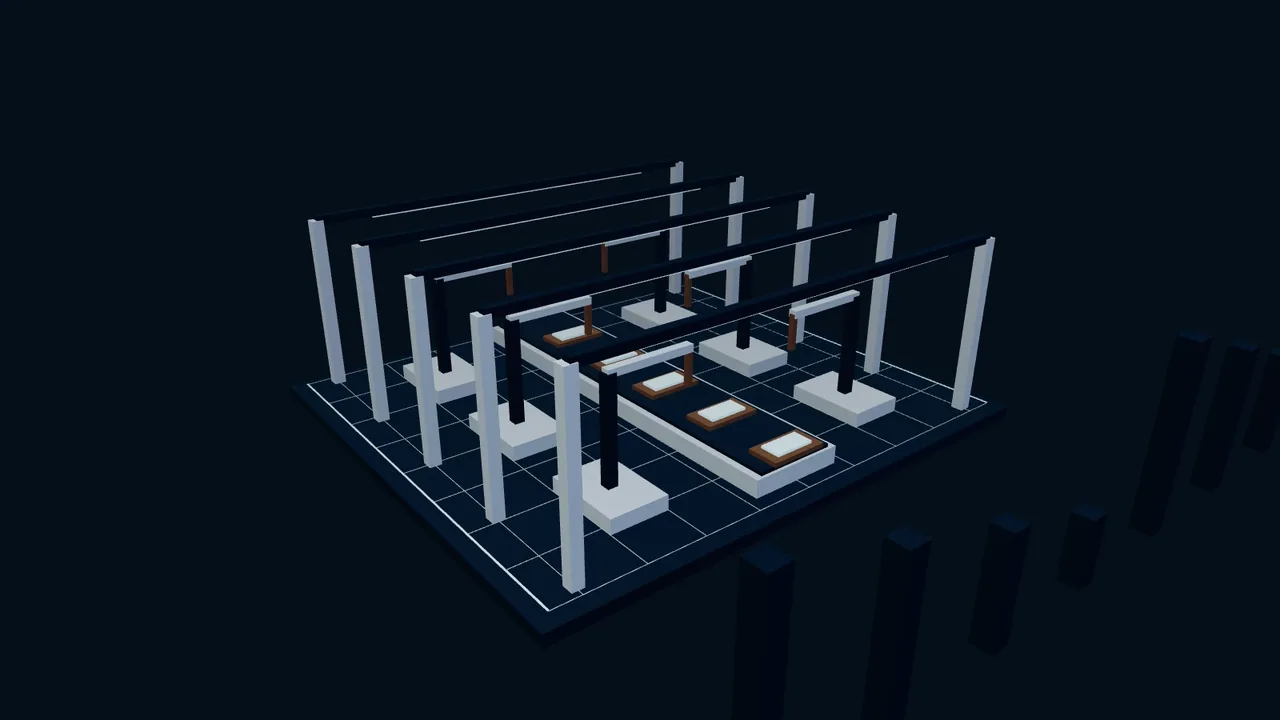
The CYBORG factory is a production setting for the scale of human machine-making in The Human II. Its story connects manufactured bodies with distinct Personas rather than treating every robot as the same individual. These new empty assembly-bay studies do not replace the artists' approved robot looks or brand assets.
The industrial setting behind a world of distinct machines. Follow its connections to the wider film world, from everyday life to the choices made under pressure.
The owner's direction asks for a large robot factory and an army-scale world rather than a conflict between two isolated figures. The factory supplies a place where that scale can be felt. Repeated structures, depth and movement can imply organized capacity without claiming an exact output rate. The website study uses assembly stations around a moving line and leaves the body cradles empty. That choice is deliberate: it allows the architecture to be explored without duplicating a locked character design, inventing a finished robot population or counting schematic objects as production-ready machines.
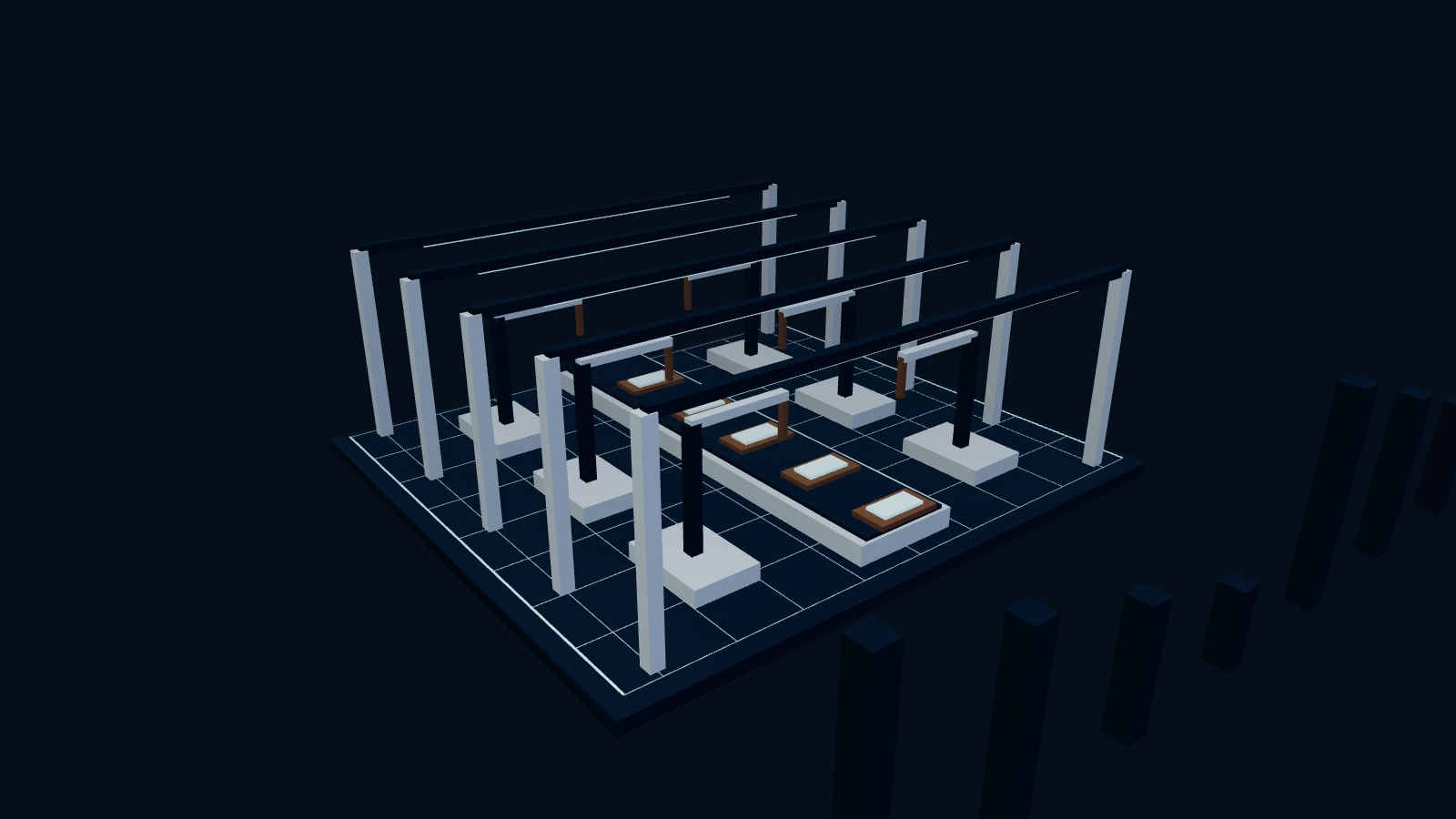
The Persona Core separates a robot's housing from the identity it carries. A repeated chassis therefore need not imply repeated memories, histories or personalities. The later story direction asks the audience to notice that many robots carry learned Human Personas, while other machines use default AI Personas. The factory is where a purely industrial image can become a question about individuality. This page does not manufacture names for its empty stations. It directs visitors to the existing Core and robot-role dossiers, where those distinctions can be followed without pretending a production line has already supplied their biographies.
The absence of finished bodies in the assembly study is also a way to protect continuity between teams. A factory environment can be reviewed for access and scale without forcing artists to accept a new robot silhouette. When approved bodies are eventually placed in a production set, their proportions and Core treatment must come from that reviewed design work. This separation lets the website contribute a useful industrial space now while preserving the characters' visual identities and avoiding a false claim that all required machine artwork is complete.
Fighting, rescue, utility, keeper and medical machines have different responsibilities in the visual plan. Their differences matter to the film's portrayal of a constructive civilization. A factory should not suggest that every machine leaving it is a weapon. The related guides describe those roles separately, while named characters such as Brick and Keeper-7 keep their own pages. The empty assembly-bay model is intentionally neutral about final bodies. It explores access, scale and circulation rather than silently turning one schematic into all five approved robot types.
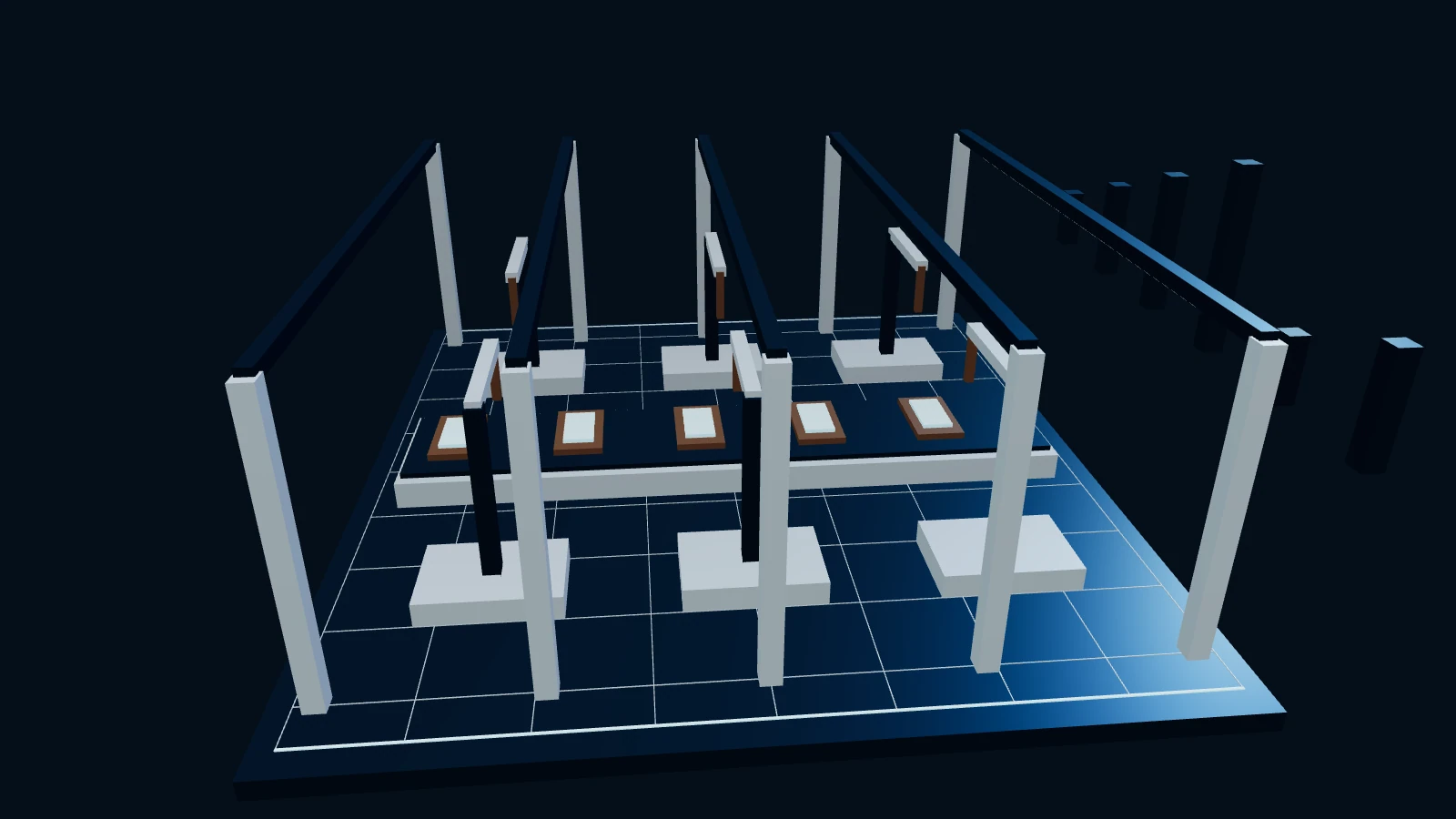
Cyborg Inc makes the human ships, robots and weapons in the story, within the wider Nayak Incorporation structure. The owner also asks that the film not feel like an advertisement. Both directions must survive together. Final production designs can integrate the approved CYBORG mark instead of placing invented logos on every surface. This website study does not redraw the mark or substitute a typed word for an approved chest emblem. Its title names the setting, while the geometry stays focused on industrial space and the relationships between its working areas.
The new renders show a longitudinal view, an oblique view and an overhead view of the same original assembly architecture. In the interactive exhibit, the line's carriers move through a bounded phase; the six-second study records a camera move through that system. The movement is authored for the website and does not encode a real manufacturing recipe, safety procedure or throughput figure. It is useful because it makes the space inspectable. Production-approved robot models, Persona installation performances and final factory footage remain separate work, and the independent studio collections remain untouched.
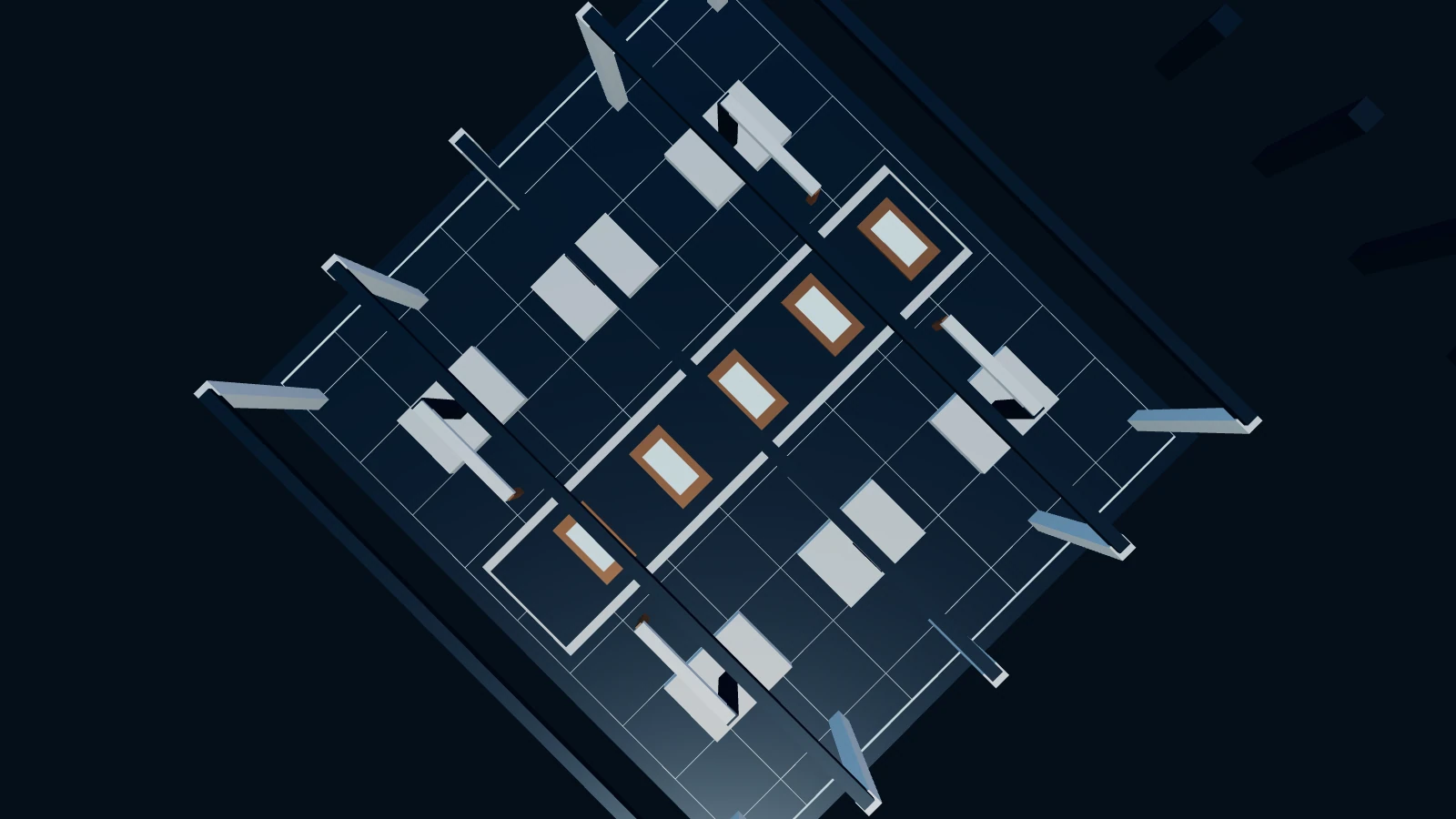
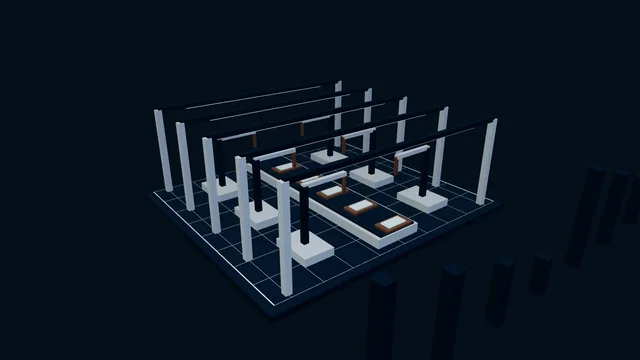
Static artwork remains available without 3D. The exhibit is an abstract website schematic, not a final model, approved map or physical simulation.
Drag horizontally or use arrow keys to inspect. Vertical touch scrolling remains native. The phase control changes geometry; it is not a claim about story timing.
Shared infrastructure makes specialized bodies possible.
A body type does not determine a Persona's identity.
The machine's purpose continues outside the factory.
Watch the memory and machines artwork motion study: 12 seconds of silent concept imagery, with a shot guide and links to The Human story dossiers.
Related story context. This existing clip is not a new scene at The CYBORG Factory or a completed character performance.
Read the full watch page ↗The factory's studio establishing image, alternate angles and layout add visual depth to the existing story and procedural assembly study. A factory can communicate scale without pretending every machine emerging from it has the same identity or the same purpose.
These existing working images are not a replacement for the robot team's character designs or the earlier website geometry. They do not assert a final production rate, approved manufacturing process or locked Persona-loading performance. The gallery keeps the artist's source and delivery history visible while preserving the distinction between a repeated body and the individual Persona it may carry.
 FULL VIEW ↗
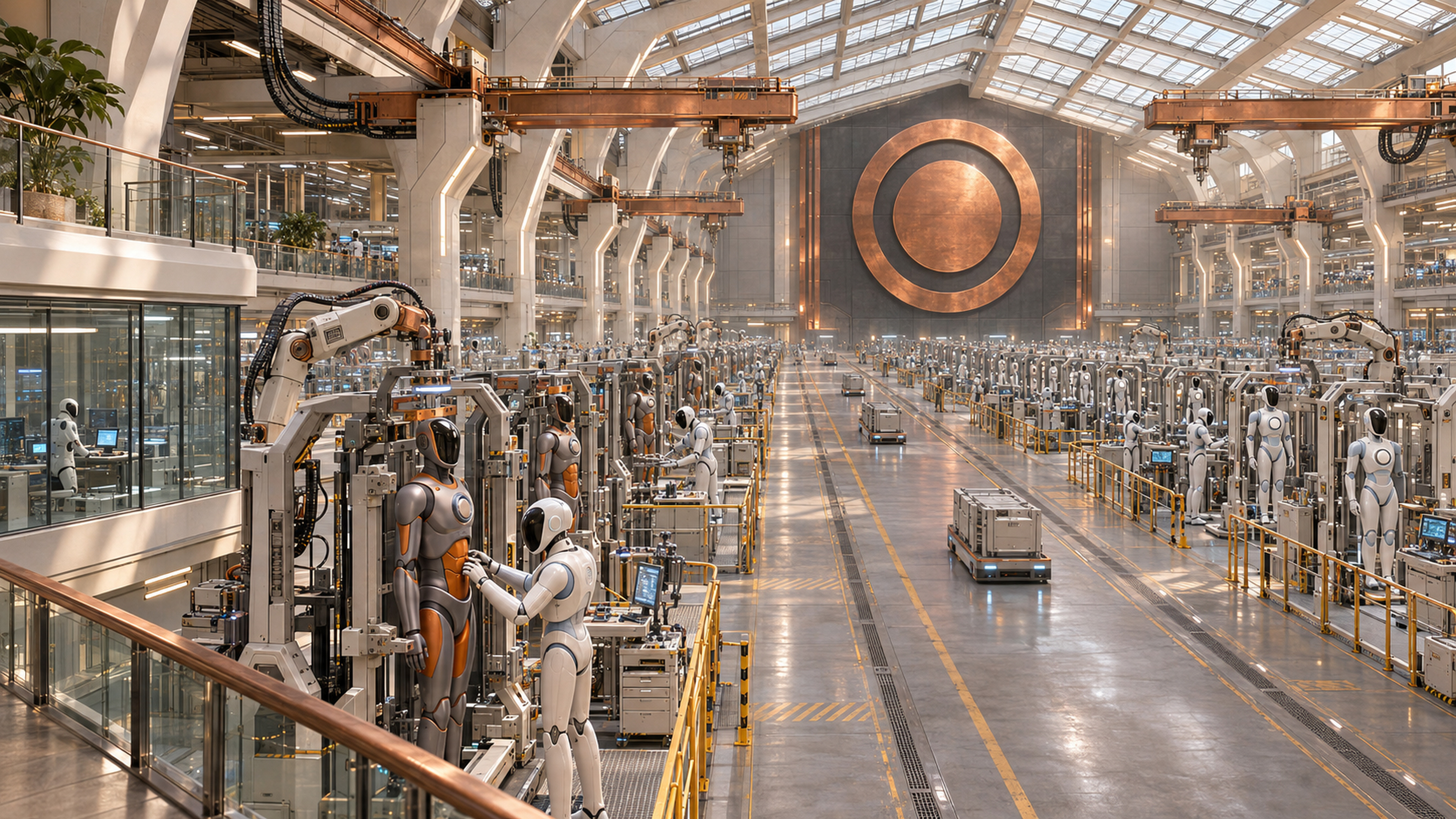
Proposed factory architecture, 3026: four production lanes around a transport spine, overhead copper gantries, ivory structure and a single monumental ring-and-disc wall inlay. Existing builder and medical robot families guide the assembly lines. Repeating halls imply industrial capacity; no literal robot population count is asserted.
Delivery 3840 × 2160; source-native 1672x941. ImageMagick Lanczos resize to 3840x2160, minimal aspect trim, restrained unsharp 0x0.55+0.30+0.015; not native 4K
Owner review pending; original studio status: working
Owning studio ↗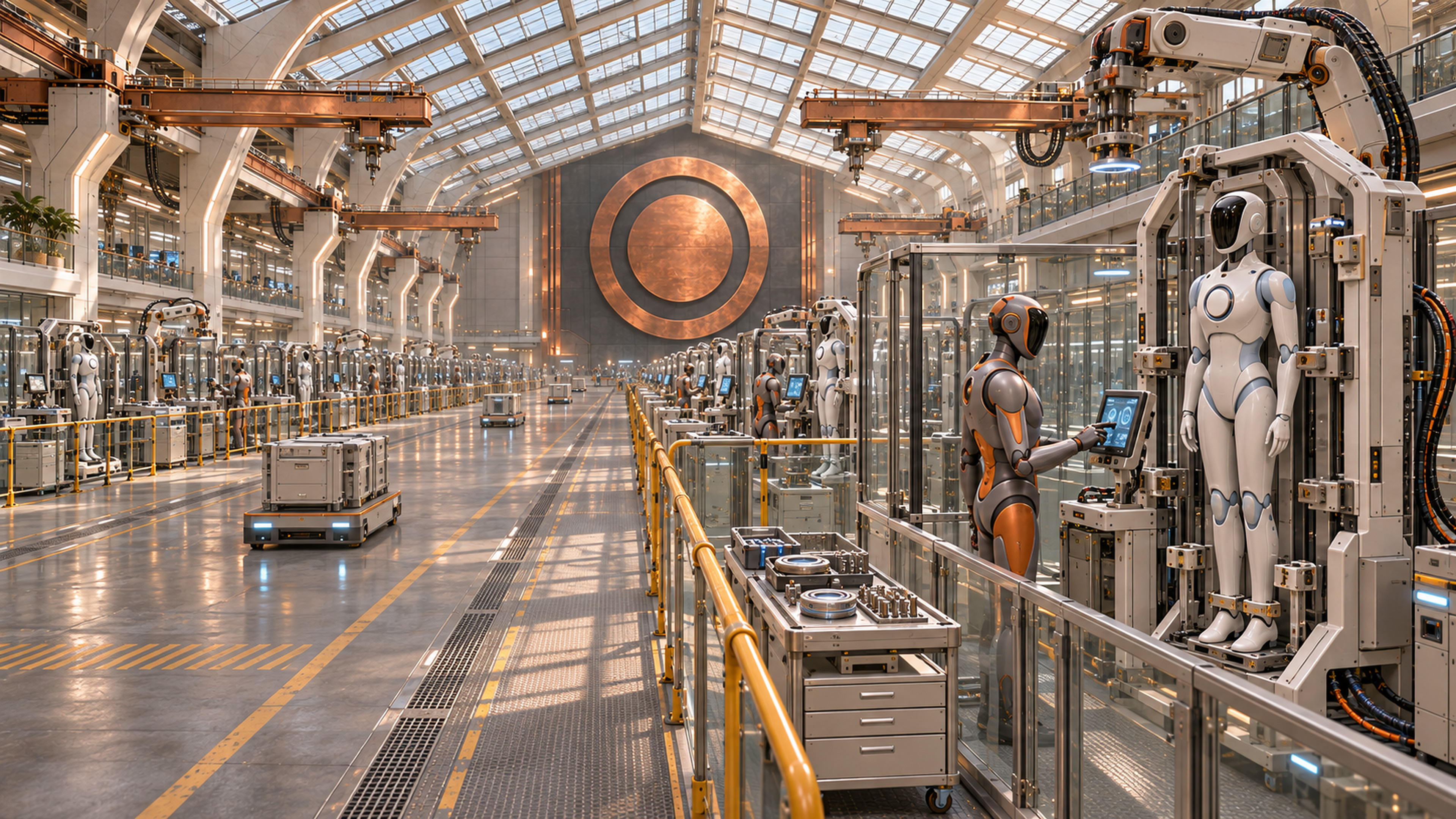 FULL VIEW ↗
Ground-level view of the same factory, beside the medical line. A grey-orange builder checks a white medical body; small removable Persona modules sit in fitted trays. The original wall emblem and production layout are retained.
Delivery 3840 × 2160; source-native 1672x941. ImageMagick Lanczos resize to 3840x2160, minimal aspect trim, restrained unsharp 0x0.55+0.30+0.015; not native 4K
Owner review pending; original studio status: working
Owning studio ↗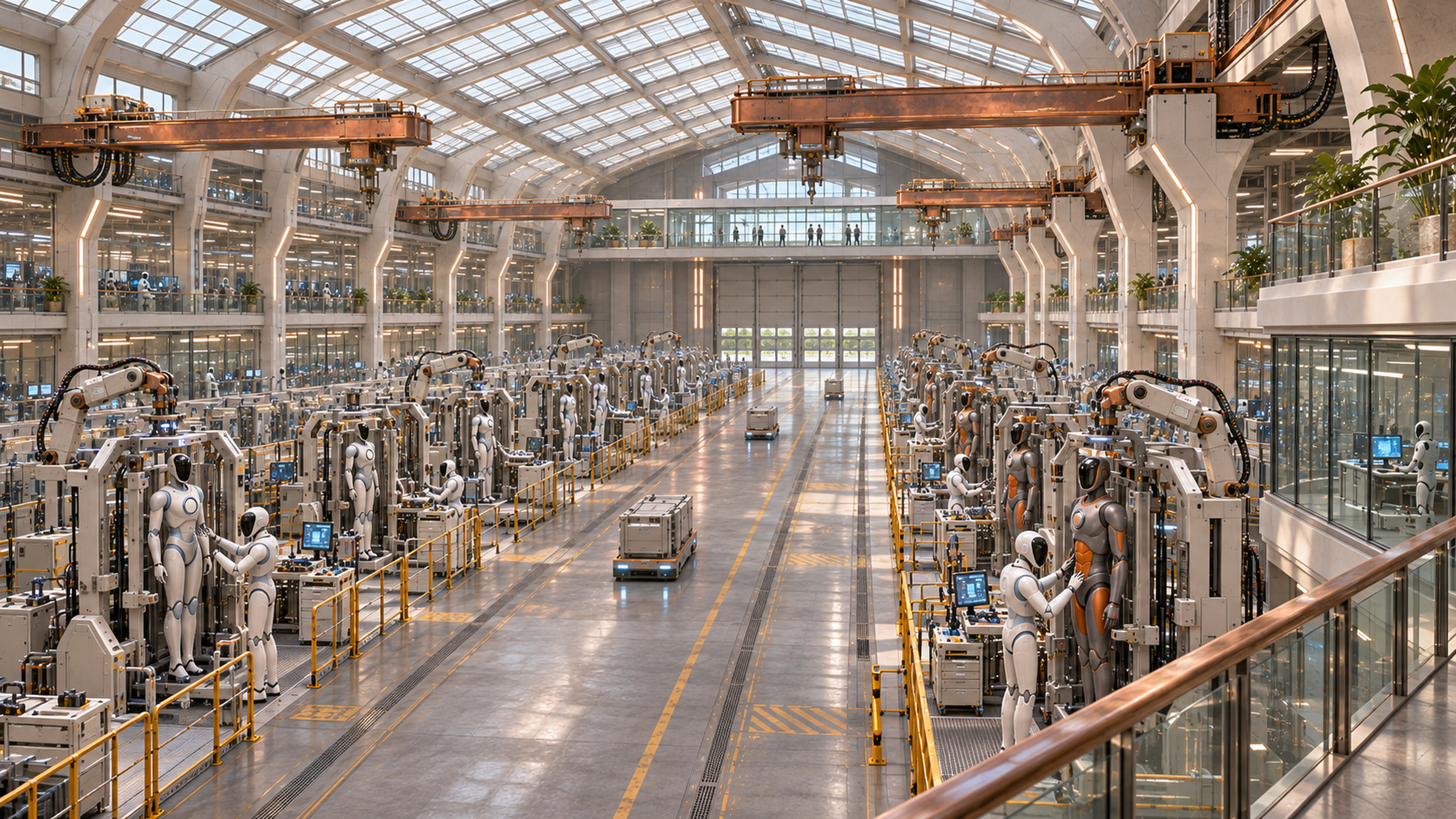 FULL VIEW ↗
Reverse view from the far inspection mezzanine toward the receiving doors. The emblem is behind the camera. Medical and builder assembly lanes preserve their positions within the same hall.
Delivery 3840 × 2160; source-native 1672x941. ImageMagick Lanczos resize to 3840x2160, minimal aspect trim, restrained unsharp 0x0.55+0.30+0.015; not native 4K
Owner review pending; original studio status: working
Owning studio ↗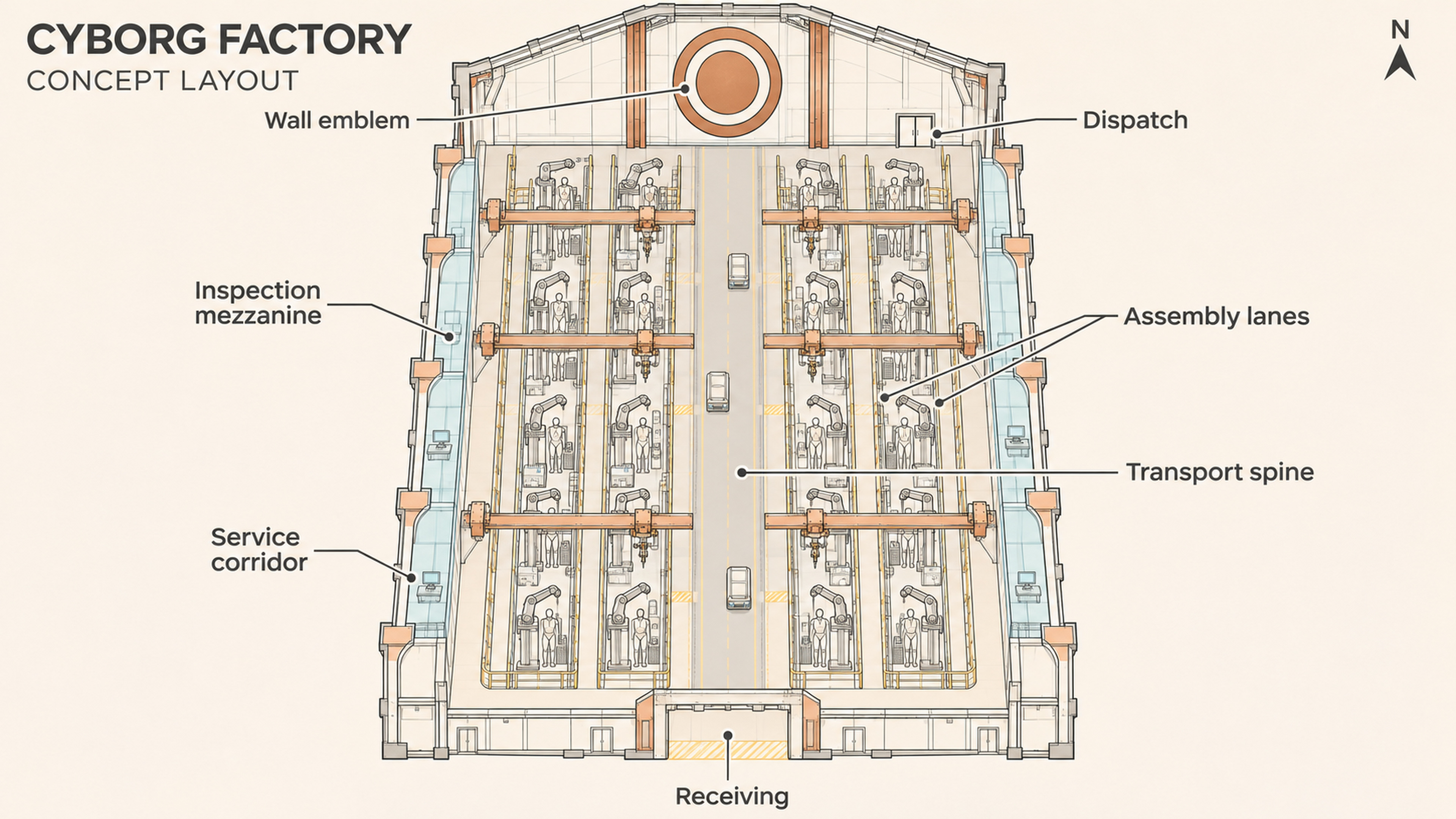 FULL VIEW ↗
Concept layout with four assembly lanes, central transport spine, side inspection mezzanines and receiving/dispatch access. End wall shown in a folded elevation to identify the emblem. No certified dimensions or industrial capacity are claimed.
Delivery 3840 × 2160; source-native 1672x941. ImageMagick Lanczos resize to 3840x2160, minimal aspect trim, restrained unsharp 0x0.55+0.30+0.015; not native 4K
Owner review pending; original studio status: working
Owning studio ↗No. They are empty schematic fixtures in a website room study. No new character names, faces or finished bodies are implied.
No. A repeated body and a distinct Persona are different parts of the film's identity system.
The current story direction places the human machine-making role with Cyborg Inc, under Nayak Incorporation. Public institutions remain separate.
No. The model communicates industrial scale without inventing output rates, capacities or a final robot count.
The factory is a named visual setting. This batch adds empty industrial-room concepts, not final robot models, an approved logo treatment, manufacturing specifications or performed Persona-loading footage. All other artists' designs remain unchanged.
Source: the reviewed The Human series story record, sections 16, 20, 22, 28.3, 28.5; Task/CG4003/TASK.md; Task/CG4008/TASK.md. Later owner decisions take precedence over older drafts. The five reading chapters are editorial interpretation of that record, not newly approved screenplay scenes.
These pages describe a fictional world. They do not announce a release date, a cast contract, real exoplanet settlements or completed production assets.
Read the story and media policy ↗Explore the places, shared roles and everyday systems that connect the larger movie universe.
Open Worldbuilding ↗144 newly rendered frames at 24 fps. The camera and scene geometry change together. This is a website architectural study, not an actor performance, an approved movie set or finished film footage.
The interactive model above and this clip are generated from the same geometry source. The source hashes and actual frame count are recorded with the release.