Skip to content
THE HUMANALIENS STUDIO
ExploreClose
THE HUMAN / EXPLORE

Every story.
One universe.

Meet the people. Discover their worlds.
Follow the spacecraft, scenes and ideas that connect them.

A film universe in development. Artwork and short motion studies are not final movie footage.

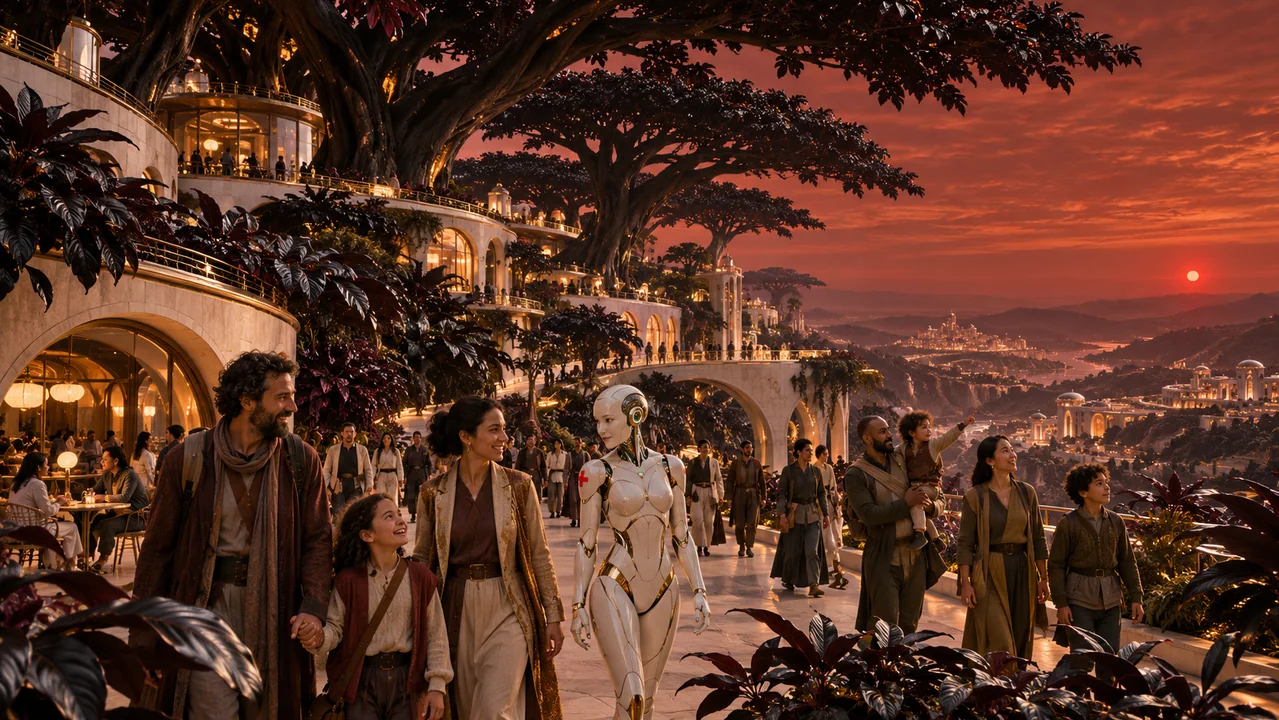
Proxima b development artwork — a fictional home in The Human
THE HUMAN / THE COMPLETE STORY ATLAS

Every life.
Every world.
One story.

People, adversaries, ships and the places between them. Find every published subject, or follow a connection you have not explored.

102 detailed subjects18 playable studies06 reading paths

Published website coverage, not a claim that the film or its production artwork is complete.

A CONNECTED UNIVERSE

Enter through a person. Stay for a world.

This atlas brings the original 82 dossiers together with the ten worldbuilding guides, six rendered setting studies and four additional place guides. A character is not lost because their role belongs to a different collection, and an important room is no longer outside the main search.

Every card opens an existing page with its own story, illustrations and development notes. The images are drawn from that page’s existing artwork, not newly assigned faces. The original character photographs remain in the full portrait collections and their individual profiles.

ALL 102 PUBLISHED SUBJECTS

Find your next connection.

20 PUBLISHED SUBJECTS

Characters

Anil Cyborg — existing dossier artwork
Human-appearing Cyborg · engineer · founder

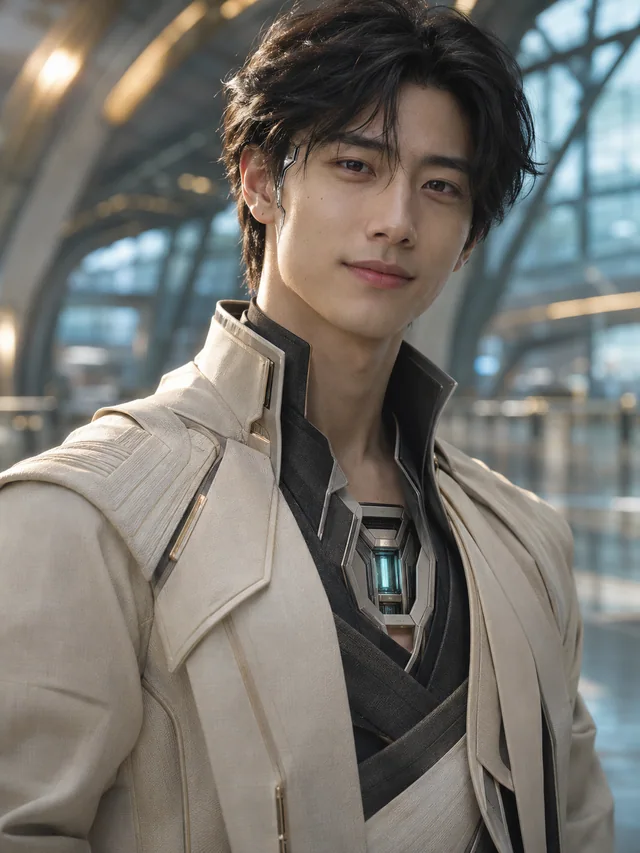
Anil Cyborg

Anil Cyborg is the lead of The Human - II: a fully human-appearing robot carrying a Human Persona derived from the original Anil. His work joins software engineering, business building and advanced hardware. He is not an ordinary human scientist, and Part II has one active Anil Cyborg, not an army of simultaneous copies.

Open the full story
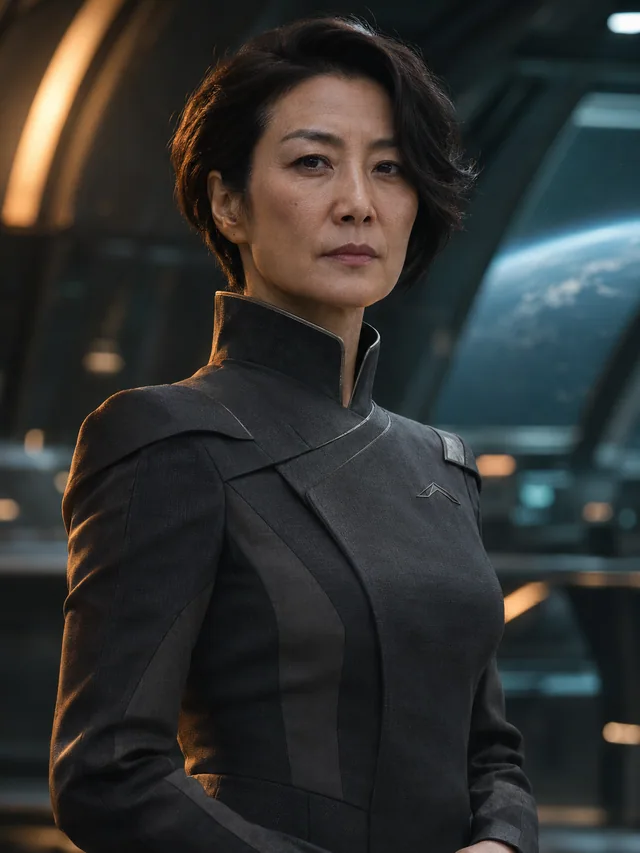
Anil — the human origin — existing dossier artwork
Part I · original human

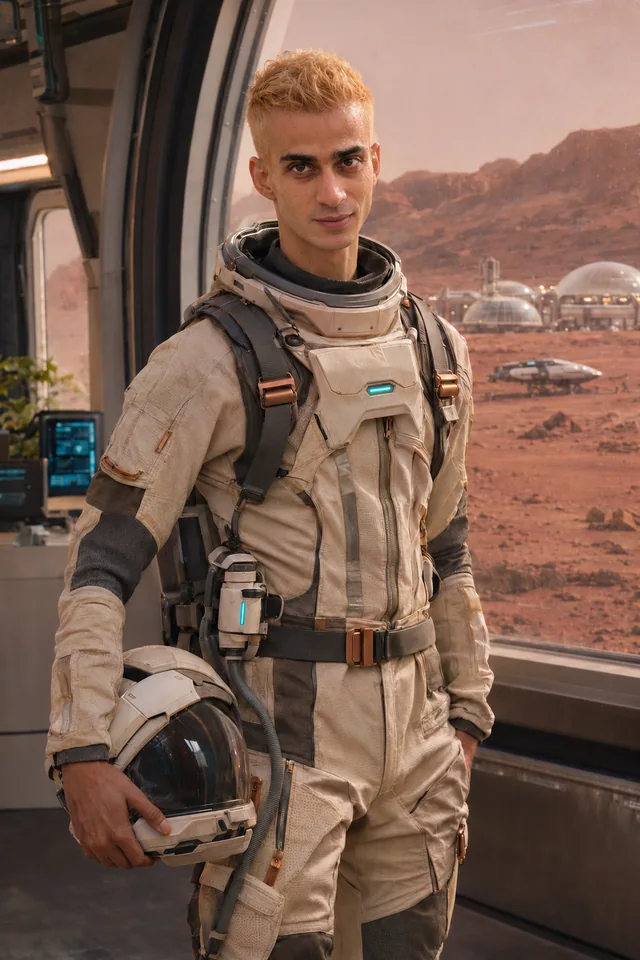
Anil — the human origin

The human Anil belongs to the origin of the Persona that becomes Anil Cyborg. Part I is intended to explore the next 100–150 years: the gradual development of AI companions, digital expertise and physical Cyborg bodies. The owner has retained authorship of Part I’s screenplay.

Open the full story
Admiral Seo-yeon Han — existing dossier artwork
Human · fleet command

Admiral Seo-yeon Han

Admiral Seo-yeon Han is the Korean fleet commander in the developing ensemble. Her responsibility is to turn a peaceful civilization’s vessels into a coordinated rescue and defensive force without losing sight of the people inside them.

Open the full story
Dr. Ira Khan — existing dossier artwork
Human · research scientist

Dr. Ira Khan

Dr. Ira Khan is a scientist in The Human’s developing ensemble. Her work expresses humanity’s defining strength in the story: learning quickly, sharing knowledge and changing a theory when evidence demands it.

Open the full story
Kofi Mensah — existing dossier artwork
Human · spacecraft pilot

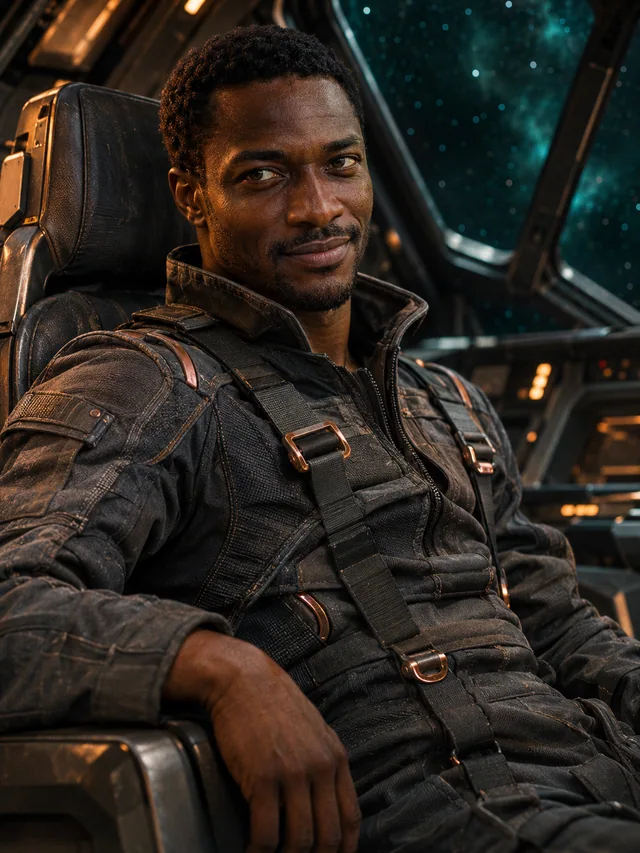
Kofi Mensah

Kofi Mensah is the Ghanaian pilot in the developing ensemble. His skill and humor bring a personal scale to spacecraft travel, dangerous decisions and the pressure of evacuation.

Open the full story
De-jun — existing dossier artwork
Human-appearing Cyborg

De-jun

De-jun is a human-appearing Cyborg in The Human. The character explores how trust, companionship and a learned Persona can matter more than the visible difference between a human body and an artificial one.

Open the full story
Keeper-7 — existing dossier artwork
Cyborg · rescue and recovery

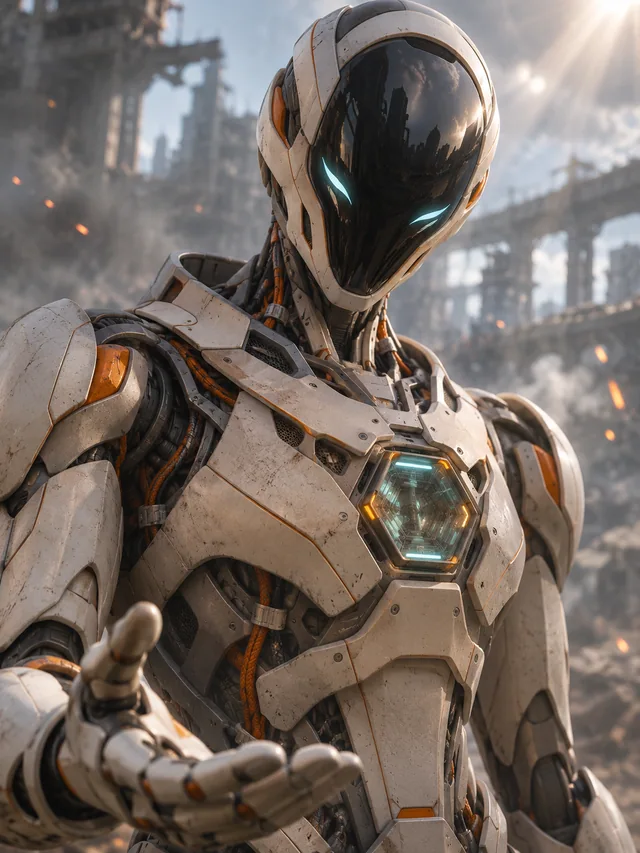
Keeper-7

Keeper-7 is a rescue Cyborg concept associated with the devastated-Earth opening. A frightening silhouette resolves into an ally searching for people and helping a damaged world recover.

Open the full story
Amara Okonkwo — existing dossier artwork
Human · Earth president

Amara Okonkwo

Amara Okonkwo is the proposed Nigerian president of Earth in the ensemble. She represents a threatened home within a multi-world human civilization, not a single nation entitled to speak for everyone.

Open the full story
Aryan Sehgal — existing dossier artwork
Human · Proxima prime minister

Aryan Sehgal

Aryan Sehgal is the proposed Indian prime minister of Proxima in the working ensemble. His role gives the twilight world a political voice alongside the other inhabited worlds.

Open the full story
Zara Malik — existing dossier artwork
Human · Mars president

Zara Malik

Zara Malik is the proposed president of Mars. Her world receives people escaping Earth, then faces an incoming asteroid of its own.

Open the full story
Hiroshi Tanaka — existing dossier artwork
Human · TRAPPIST representative

Hiroshi Tanaka

Hiroshi Tanaka is the proposed Japanese president representing the TRAPPIST setting in the human ensemble. The role broadens the story beyond Earth and Proxima.

Open the full story
Leena Volkova — existing dossier artwork
Human · Haven president

Leena Volkova

Leena Volkova is the proposed Russian president of Haven, the artificial ring habitat. Her role connects an engineered world with the human lives that make it a home.

Open the full story
Elias Brandt — existing dossier artwork
Human · Teegarden chancellor

Elias Brandt

Elias Brandt is the proposed German chancellor of the Teegarden ocean-world setting. He gives the floating cities a voice in the shared human council.

Open the full story
Lucía Reyes — existing dossier artwork
Human · soldier

Lucía Reyes

Lucía Reyes is the proposed Mexican soldier in the ensemble. Her inclusion gives the conflict a frontline human perspective alongside pilots, scientists and political leaders.

Open the full story
Pihu — existing dossier artwork
Human · child’s perspective

Pihu

Pihu is the child in the working human ensemble, connected to the Nani and Persona story. Her perspective makes a civilization of enormous machines understandable through trust, recognition and ordinary questions.

Open the full story
Nani — existing dossier artwork
Human memory · family and Persona

Nani

Nani belongs to the family-centered Persona material. The proposed scenes explore how a learned voice, a recording and a physical Cyborg body can carry memory without claiming to bring back biological consciousness.

Open the full story
Brick — existing dossier artwork
Large Cyborg · protective body

Brick

Brick is the large protective Cyborg body in the developing ensemble. Early notes describe a six-metre combat form; the exact dimensions and final production design remain provisional.

Open the full story
The Proxima Teacher — existing dossier artwork
Human-appearing Cyborg · default AI Persona

The Proxima Teacher

The Proxima Teacher is an unnamed Cyborg teaching concept. A human-appearing body carries a default AI Persona, demonstrating that not every artificial companion is derived from a deceased human.

Open the full story
The Household Companion — existing dossier artwork
Conversational device · default AI Persona

The Household Companion

The household companion is a descriptive dossier for the talking screen in the latest worldbuilding. It is not a named human character: it demonstrates how a default AI Persona can make an everyday electronic device feel like a member of a home.

Open the full story
Nani's Persona — existing dossier artwork
Human Persona in a Cyborg body

Nani's Persona

Nani's Persona is the proposed digital character that preserves learned memories and familiar behavior associated with Nani. It offers a way to explore care and remembrance while openly distinguishing a Persona from the original human consciousness.

Open the full story
04 PUBLISHED SUBJECTS

Adversaries

Prime Sereth — existing dossier artwork
Orvaan · proposed political leader

Prime Sereth

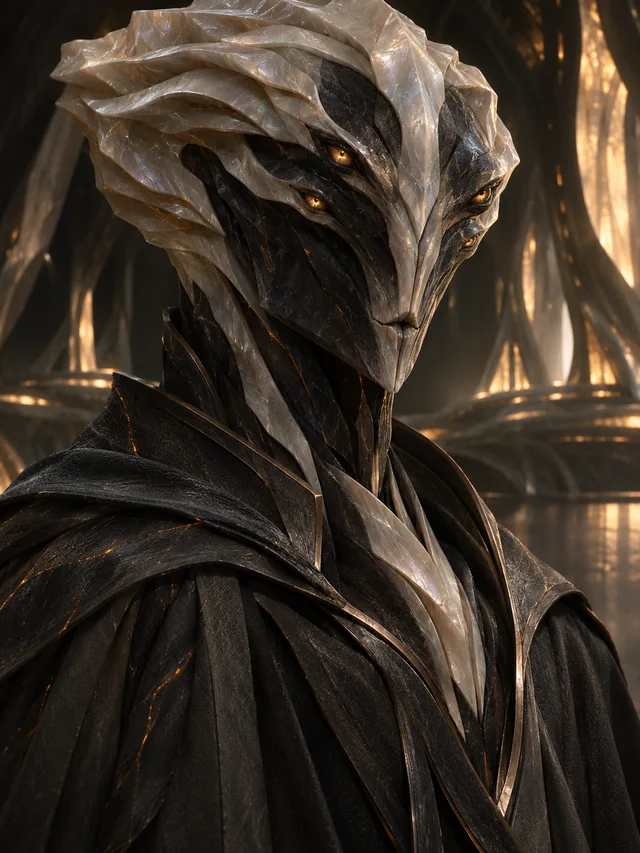
Prime Sereth is the working name for the Orvaan leader. The owner selected the existing mineral-faced Orvaan artwork for this character: a dark face, pearl-like crown plates, amber fissures and four eyes.

Open the full story
Vorak — existing dossier artwork
Orvaan · proposed commander

Vorak

Vorak is the working name of the Orvaan commander. The role connects the enemy’s political doctrine to fleet decisions, defensive systems and the escalating conflict with humanity.

Open the full story
Ilva — existing dossier artwork
Orvaan · proposed scientist

Ilva

Ilva is the proposed Orvaan scientist. The role offers a counterpart to human research without assuming that every member of the adversary civilization thinks or acts identically.

Open the full story
The Ancient Architects — existing dossier artwork
Unnamed future adversary · working descriptor

The Ancient Architects

The source notes propose a still greater, bone-like adversary for a later film. “The Ancient Architects” is a website navigation label for this unresolved idea, not an owner-approved species name.

Open the full story
10 PUBLISHED SUBJECTS

Worlds

Earth — existing dossier artwork
Humanity’s first home

Earth

Earth is humanity’s first home and the center of the evacuation crisis in The Human - II. The ruined-world opening takes place after the impact; the Cyborgs seen there are a recovery team, not the cause of the destruction.

Open the full story
Mars — existing dossier artwork
Human settlement · next refuge

Mars

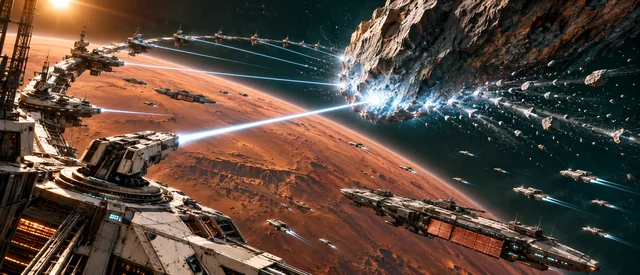
Mars is the nearest human refuge in the story. After people escape Earth, another incoming asteroid forces the settlement and its orbital defense system to confront a second attack.

Open the full story
Proxima b — existing dossier artwork
Fictional settlement on a real exoplanet

Proxima b

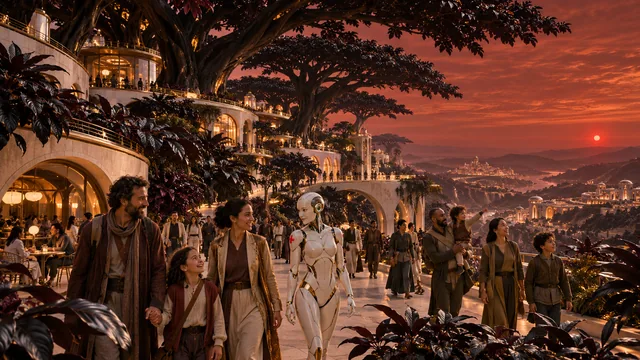
The Human imagines Proxima b as a twilight home with black-leaved forests and golden cities. Its schools, gardens and families show what humanity has learned to build beyond the Solar System.

Open the full story
TRAPPIST-1 — existing dossier artwork
Seven-world system · story setting

TRAPPIST-1

TRAPPIST-1 is the seven-world system used as a human setting in the story bible. The film’s settlement details and the exact inhabited member of the system have not been finalized.

Open the full story
Epsilon Moon — existing dossier artwork
Fictional moon · Epsilon Eridani setting

Epsilon Moon

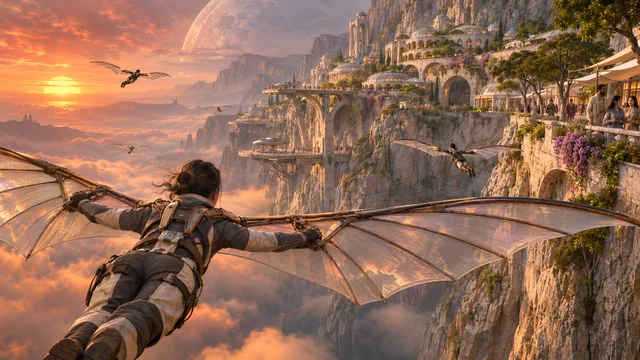
Epsilon Moon is the fictional moon imagined for the Epsilon Eridani setting. Low gravity and dense air inspire engineered personal wings, cliff cities and flight terraces.

Open the full story
Teegarden b — existing dossier artwork
Fictional ocean civilization

Teegarden b

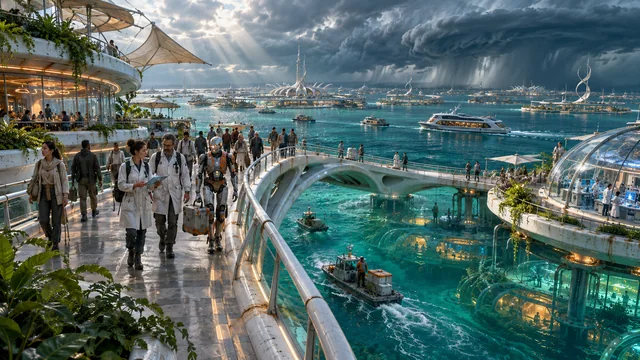
The film imagines Teegarden b as an ocean-covered world of floating cities, marine farms and linked districts. This is a fictional settlement design built around a real exoplanet name.

Open the full story
Haven — existing dossier artwork
Artificial ring habitat

Haven

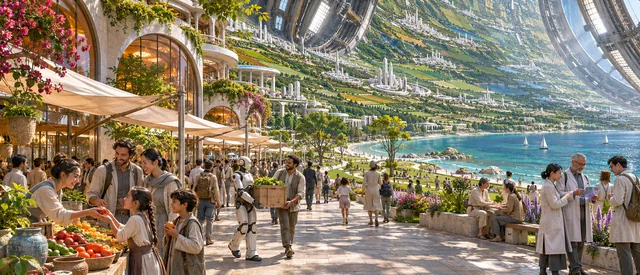
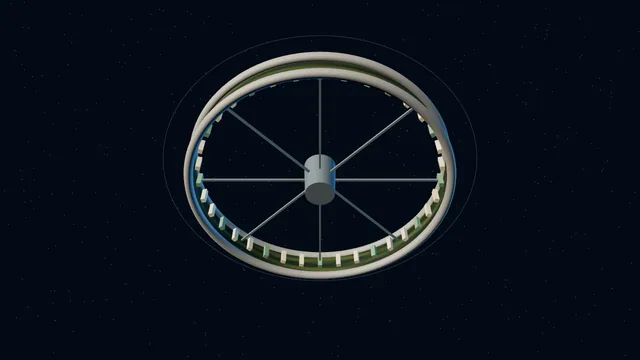
Haven is an artificial ring habitat in The Human: a constructed home with water, markets, gardens and cities continuing into an inner horizon. It is not a natural planet.

Open the full story
Lantern — existing dossier artwork
Rogue-world concept · engineered warmth

Lantern

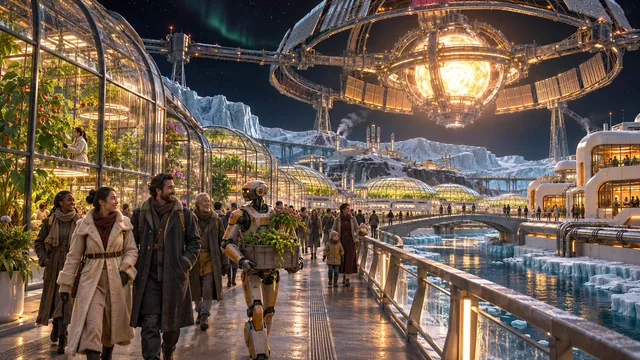
Lantern is a proposed starless world given a local engineered source of warmth and light. Sheltered districts and glowing greenhouses make the frontier habitable in the film’s imagination.

Open the full story
The Frontier Worlds — existing dossier artwork
Cyborg-led preparation and recovery

The Frontier Worlds

The owner’s worldbuilding describes Cyborg work preparing or recovering approximately 100–200 worlds. A smaller forty-world figure appeared as a trailer proposal, not a replacement for the larger development direction.

Open the full story
The Orvaan Worlds — existing dossier artwork
Adversary civilization · unnamed worlds

The Orvaan Worlds

The Orvaan occupy multiple worlds; the owner describes a range of ten to twenty, while fourteen is a working proposal. The individual world names and their final visual identities remain open.

Open the full story
10 PUBLISHED SUBJECTS

Ships

Human Carrier — existing dossier artwork
Cyborg-built civilian fleet

Human Carrier

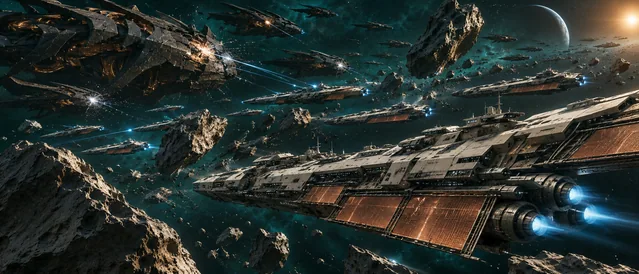
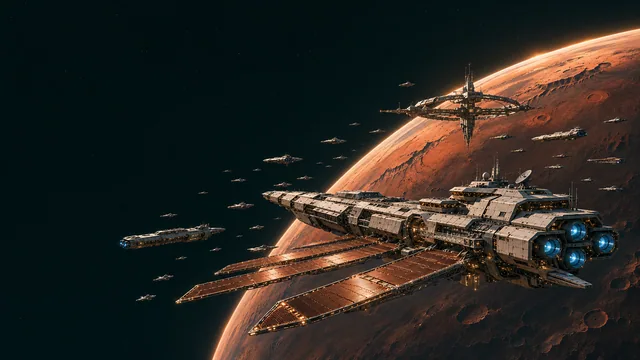
The Human Carrier is the existing evacuation-vessel design study: a long plated hull with passenger modules, rescue bays, copper radiators and four recessed engines.

Open the full story
Interceptor — existing dossier artwork
Cyborg-built escort · rapid response

Interceptor

The Interceptor is the compact escort study in the existing 3D hangar. Twin forward prongs, a recessed cockpit, paired engines and angled radiators give it a different silhouette from the carrier.

Open the full story
Human Cruiser — existing dossier artwork
Cyborg-built large-vessel visual study

Human Cruiser

The Human Cruiser is the pale, copper-accented ship used as an independent photographic layer in the website’s cinematic hero scenes. Its production class name is not locked.

Open the full story
Human Courier — existing dossier artwork
Cyborg-built small-craft visual study

Human Courier

The Human Courier is the independent small-ship artwork used in the layered world, Mars and countermove scenes. It is a descriptive design-study name, not a locked vessel callsign.

Open the full story
The Last Departure Ship — existing dossier artwork
Autonomous evacuation vessel · scene role

The Last Departure Ship

The Last Departure Ship is an unnamed evacuation vessel with a conversational AI Persona. The owner’s worldbuilding makes spacecraft active characters that can speak, reason and fly without a human pilot.

Open the full story
Orvaan Capital Ship — existing dossier artwork
Ancient fleet · command-vessel study

Orvaan Capital Ship

The Orvaan Capital Ship is the dark command-vessel concept in the original hangar and cinematic scene layers. Obsidian plates, swept structures and amber apertures echo the Orvaan visual direction.

Open the full story
Orvaan Scout — existing dossier artwork
Small adversary-craft visual study

Orvaan Scout

The Orvaan Scout is the small alien craft used as an independent layer in the countermove scene. It shares the adversary fleet’s dark, unfamiliar visual language.

Open the full story
Ice Freighter — existing dossier artwork
Proposed logistics vessel · Gate balance

Ice Freighter

The Ice Freighter is a proposed logistics role connected to the Mass Bank idea. In that story concept, outward passenger traffic is balanced by returning material such as ice.

Open the full story
The Rescue Shuttle — existing dossier artwork
The distance between a person and safety

The Rescue Shuttle

The rescue shuttle is the short-route transport concept linking people, damaged locations and larger evacuation vessels. Its role makes the last part of a rescue visible instead of assuming that everyone can reach a carrier unaided.

Open the full story
The Gate-Seed Vessel — existing dossier artwork
The journey before the shortcut

The Gate-Seed Vessel

The Gate-seed vessel is a descriptive concept for the ship that first carries a Gate mouth toward another system. It follows the approved rule that The Span cannot connect to a destination where its other end has never been placed.

Open the full story
02 PUBLISHED SUBJECTS

Vehicles

Autonomous Helicopter — existing dossier artwork
Cyborg software · callable vehicle

Autonomous Helicopter

The autonomous helicopter is one of the owner’s examples of a machine with a conversational Cyborg-software Persona. A proposed scene has Pihu call it and watch it arrive without a pilot.

Open the full story
Conversational Car — existing dossier artwork
Cyborg software · everyday companion

Conversational Car

Conversational cars are part of the owner’s everyday-machine worldbuilding. A proposed light scene lets two vehicles argue about a lane while their human passengers calmly drink tea.

Open the full story
22 PUBLISHED SUBJECTS

Technology & robot roles

Persona Core — existing dossier artwork
Memory · behavior · embodied identity

Persona Core

A Persona Core is the fictional module that connects a Cyborg body with a learned personality. The series distinguishes default AI Personas from Human Personas based on recorded memories, speech and behavior. Consent and an honest distinction from the original person are essential.

Open the full story
The Span — existing dossier artwork
Interstellar Gate network · speculative fiction

The Span

The Span is the working name for the story’s Gate network. It connects prepared endpoints through a fictional traversable wormhole. A ship does not locally exceed the speed of light; the narrative uses a shorter route through space.

Open the full story
Pocket Gate — existing dossier artwork
Limited-scale Gate application

Pocket Gate

Pocket Gate is a proposed application of the same speculative Gate premise used by The Span. In the developing climax it gives humanity a way to redirect dangerous material with a controlled destination rather than simply copying the enemy’s destructive method.

Open the full story
The Reach — existing dossier artwork
Orvaan strategic system

The Reach

The Reach is the working name for the Orvaan asteroid-redirection system. The development notes connect its imagery to remote illumination and surface ablation, then expand that idea to an enormous fictional scale.

Open the full story
Mars Shield — existing dossier artwork
Planetary defense architecture

Mars Shield

The Mars Shield is the fictional defense system that protects Mars during the second asteroid attack. Its success changes the story from escape after a catastrophe to recognition of a deliberate campaign.

Open the full story
Mass Bank — existing dossier artwork
Proposed Gate traffic accounting

Mass Bank

The Mass Bank is a proposed story system for accounting at Gate endpoints. It makes traffic through The Span depend on a managed balance, so an open Gate is not automatically an unlimited escape route.

Open the full story
Radiator Wings — existing dossier artwork
Spacecraft thermal design

Radiator Wings

Radiator Wings are the broad thermal surfaces in The Human’s spacecraft design language. They make the cost of operating a powerful ship visible: energy use leaves heat that the vessel must manage.

Open the full story
Retro Skin — existing dossier artwork
Orvaan defensive surface concept

Retro Skin

Retro Skin is a proposed Orvaan surface treatment that challenges an initial human attack. Its narrative role is to force a change in assumptions rather than let the first familiar weapon solve the conflict.

Open the full story
Sand Wall — existing dossier artwork
Orvaan orbital hazard concept

Sand Wall

Sand Wall is a proposed defensive obstacle made from small material distributed along an orbital path. In the story it makes navigation and relative motion more important than simply having a larger ship.

Open the full story
Skyhook — existing dossier artwork
Orbital transport concept

Skyhook

A Skyhook is an orbital transport concept in the film’s technology vocabulary. It connects local surface journeys with the larger interplanetary travel system, giving ordinary transport a different visual rhythm from a battle launch.

Open the full story
Solar Lens — existing dossier artwork
Long-distance observation concept

Solar Lens

Solar Lens is an observation concept in The Human’s development notes. It uses a star’s gravitational influence as the inspiration for an extremely distant observatory, supporting discovery rather than a magical all-seeing sensor.

Open the full story
Cold Run — existing dossier artwork
Temporary thermal-management sequence

Cold Run

Cold Run is a proposed spacecraft sequence in which a vessel temporarily stores heat instead of immediately shedding it. The dramatic advantage is limited and comes with a cost, rather than granting permanent invisibility.

Open the full story
Tether Whip — existing dossier artwork
Momentum-exchange maneuver concept

Tether Whip

Tether Whip is a proposed maneuver built around momentum exchange and a planetary or lunar environment. It is intended to make a spaceflight action feel different from an aircraft turning in air.

Open the full story
Aurora Shield — existing dossier artwork
Charged-particle protection concept

Aurora Shield

Aurora Shield is a proposed magnetic protection concept in the film’s technology list. Its defining limitation is important: it concerns charged material, not a universal barrier that stops rocks, light and every other threat.

Open the full story
Light-Delay Navigation — existing dossier artwork
Observation · prediction · communication

Light-Delay Navigation

Light delay is a governing story rule for observation and communication across The Human’s spacefaring setting. Characters cannot treat a distant image as an instantaneous view or make ordinary messages travel faster than light.

Open the full story
Rock Rain — existing dossier artwork
Developing climax sequence concept

Rock Rain

Rock Rain is the working name for a proposed large-scale asteroid sequence in the developing climax. Its significance is not indiscriminate destruction, but the contrast between threatening force and the ability to control its outcome.

Open the full story
Every Machine, a Character — existing dossier artwork
The intelligence layer of everyday life

Every Machine, a Character

Cyborg software connects the intelligent machines of The Human: robots, ships, vehicles and everyday electronics. The approved direction gives these machines distinct personalities and the ability to communicate, cooperate and operate autonomously.

Open the full story
Rescue Cyborgs — existing dossier artwork
A robot role, not a new individual character

Rescue Cyborgs

Rescue Cyborgs are the helping machines that make The Human's opening reversal possible: the robots on a damaged Earth are rescuers, not humanity's destroyers. Rescue is a role shared by multiple bodies and Personas, rather than a newly named character or a final robot model.

Open the full story
Medical Cyborgs — existing dossier artwork
The medical role in the Cyborg world

Medical Cyborgs

Medical Cyborgs are one of the robot types in The Human's visual-development plan. Their role places advanced machines beside human vulnerability and care. A medical body, a Human Persona and a default AI Persona are different concepts; none of them establishes real-world clinical capability.

Open the full story
Builder Cyborgs — existing dossier artwork
Utility and world-preparation machines

Builder Cyborgs

Builder Cyborgs are the utility and construction roles behind The Human's expanding homes. The source connects robots with preparing worlds and raising air-making infrastructure. These are fictional development ideas, not a claim that terraforming is simple, instantaneous or currently achievable.

Open the full story
Defense Cyborgs — existing dossier artwork
The fighting-robot role in the human ensemble

Defense Cyborgs

Defense Cyborgs are the fighting-robot role in The Human's developing world. The production direction distinguishes black fighting bodies from working and medical roles. They support an ensemble story about learning and restraint, not a claim that every robot is a weapon or a copy of Anil.

Open the full story
Keeper Cyborgs — existing dossier artwork
A dedicated keeper-role guide

Keeper Cyborgs

Keeper Cyborgs are a dedicated type in The Human's robot-development plan, connected to the quieter work of preserving and supporting life. Keeper-7 is a named character within the wider story, not an interchangeable portrait for every keeper or a guarantee of a finalized robot design.

Open the full story
04 PUBLISHED SUBJECTS

Organizations

The Concord — existing dossier artwork
Working human council concept

The Concord

The Concord is the proposed council of human worlds. Its circular-table imagery reflects the series’ emphasis on cooperation across national backgrounds and settlements, rather than rule by one hero or one company.

Open the full story
Orvaan — existing dossier artwork
Adversary civilization

Orvaan

The Orvaan are the approved adversary civilization in The Human - II. Their defining contrast with humanity is a threat-first doctrine: eliminate what may become dangerous rather than learning to live together.

Open the full story
Cyborg Inc — existing dossier artwork
Fictional technology maker · Nayak Inc family

Cyborg Inc

In the latest film worldbuilding, Cyborg Inc sits beneath Nayak Inc alongside Aliens Inc. Human spacecraft, robots and defensive machinery use Cyborg technology; conversational software also gives everyday devices their own personalities.

Open the full story
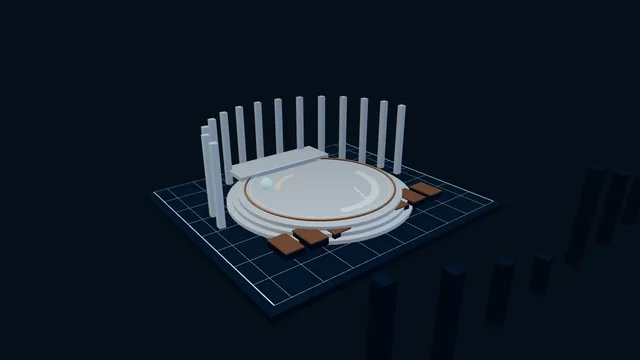
Nayak Incorporation — existing dossier artwork
Building tools, not owning humanity

Nayak Incorporation

The latest story direction places Nayak Incorporation above Aliens Incorporation and Cyborg Incorporation. Cyborg technology supports the human-side machines, while Aliens Studio is the film-making brand within the wider family.

Open the full story
17 PUBLISHED SUBJECTS

Places & sets

The Foundry — existing dossier artwork
Proposed industrial asteroid

The Foundry

The Foundry is a proposed large industrial asteroid associated with Cyborg manufacturing and the developing Gate-balance climax. It is an engineered location, not a newly named natural planet or a confirmed final set.

Open the full story
The Orbital Dock — existing dossier artwork
Where a fleet becomes a working world

The Orbital Dock

The orbital dock is the working environment around The Human's fleet: a place for preparation, transfer, repair and departure. It is infrastructure rather than an individual ship, included here because ships need a world that supports them.

Open the full story
Olympus City — existing dossier artwork
A Martian city in the developing film world

Olympus City

Olympus City is a named Martian setting in The Human II's current visual-development plan. Its story context is a settled Mars, Earth's arriving survivors and a defense capability Earth did not have. The city layout remains a website interpretation, not an approved geographic map.

Open the full story
Mumbai Spaceport — existing dossier artwork
An Earth evacuation setting

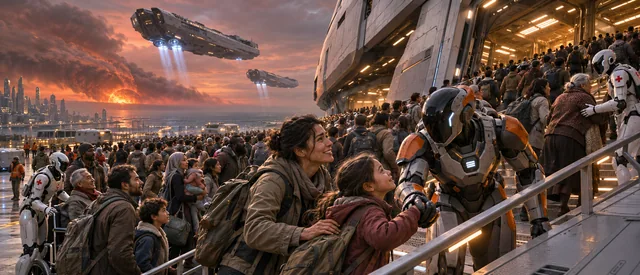
Mumbai Spaceport

Mumbai Spaceport is a proposed Earth evacuation setting in The Human II's visual plan. It connects the human scale of departure with the wider fleet, rescue Cyborgs and the loss of Earth. Its specific terminal design and timing are not yet locked movie facts.

Open the full story
Rio Spaceport — existing dossier artwork
The human-scale edge of Last Departure

Rio Spaceport

Rio Spaceport is the evacuation context associated with the developing Last Departure sequence. It brings a closing escape window, a transport crew and the people left on Earth into one place. Exact countdowns and final staging remain proposals, not confirmed movie specifications.

Open the full story
The Concord Chamber — existing dossier artwork
A proposed meeting place for humanity's worlds

The Concord Chamber

The Concord Chamber is the proposed round-table setting for representatives of humanity's worlds in The Human II. It expresses the story's commitment to shared responsibility without a dominant nation. The chamber is an editorial setting page, not a new government or a finalized architectural design.

Open the full story
The Proxima Classroom — existing dossier artwork
A proposed everyday-life setting on Proxima b

The Proxima Classroom

The Proxima Classroom is a proposed school setting that makes The Human II's peaceful future understandable through a child's question. It connects Proxima b, the teacher Cyborg and humanity's memory of conflict. Its curriculum, architecture and dialogue are still development choices.

Open the full story
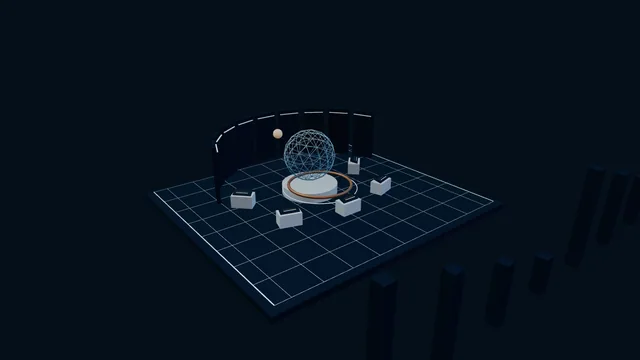
Earth Hall — existing dossier artwork
Rio's proposed civic setting

Earth Hall

Earth Hall is the Rio civic setting named in The Human II's visual-development brief. Its place in the developing world is distinct from the Concord's interworld chamber and from Rio Spaceport. It connects public responsibility on Earth with the human consequences of departure.

Open the full story
Mars Shield Control Room — existing dossier artwork
The people-facing space behind Mars defense

Mars Shield Control Room

The Mars Shield Control Room is the production setting that connects Mars's defense capability with the people and machines interpreting its results. It is not the Shield itself, a universal force field or a final engineering blueprint. Its narrative context is the second approaching threat in The Human II.

Open the full story
The War Room — existing dossier artwork
An ensemble space for decisions under pressure

The War Room

The War Room is a named production setting for The Human II's coordinated response to the Orvaan. It connects learning, leadership and restraint rather than introducing a new weapon. The website exhibit explores a shared planning space without fixing its location, occupants or final screenplay dialogue.

Open the full story
Dr. Ira Khan's Laboratory — existing dossier artwork
A place where understanding becomes a shared tool

Dr. Ira Khan's Laboratory

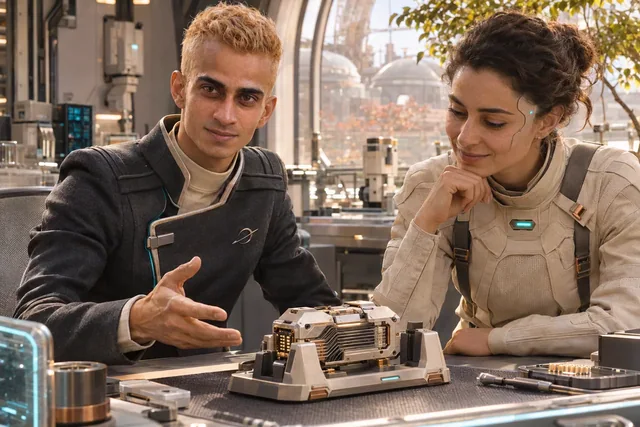
Dr. Ira Khan's laboratory is a named setting in The Human II's visual brief. It provides a place for scientific work, technological interpretation and the ensemble's learning process. The website does not settle Ira's unresolved personal relationship with Anil or present fictional Persona technology as proven science.

Open the full story
The CYBORG Factory — existing dossier artwork
The industrial setting behind a world of distinct machines

The CYBORG Factory

The CYBORG factory is a production setting for the scale of human machine-making in The Human II. Its story connects manufactured bodies with distinct Personas rather than treating every robot as the same individual. These new empty assembly-bay studies do not replace the artists' approved robot looks or brand assets.

Open the full story
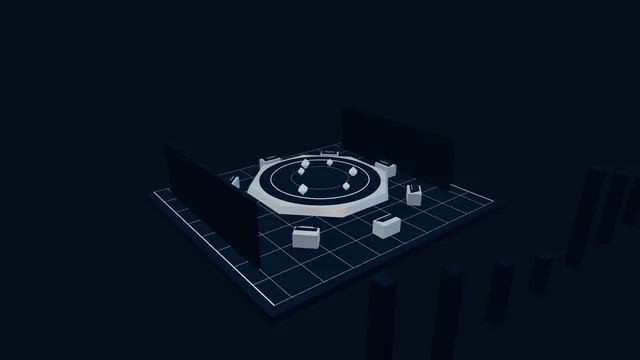
Olympus Observatory — existing dossier artwork
A Martian setting for observation and interpretation

Olympus Observatory

Olympus Observatory is the named Mars location in The Human II's visual-production brief. It is distinct from Olympus City and from the Mars Shield Control Room. This page explores observation as a narrative function without assigning an exact instrument, mountain coordinate or approved discovery sequence.

Open the full story
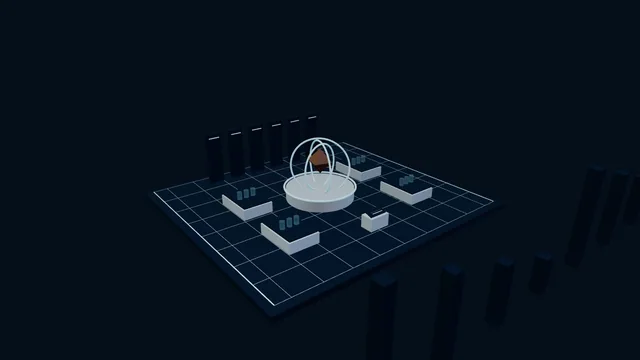
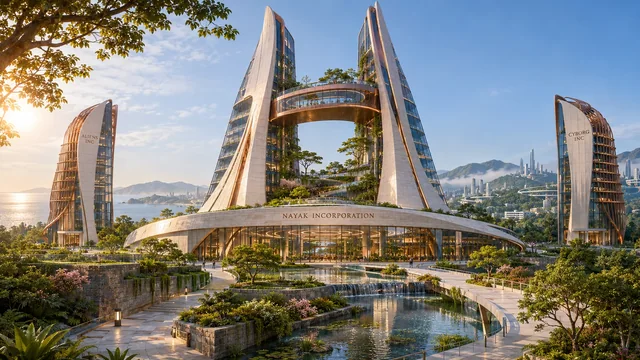
Nayak Incorporation Headquarters — development artwork, not final production approval
A company campus inside a larger civilization

Nayak Incorporation Headquarters

Nayak Incorporation headquarters is a named setting in The Human II's visual plan. Nayak is the parent of Aliens Inc and Cyborg Inc in the story. The campus expresses that connection without making a company the government, branding every building or fixing its exact city before owner approval.

Open the full story
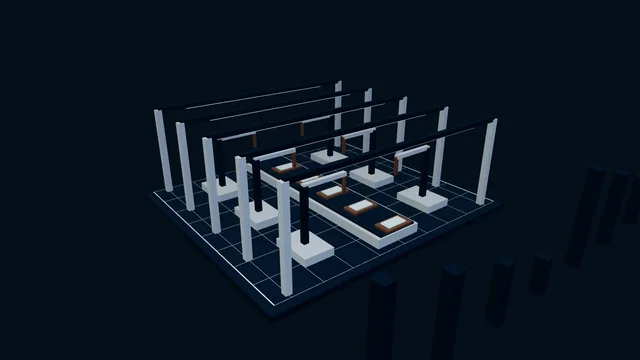
The Cruiser Bridge — development artwork, not final production approval
A human fleet interior with more than one voice

The Cruiser Bridge

The cruiser bridge is a named interior in The Human II's visual brief. It connects a human vessel, its crew and the ship's own machine personality. It is distinct from the war room and Kofi's cockpit; its final architecture must remain compatible with the fleet designers' approved ship rather than inventing a conflicting hull.

Open the full story
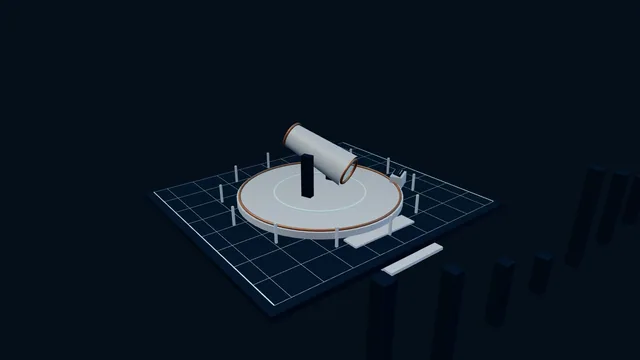
Kofi's Cockpit — development artwork, not final production approval
A pilot's place inside the evacuation story

Kofi's Cockpit

Kofi's cockpit is a named setting in The Human II's production brief. It brings the evacuation pilot's perspective close to the people, machines and choices involved in departure. The page does not invent a new ship identity, lock cockpit controls or settle which fleet design belongs to this interior before source reconciliation.

Open the full story
Rooftop Festivals — development artwork, not final production approval
Everyday celebration across Lagos, Seoul and Mumbai

Rooftop Festivals

The rooftop festivals are proposed everyday-life settings named for Lagos, Seoul and Mumbai in The Human II's visual brief. They show the civilization's shared future without making its cultures interchangeable. This is one guide to a group of scenes, not a claim that three separate production-approved festival sets already exist.

Open the full story
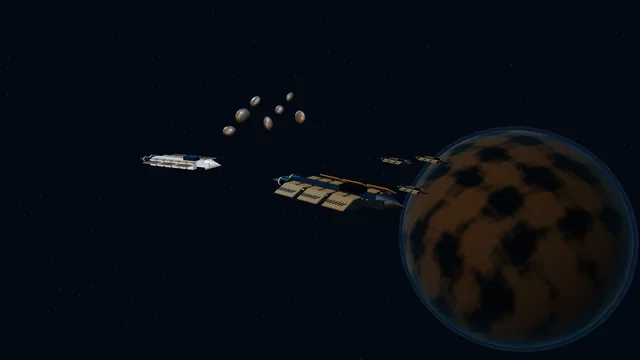
03 PUBLISHED SUBJECTS

Films

The Human — Part I — existing dossier artwork
Origin story · screenplay in development

The Human — Part I

Part I is the planned origin of The Human series. It looks from the present toward roughly the next 100–150 years, exploring Persona, human-derived digital identities and the arrival of Cyborg bodies. Its screenplay remains with the owner.

Open the full story
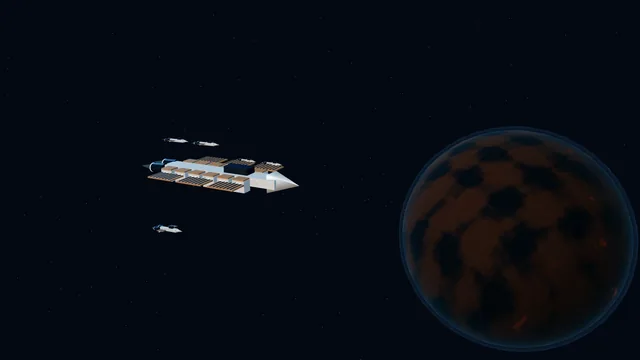
The Human — II — existing dossier artwork
Science-fiction film · current story focus

The Human — II

The Human - II is the current film and trailer development focus. The working chronology begins in 3026, follows humanity’s encounter with the Orvaan and closes with a proposed 3038 epilogue. Anil Cyborg is the lead within a global ensemble.

Open the full story
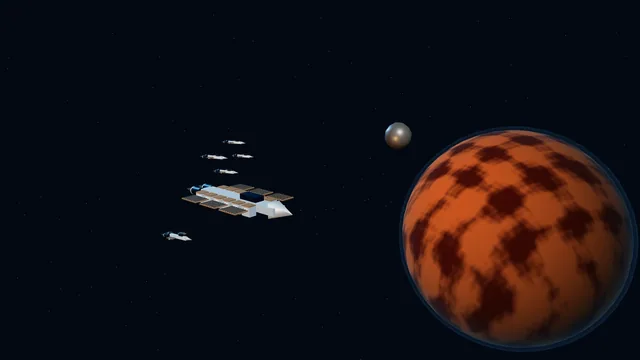
The Human — Part III — existing dossier artwork
Future continuation concept

The Human — Part III

Part III is the planned continuation after the Part II era. The owner’s direction includes a recovering Earth, a larger adversary and the possibility of ten to twenty Anil Cyborg copies. Those ideas must not be retroactively treated as Part II events.

Open the full story
09 PUBLISHED SUBJECTS

Scenes

Ash & Rescue — existing dossier artwork
The opening reversal

Ash & Rescue

The opening takes place after Earth’s catastrophe. Cyborg figures among the ruins initially look threatening, then their rescue work changes the meaning of the image. The approved direction makes AI an ally, not the cause of the disaster.

Open the full story
The Last Departure — existing dossier artwork
Evacuation sequence

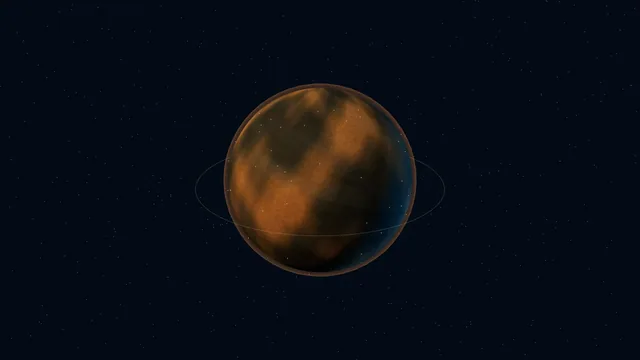
The Last Departure

The last-departure concept follows the final vessels escaping Earth as the disaster spreads. It connects the scale of evacuation with the human and artificial personalities deciding whether everyone who can be reached is aboard.

Open the full story
Mars Interception — existing dossier artwork
Defense and identity reveal

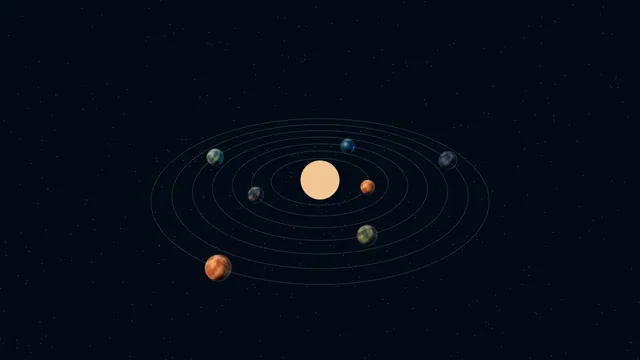
Mars Interception

The second asteroid attack reaches Mars after Earth’s evacuation. The Mars Shield’s response reveals that the danger is deliberate, while a proposed intervention by Anil makes his Cyborg identity visible beneath a human appearance.

Open the full story
Worlds in Motion — existing dossier artwork
Civilization and travel montage

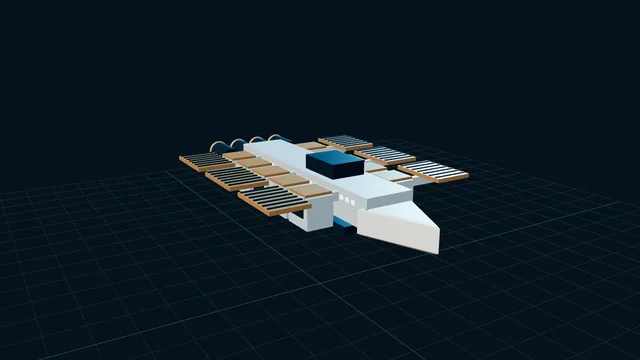
Worlds in Motion

Worlds in Motion explores the homes beyond Earth: twilight cities, ocean settlements, winged travel, an artificial ring and a sunless world with engineered warmth. It shows what the civilization values before focusing on what threatens it.

Open the full story
First Contact with the Orvaan — existing dossier artwork
Threat and interpretation

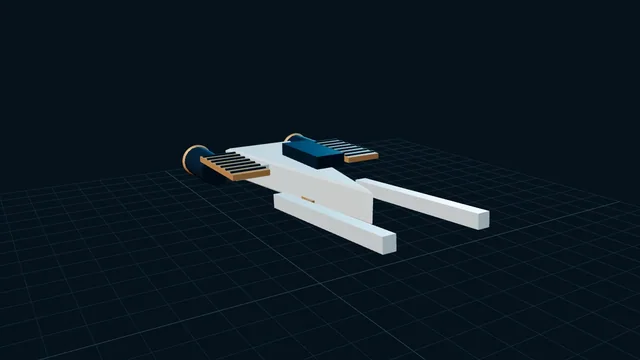
First Contact with the Orvaan

The first-contact thread connects the attacks with the Orvaan civilization. Their appearance, ships and threat-first doctrine should become visible as a society with decisions and internal roles, not only as an unseen force.

Open the full story
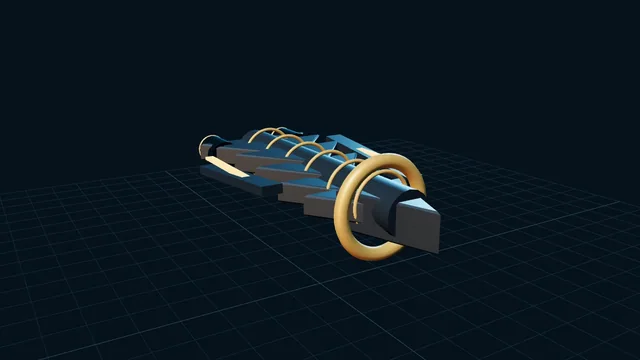
Six Days of Learning — existing dossier artwork
Research and adaptation

Six Days of Learning

Six Days of Learning is a working title for the rapid-learning arc. Humanity combines researchers, artificial intelligence and Cyborg capabilities to understand an adversary’s advantage and develop a different response.

Open the full story
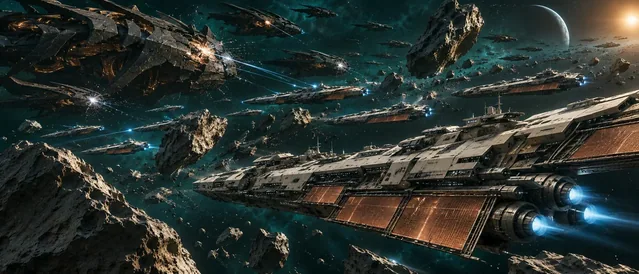
The Countermove — existing dossier artwork
Restraint in the developing climax

The Countermove

The Countermove is the developing climax’s change of direction: humanity learns not only to threaten with powerful technology, but to control the outcome and leave room for surrender. The intended resolution is not the destruction of the Orvaan worlds.

Open the full story
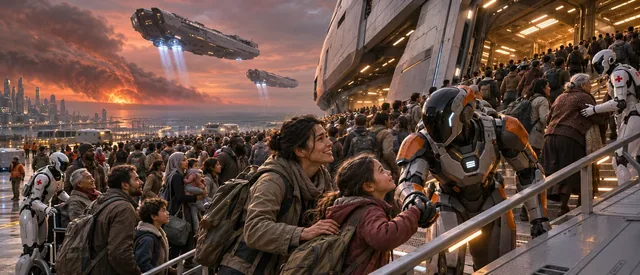
Persona Awakening — existing dossier artwork
Identity and embodied memory

Persona Awakening

Persona Awakening explores the proposed moment when a Core activates a Cyborg body. A remembered way of speaking can create recognition, while the story keeps a clear distinction between a learned Persona and the original human consciousness.
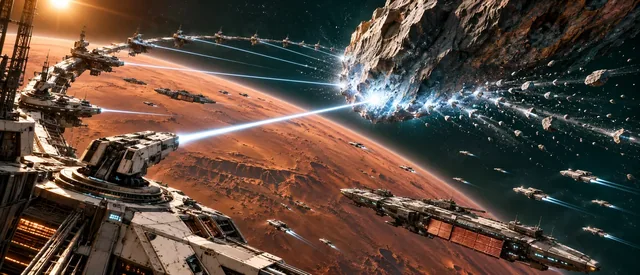
Open the full story
The First Green Line — existing dossier artwork
3038 epilogue concept

The First Green Line

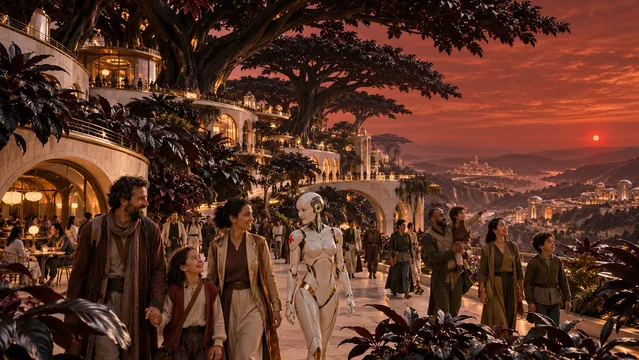
The Earth-recovery epilogue is a proposed closing image in 3038. It connects the war’s resolution with a delayed sign of renewal, rather than pretending that a devastated world is instantly restored.

Open the full story
01 PUBLISHED SUBJECTS

Reading guides

The Series Timeline — existing dossier artwork
One universe, several eras

The Series Timeline

The Human's development chronology separates the near-future first part from The Human II's 3026 story and 3038 epilogue. Later parts remain open, including the larger-adversary direction and multiple Anil copies proposed beyond Part II.

Open the full story
PEOPLE / PURPOSE / CONSEQUENCES

Six paths through the same universe.

Suggested reading routes, not a final scene order or a claim that every linked character appears together. Every step remains a normal page link.

PATH / 01

A life beyond its first body.

Begin with the human origin, then follow the distinction between a Persona and the body carrying it. Anil, Brick and Nani do not become interchangeable because the same technology connects their stories. The factory shows the scale of machine-making; the character pages preserve the individual histories. This is a suggested reading order, not a claim that these scenes occur consecutively in the film.

  1. 01Anil — the human origin
  2. 02Persona Core
  3. 03Anil Cyborg
  4. 04Brick
  5. 05Nani's Persona
  6. 06The CYBORG Factory
PATH / 02

From rescue to another home.

Follow the human scale of evacuation rather than jumping straight to a fleet in space. Rescue is a role, Kofi is a person, a spaceport is a threshold and a carrier has its own responsibilities. The route reaches Mars without treating arrival as the end of the story. The two named spaceports remain distinct locations, and their imagery is labelled according to its development status.

  1. 01Rescue Cyborgs
  2. 02Kofi Mensah
  3. 03Mumbai Spaceport
  4. 04Rio Spaceport
  5. 05Human Carrier
  6. 06Mars
PATH / 03

The future between the crises.

A better future needs ordinary places as well as extraordinary machines. Meet a classroom, the teacher who works there and the world around them, then move to the shared civic setting and its wider institution. A human-looking body does not automatically establish a Human Persona origin. Each linked page keeps its own facts, proposals and visual references separate.

  1. 01Proxima b
  2. 02The Proxima Teacher
  3. 03The Proxima Classroom
  4. 04The Household Companion
  5. 05The Concord Chamber
  6. 06The Concord
PATH / 04

Every silhouette has a purpose.

A rescue shuttle, a civilian carrier, a cruiser and an interceptor answer different needs. The enemy fleet does not become the same family of designs because all of them travel through space. This path connects the vessel dossiers without inventing capacities, real engineering performance or final production approval. Existing models and visual studies are labelled before they are opened.

  1. 01The Rescue Shuttle
  2. 02Human Carrier
  3. 03Human Cruiser
  4. 04Interceptor
  5. 05Orvaan Capital Ship
  6. 06Orvaan Scout
PATH / 05

Understand the enemy. Choose the ending.

Start with distinct adversary identities rather than one face standing for an entire civilization. Then move through the ensemble’s learning process and the room where understanding can inform decisions. The current Countermove direction preserves the important distinction between the capacity to destroy and the decision to stop. These links are a thematic path, not a newly approved screenplay sequence.

  1. 01Prime Sereth
  2. 02Vorak
  3. 03Ilva
  4. 04Six Days of Learning
  5. 05The War Room
  6. 06The Countermove
PATH / 06

A world is not always a planet.

A planetary system, a moon, a named world and an engineered habitat are not interchangeable. This route follows the different kinds of homes represented in the story and returns to the responsibility of recovering Earth. Where the source names only a collection of worlds, the website keeps it a collection instead of inventing individual planetary biographies.

  1. 01TRAPPIST-1
  2. 02Epsilon Moon
  3. 03Teegarden b
  4. 04Haven
  5. 05Lantern
  6. 06The First Green Line
ALL 18 PLAYABLE WEBSITE STUDIES

A world you can watch.

All fifteen original Cinema studies and the three newer set walkthroughs. Each preview is silent and starts only when selected. Geometry studies, artwork motion and room walkthroughs keep their own labels; none is final feature-film footage.

DIRECT ANSWERS / CONTENT STATUS

Know what you are exploring.

Does this atlas include every finished film asset?

No. It indexes every detailed subject currently published in the website archive. Unnamed worlds, missing approved portraits and unfinished film sequences are not made complete by appearing in a catalogue.

Where did the original photographs go?

They remain on their individual character pages and in the complete cast and adversary photograph collections. This atlas adds discovery links; it does not replace, hide or reassign the original photographs.

Are the videos actual finished movie scenes?

No. The programme contains clearly labelled website development studies: moving geometry, artwork motion and procedural set walkthroughs. An existing study is not described as newly filmed footage.

Are these reading paths the screenplay order?

No. They connect related published subjects for exploration. Their order does not approve a new scene, an unconfirmed personal relationship or a production design.

SOURCE-BOUND DISCOVERY

One story record. Clear boundaries.

The current Cyborg series Bible governs the story; later owner decisions take precedence over older drafts. The source keeps one active Anil Cyborg in Part II, distinguishes a Human Persona from proof of returned consciousness and treats machine personalities as part of the ensemble.

The atlas inherits each page’s existing classification instead of inventing missing facts to fill a list. A system, moon, habitat and planet remain different kinds of setting. Proposed names and production concepts keep their review status.

Read the canon and media notes ↗
THE HUMAN / VISUAL DEVELOPMENT

Motion study

Open the complete scene ↗
CAST / ADVERSARIES / VESSELS / WORLDS

See the story in more detail.

31 existing profiles now include dedicated development galleries: 172 studio images, with original photographs retained and review status visible.

Enter the visual library ↗
Gallery
Selected artwork