Observe
The room connects a distant threat with shared understanding.
 THE HUMANALIENS STUDIO
Meet the people. Discover their worlds.
Follow the spacecraft, scenes and ideas that connect them.
A film universe in development. Artwork and short motion studies are not final movie footage.
The difference between a warning and a way through.
The people-facing space behind Mars defense
A film world in development / Original rendered set study + interactive geometry
The Mars Shield Control Room is the production setting that connects Mars's defense capability with the people and machines interpreting its results. It is not the Shield itself, a universal force field or a final engineering blueprint. Its narrative context is the second approaching threat in The Human II.
The people-facing space behind Mars defense. Follow its connections to the wider film world, from everyday life to the choices made under pressure.
From a distance, an interception can look like a single event: a threat approaches and a defense responds. The control-room setting restores the human work between those images. Information must be interpreted, uncertainty communicated and results understood. The story distinguishes Mars from Earth because Mars has a defense capability Earth lacked. That difference gives the room emotional weight as well as a technical purpose. It is a place where the possibility of survival is visible, while the memory of Earth's loss remains present. A successful interception is not a reversal of what has already happened.
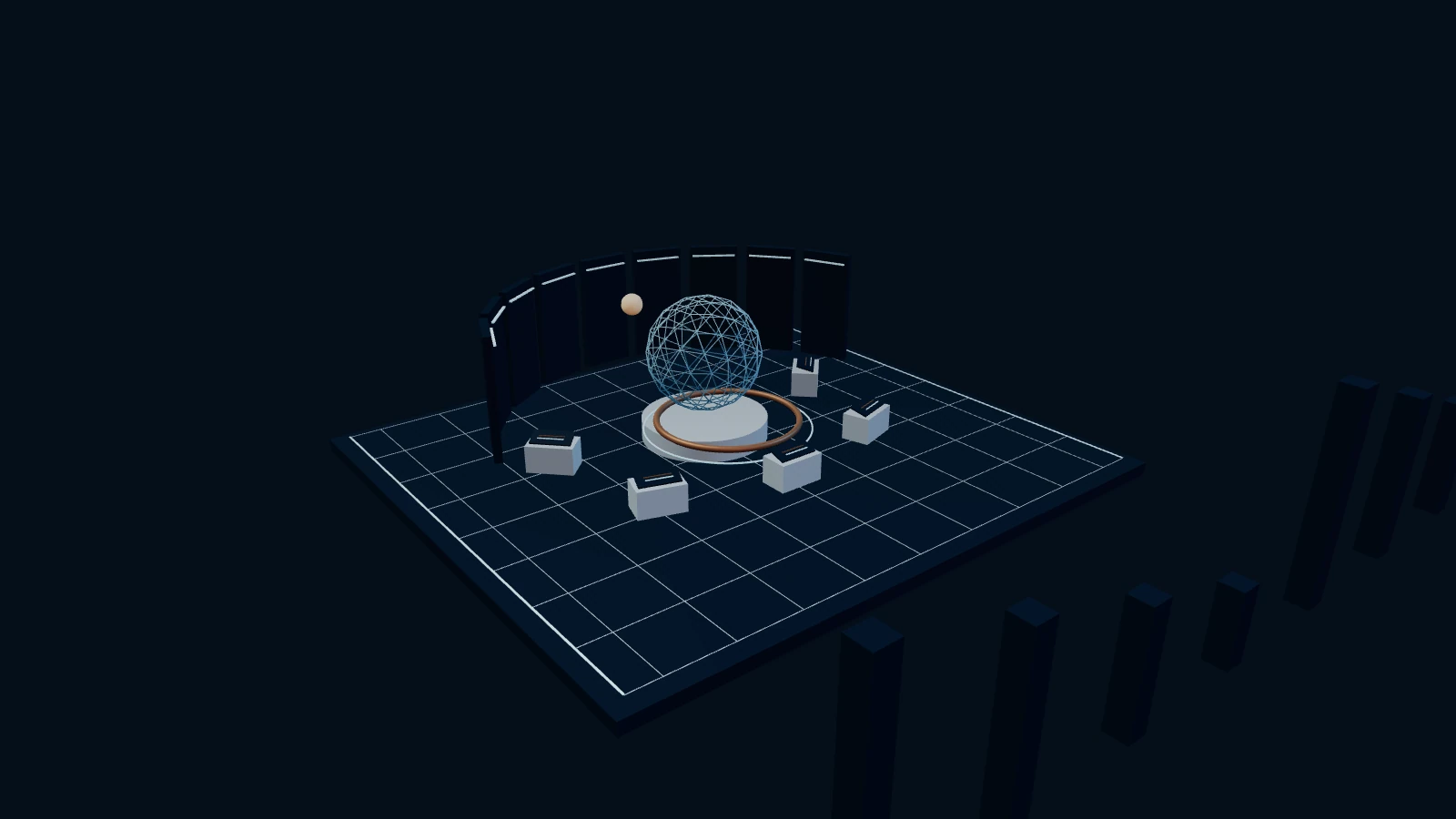
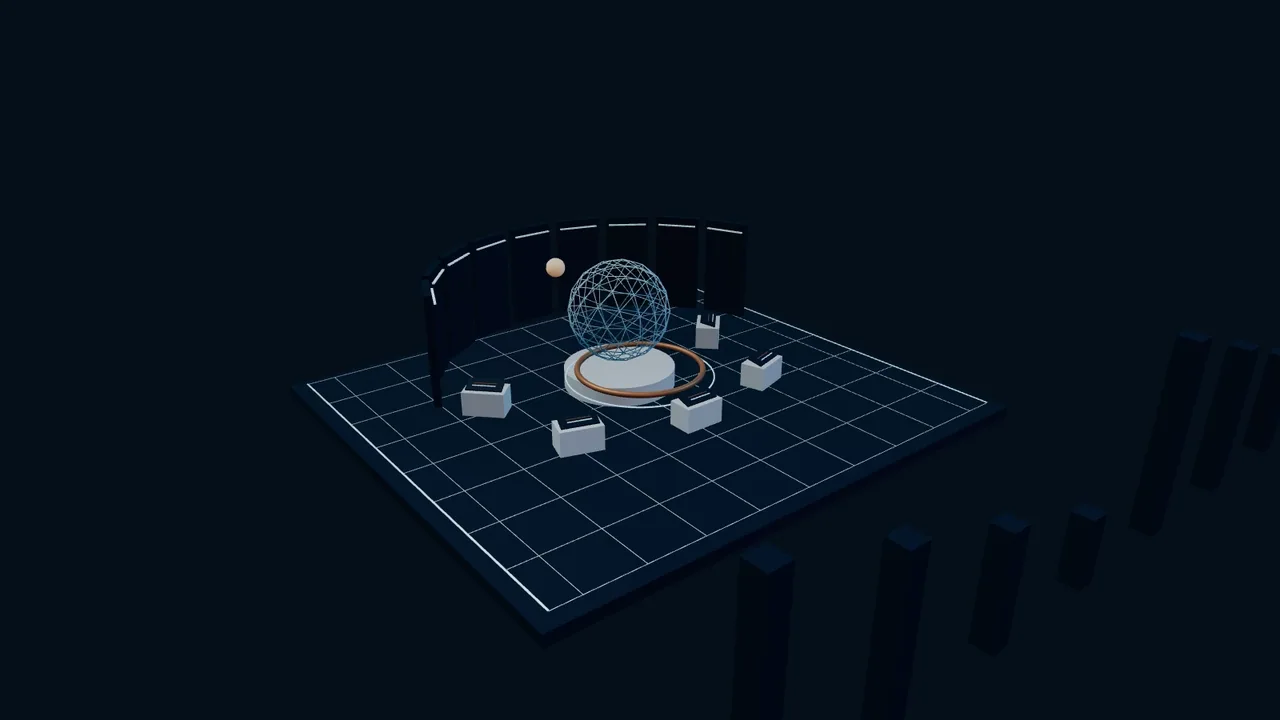
The source repeatedly separates advanced science fiction from magic. A control display can be stylized, but it should not quietly turn the Shield into an all-purpose protective bubble. The room study uses an abstract globe, a curved display wall and distinct working positions. Its moving marker is a presentation cue only: it does not calculate an intercept, prescribe a firing solution or claim physically accurate threat timing. In a completed scene, the distinction between measured information and interpretation can create tension without relying on fabricated technical precision.
An outcome on a display is not the same as a person's experience of safety. Someone watching from a shelter, someone aboard an arriving vessel and someone interpreting a system result may learn about the same event at different moments. This is a useful editorial distinction for the setting, not a new timing specification. It connects the control room with the city and fleet pages while leaving the screenplay free to choose whose perspective carries each moment of understanding.
The film's visual direction says not to draw visible laser beams across empty space. The consequence matters for the room: a display, an observed change on a distant surface and a character's response can communicate activity without putting a luminous weapon line into the vacuum. This website model contains no such beam. It remains an interior exhibit, not a simulation of the defense system. The accompanying Mars Interception clip supplies the existing scene context and keeps its own previsualization label. Neither asset is promoted to scientifically validated footage by appearing beside explanatory text.
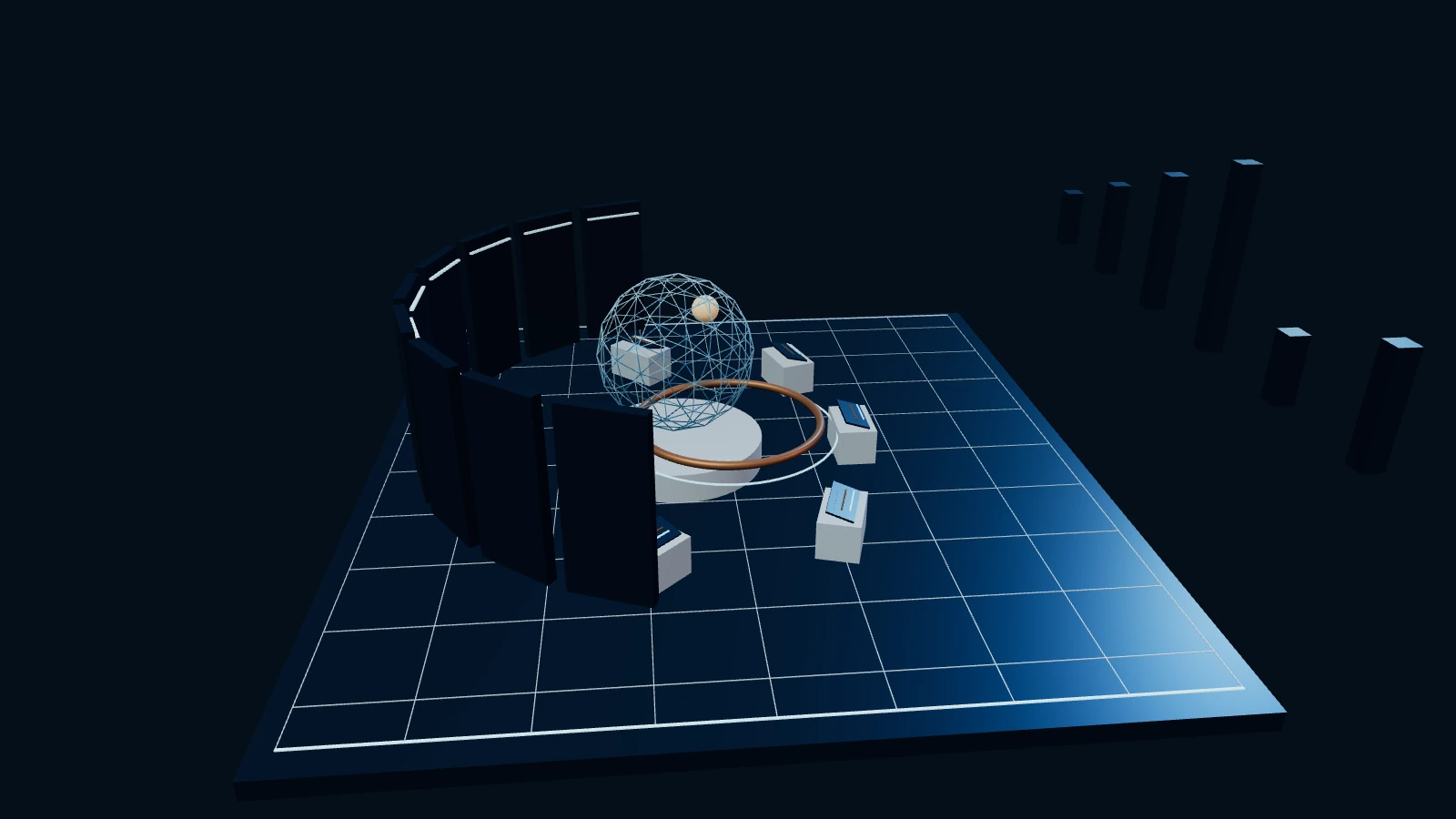
The larger story depends on scientists, leaders, pilots, AI and robots learning together. A defense room should make that collaboration legible rather than concentrating every capability in one console or one hero. The proposed arrangement gives several positions a view of a shared center. None is labelled as a final character seat. Anil's Mars arc, Zara's leadership context and the fleet's response connect to the setting through their separate dossiers. Those links are narrative relationships, not proof that all of them occupy the room simultaneously in an approved shot.
The three angle studies separate entry, shared display and overview. The interactive room adds camera orbit, zoom and a manually controlled display phase. A six-second silent walkthrough moves the camera through a bounded arc while the abstract globe changes orientation. It is newly rendered from the same website geometry, not a recycled still with a zoom applied. The model deliberately avoids numerical weapon readouts, final uniforms and unapproved portraits. Its value is spatial: visitors can see how a room might support communication while the precise architecture remains open to the production team.
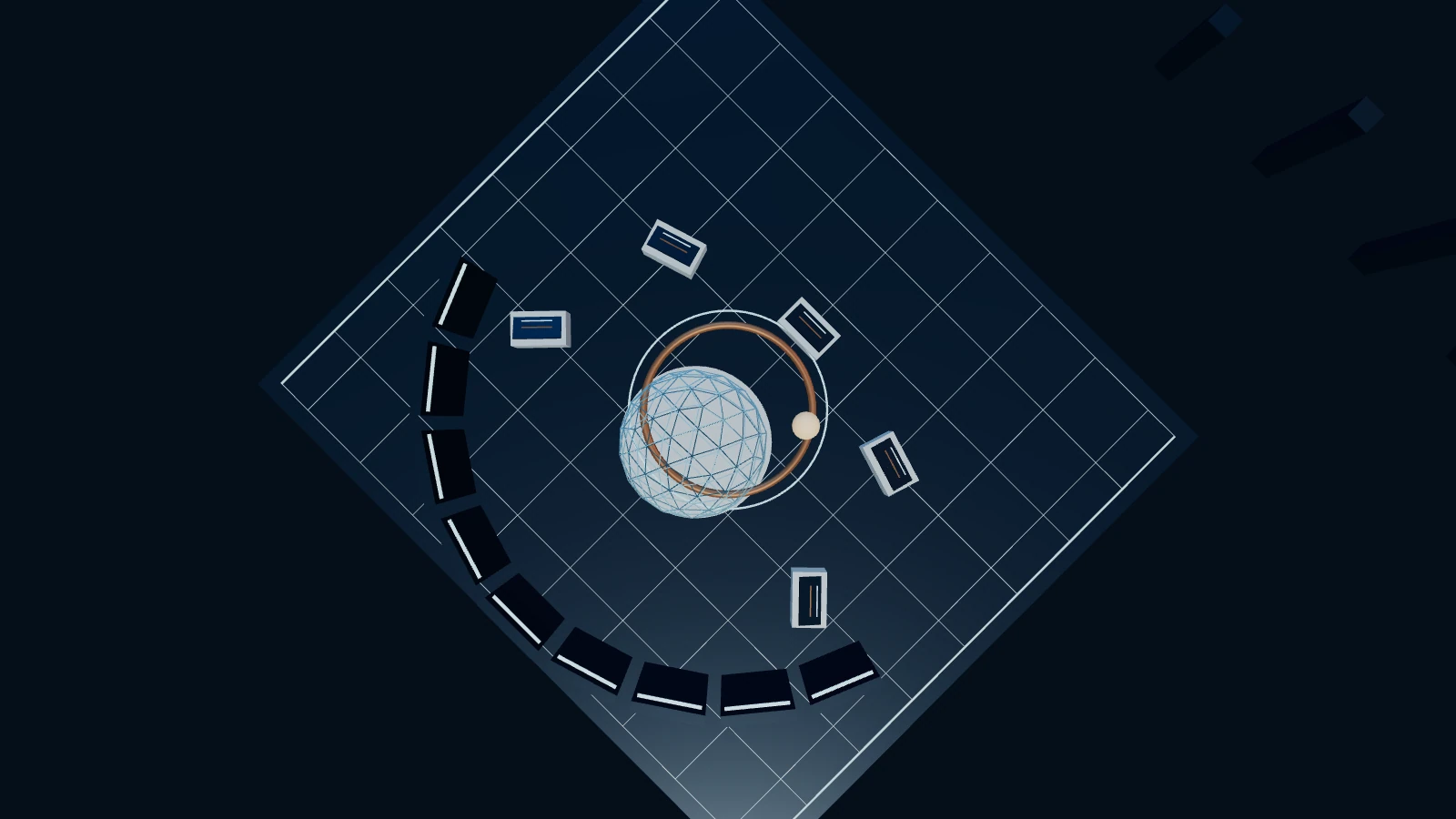
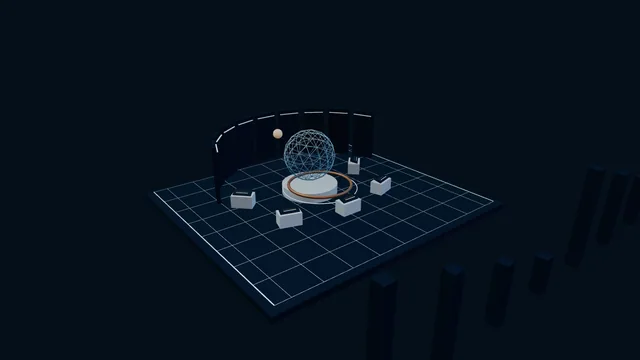
Static artwork remains available without 3D. The exhibit is an abstract website schematic, not a final model, approved map or physical simulation.
Drag horizontally or use arrow keys to inspect. Vertical touch scrolling remains native. The phase control changes geometry; it is not a claim about story timing.
The room connects a distant threat with shared understanding.
Different capabilities meet around the same information.
An apparent success still has consequences to understand.
Watch The Mars Interception as an eight-second, silent 3D website previsualisation. Read its source-grounded story and explore all four beats; not final movie footage.
Related story context. This existing clip is not a new scene at Mars Shield Control Room or a completed character performance.
Read the full watch page ↗These 4 existing CG4008 views belong to shield-control. They are linked from their original studio files, not newly generated by this page. Review labels, native dimensions and upscale history remain visible. The older context gallery and schematic are kept separately.
Open the owning studio collection ↗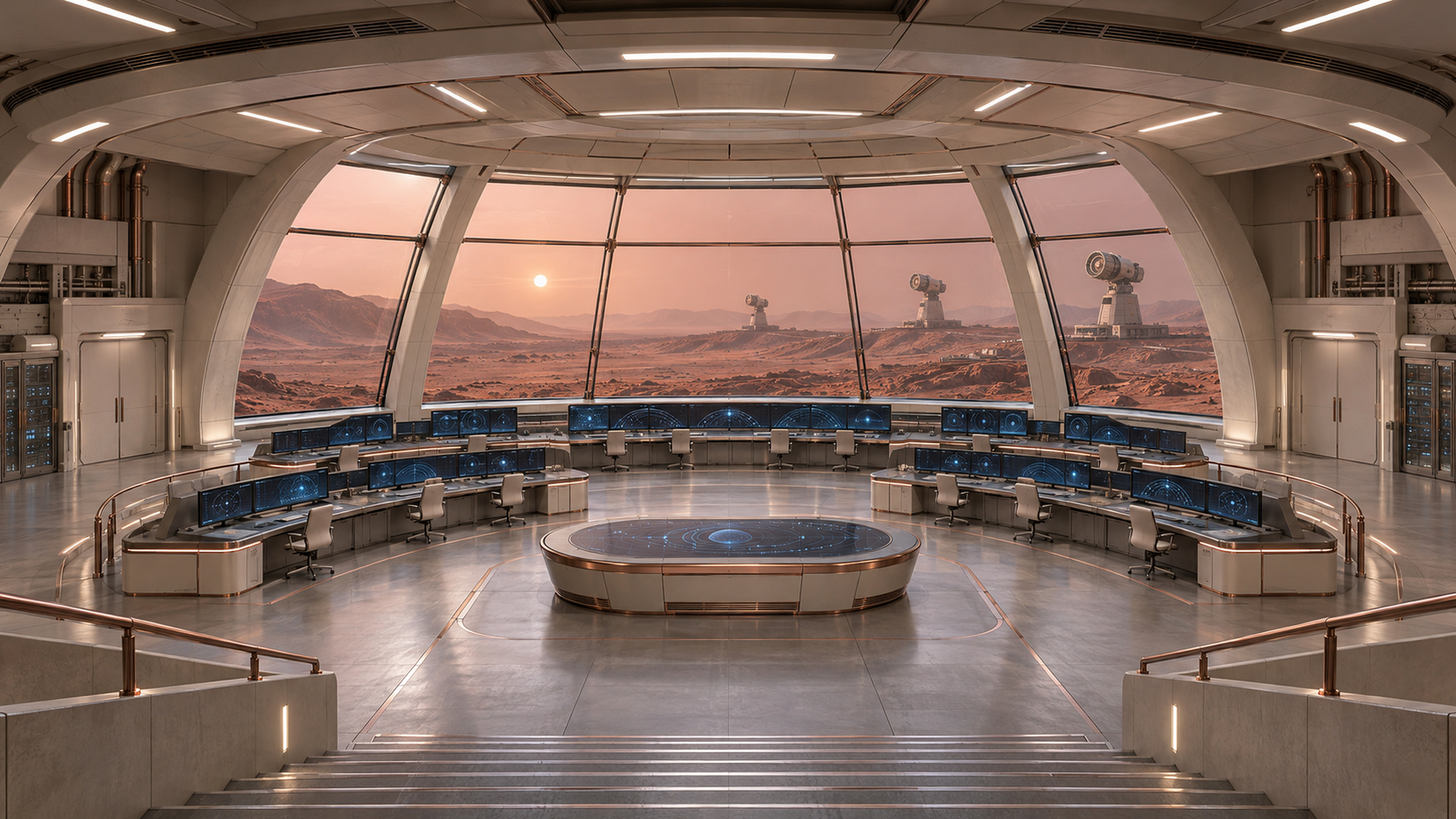
The protected control room looks toward physical optical defense towers on barren Mars. It has accessible circulation, practical tracking screens and no visible laser beam.
Delivery 3840 × 2160 · Native 1672x941 · Upscaled, not native 4K.
ImageMagick Lanczos resize to 3840x2160, subpixel aspect trim, restrained unsharp 0x0.55+0.30+0.015; not native 4K
Original artwork by ChatGPT image generation; studio owner CG4008. Approval remains pending.
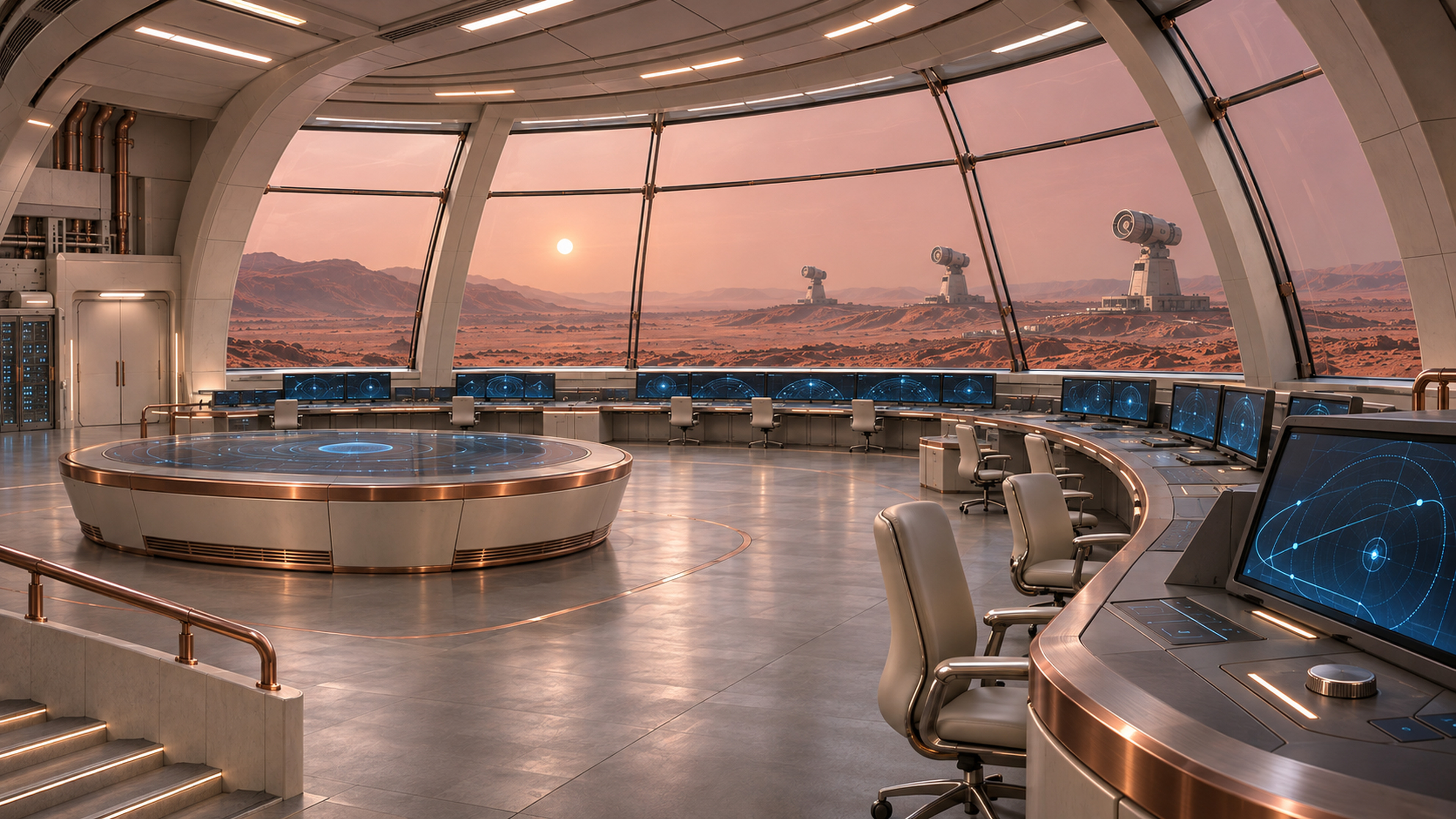
Right-side console angle preserves the central planning table, panoramic glazing and tower silhouettes. The room is shown before its crew arrives.
Delivery 3840 × 2160 · Native 1672x941 · Upscaled, not native 4K.
ImageMagick Lanczos resize to 3840x2160, subpixel aspect trim, restrained unsharp 0x0.55+0.30+0.015; not native 4K
Original artwork by ChatGPT image generation; studio owner CG4008. Approval remains pending.
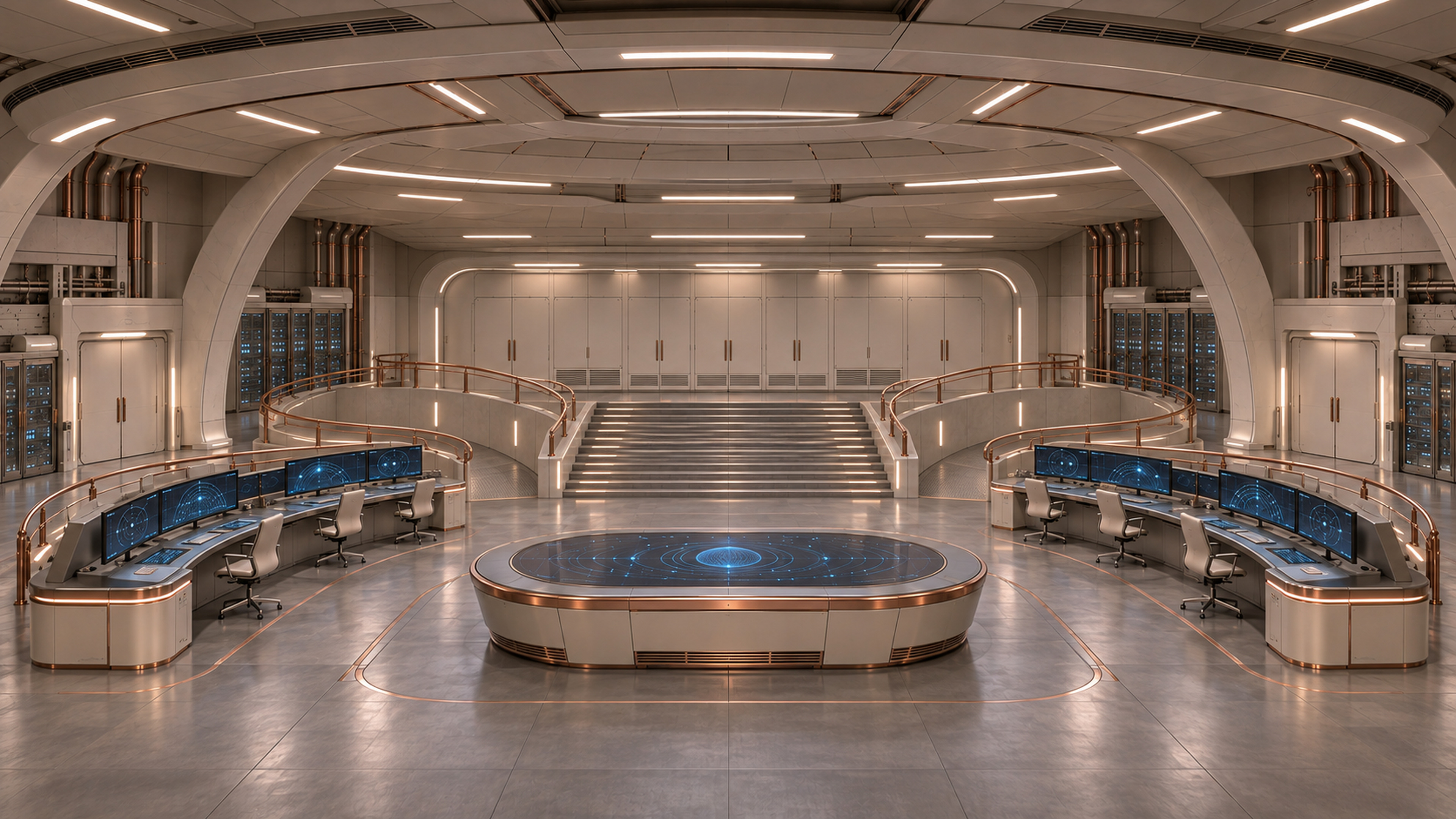
Reverse view toward the rear entry, accessible side circulation and technical cabinets. These are architecture studies, with no cast identity changes.
Delivery 3840 × 2160 · Native 1672x941 · Upscaled, not native 4K.
ImageMagick Lanczos resize to 3840x2160, subpixel aspect trim, restrained unsharp 0x0.55+0.30+0.015; not native 4K
Original artwork by ChatGPT image generation; studio owner CG4008. Approval remains pending.
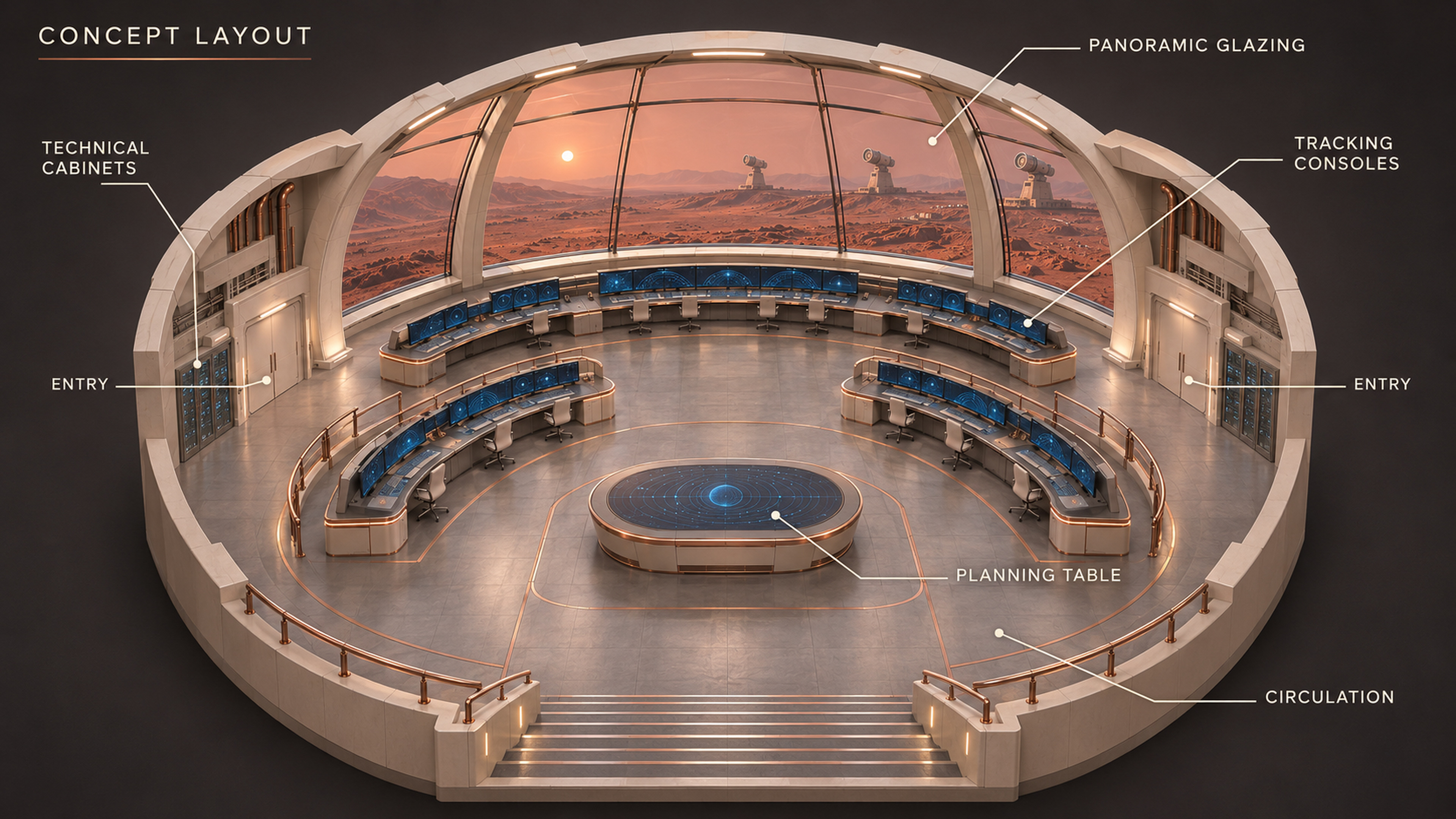
Conceptual location layout of the control room, with window, tracking consoles, planning table, circulation and technical zones. A visual staging guide, not an engineering plan.
Delivery 3840 × 2160 · Native 1672x941 · Upscaled, not native 4K.
ImageMagick Lanczos resize to 3840x2160, subpixel aspect trim, restrained unsharp 0x0.55+0.30+0.015; not native 4K
Original artwork by ChatGPT image generation; studio owner CG4008. Approval remains pending.
This page does not describe a universal force field. The story gives Mars a specific defense capability and imposes limits on its technology.
No. The globe and markers are abstract visualization. They provide no operational targeting data or physical prediction.
The source's visual rule avoids visible laser beams in vacuum. The room communicates through its displays and the narrative consequences of defense.
No. It is a newly rendered silent website scene study made from procedural geometry, separate from final sets, actors and cinematography.
The control-room location is named in the production brief. Console arrangement, screen graphics and motion are website proposals. The exhibit supplies no weapon specification, exact threat timing or final cast blocking.
Source: the reviewed The Human series story record, sections 5, 6, 18, 21, 26; Task/CG4008/TASK.md. Later owner decisions take precedence over older drafts. The five reading chapters are editorial interpretation of that record, not newly approved screenplay scenes.
These pages describe a fictional world. They do not announce a release date, a cast contract, real exoplanet settlements or completed production assets.
Read the story and media policy ↗Explore the places, shared roles and everyday systems that connect the larger movie universe.
Open Worldbuilding ↗144 newly rendered frames at 24 fps. The camera and scene geometry change together. This is a website architectural study, not an actor performance, an approved movie set or finished film footage.
The interactive model above and this clip are generated from the same geometry source. The source hashes and actual frame count are recorded with the release.