Before arrival
A settled Martian community exists in its own right.
 THE HUMANALIENS STUDIO
Meet the people. Discover their worlds.
Follow the spacecraft, scenes and ideas that connect them.
A film universe in development. Artwork and short motion studies are not final movie footage.
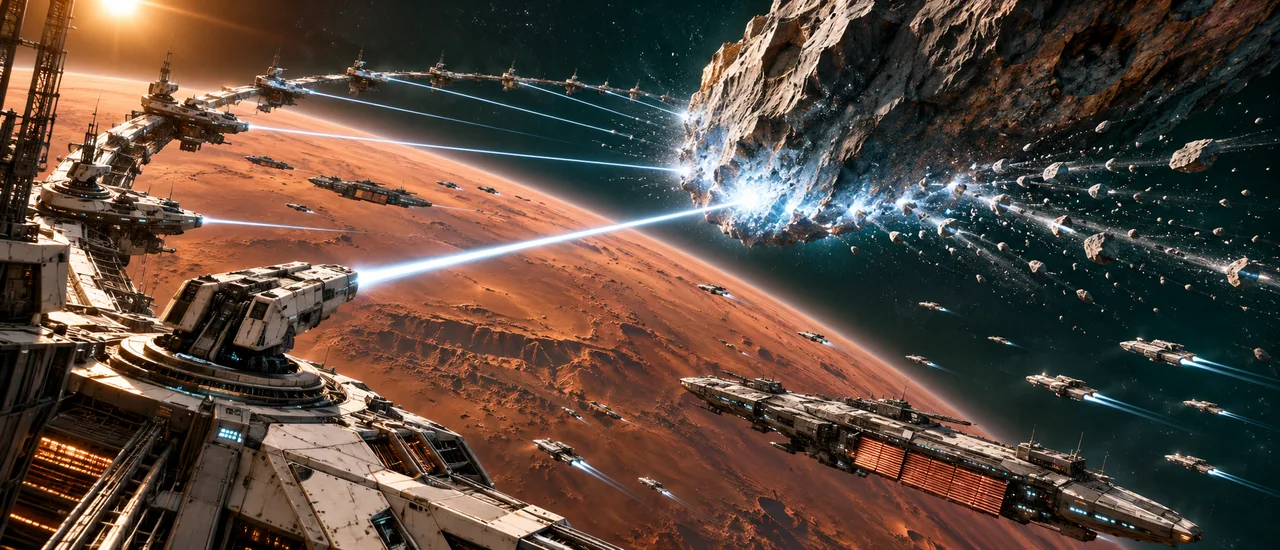
A second home. Not a second chance to lose one.
A Martian city in the developing film world
A film world in development / Context artwork + interactive schematic
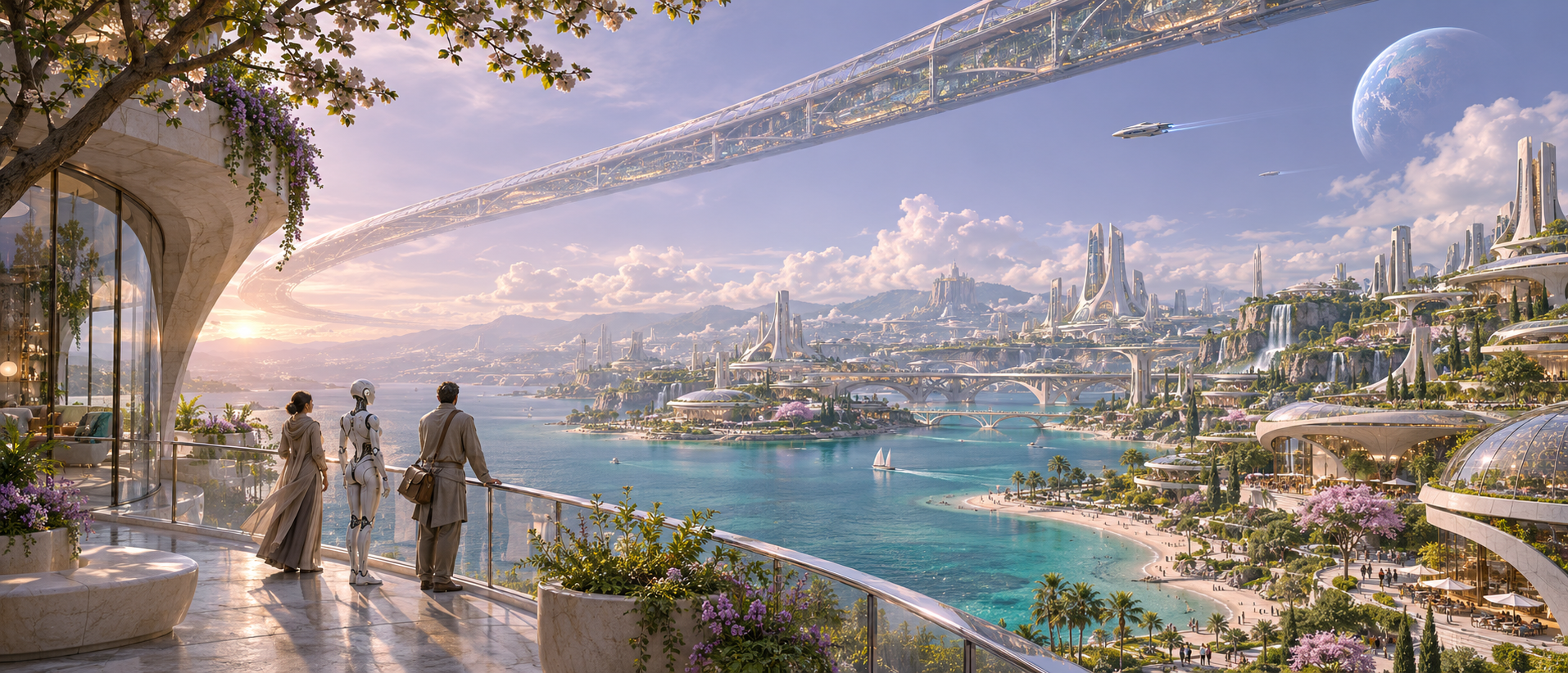
Olympus City is a named Martian setting in The Human II's current visual-development plan. Its story context is a settled Mars, Earth's arriving survivors and a defense capability Earth did not have. The city layout remains a website interpretation, not an approved geographic map.
A Martian city in the developing film world. Follow its connections to the wider film world, from everyday life to the choices made under pressure.
Mars is not an empty landing pad waiting for Earth's story to arrive. Humanity has already made a home here. That changes the meaning of an evacuation: arriving people enter another community, with its own routines, leaders and responsibilities. Olympus City gives that community a place to be imagined. The city should feel inhabited before it feels threatened. In this reading of the setting, a lighted window matters as much as a distant defense installation, because both belong to someone else's ordinary day.
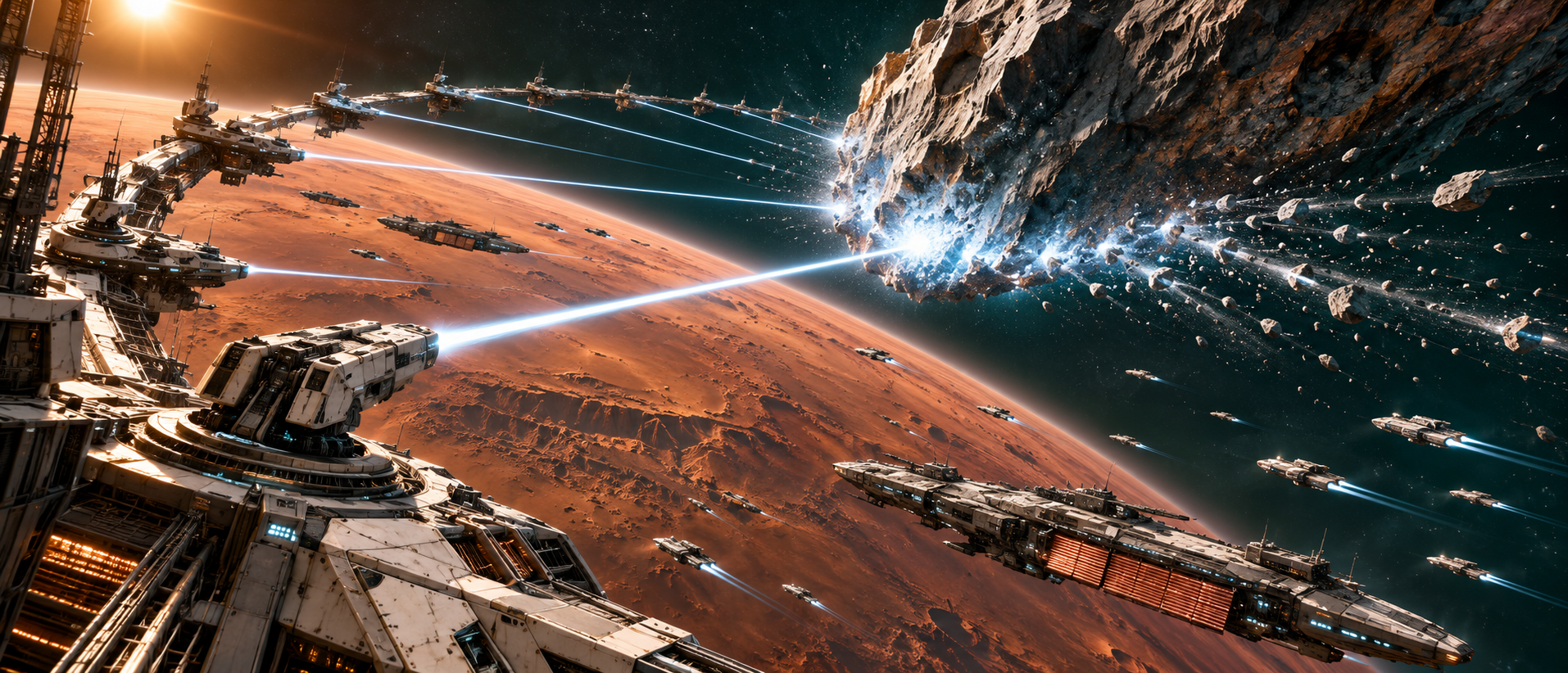
The journey from Earth joins two kinds of uncertainty. Survivors do not know what remains behind them, while Mars cannot know whether the danger has ended. A spaceport is therefore a threshold rather than a victory screen. The surrounding city holds the question that follows rescue: where do people go next? Shelter, care, reunion and trustworthy information are useful ways to read this environment. They are narrative functions, not announcements of a finalized arrival sequence, population figure or municipal plan.
The story distinguishes Earth's catastrophe from the interception at Mars. Mars possesses the capability to break the incoming threat, making the second event both a test and a revelation. Survival does not make the earlier loss disappear. Instead, it demonstrates how differently prepared worlds meet a connected danger. Olympus City belongs on the human side of that comparison: what looks like an engineering success from orbit is the preservation of homes and lives when seen from a street or a shelter.
Anil Cyborg's Mars story includes a human-looking body revealed as robotic, and a dangerous task performed without a breathing suit. These are important character beats, but they should not make the city merely his backdrop. Scientists, pilots, civic leaders, medical teams and ordinary residents all contribute to the larger response. The current visual plan names Olympus City as a setting for Anil's collection; it does not lock the location of every event, the street plan or a solitary-hero version of the crisis.
The interactive exhibit reduces a settlement to terraces, towers, traffic nodes and a shared horizon. Moving its phase changes the relationship between those elements; changing the camera changes which spaces appear connected. These shapes are a website schematic, not the final look of Olympus City. The existing Mars and fleet artwork provides atmosphere alongside it. Treat the two together as a way to follow the story's spatial relationships, while leaving detailed architecture, transport capacities and exact geography open for production design.
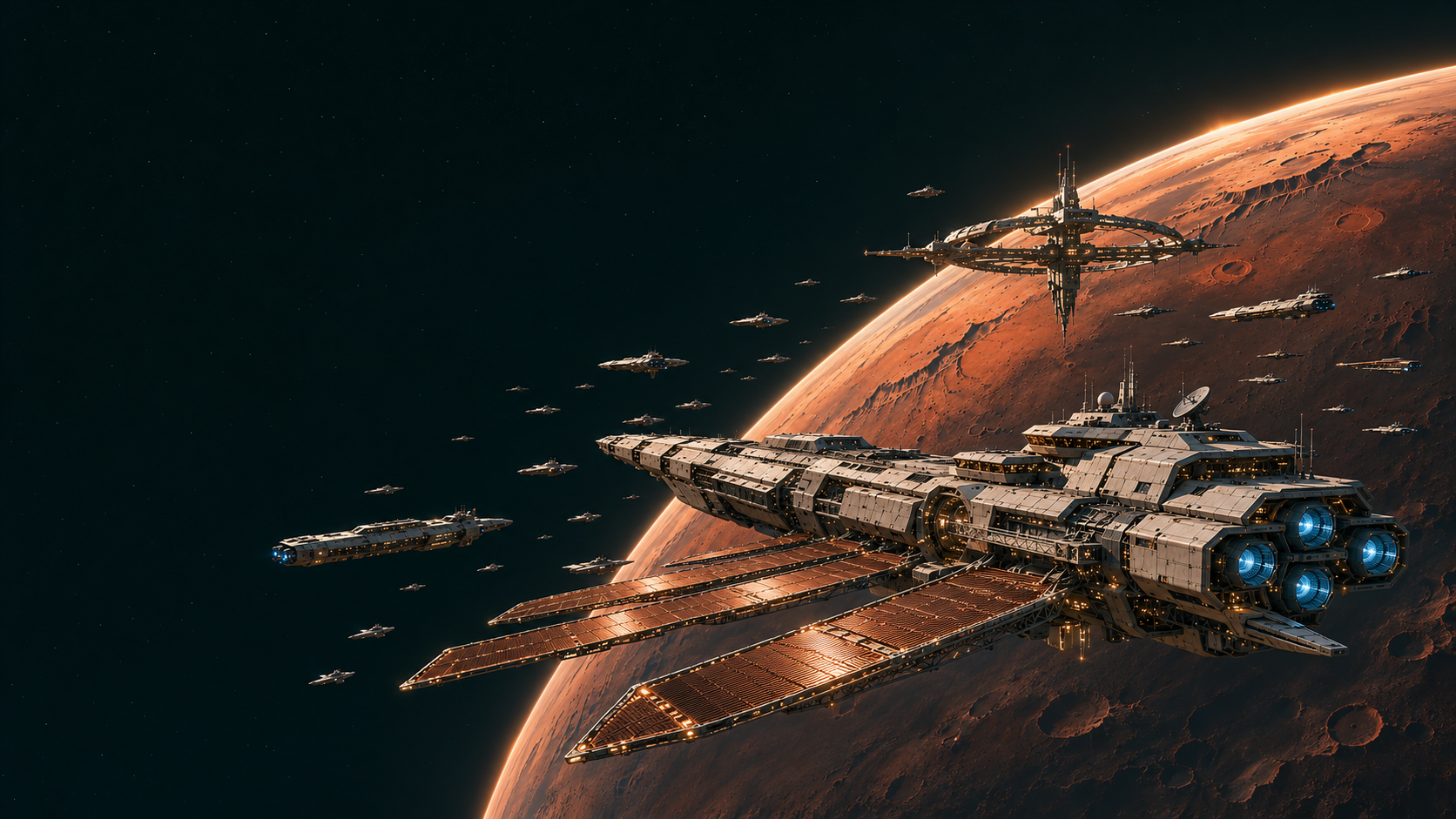
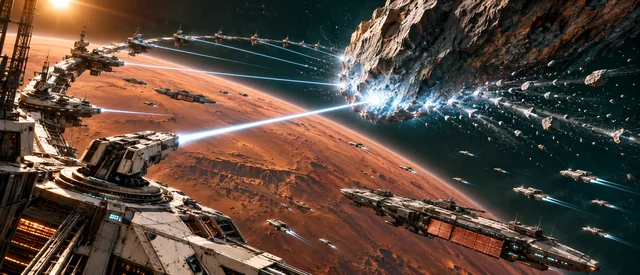
Static artwork remains available without 3D. The exhibit is an abstract website schematic, not a final model, approved map or physical simulation.
Drag horizontally or use arrow keys to inspect. Vertical touch scrolling remains native. The phase control changes geometry; it is not a claim about story timing.
A settled Martian community exists in its own right.
Earth's evacuation reaches a world with its own defense responsibilities.
Preserving a city is the reason the machinery matters.
Watch The Mars Interception as an eight-second, silent 3D website previsualisation. Read its source-grounded story and explore all four beats; not final movie footage.
Related story context. This existing clip is not a new scene at Olympus City or a completed character performance.
Read the full watch page ↗No. This page describes a fictional setting in The Human II's visual-development plan, not an existing settlement or a real colonization project.
No. The moving exhibit is a schematic arrangement for the website. It establishes no coordinates, population, street names or production-approved city plan.
The current visual task lists Olympus City among his proposed story settings. His broader Mars arc includes the Cyborg reveal, but individual shot locations remain open.
The Mars world dossier, Mars Interception scene and Zara Malik character page connect this setting with the wider crisis and its human leadership.
Olympus City is named in the current visual-development task. The city model, districts and camera staging on this page are illustrative. They do not approve a production design, put the city at a specific coordinate or fix every Mars scene to this location.
Source: the reviewed The Human series story record, sections 3, 5, 28.2; TheHuman Task/CG4001/TASK.md. Later owner decisions take precedence over older drafts. The five reading chapters are editorial interpretation of that record, not newly approved screenplay scenes.
These pages describe a fictional world. They do not announce a release date, a cast contract, real exoplanet settlements or completed production assets.
Read the story and media policy ↗Explore the places, shared roles and everyday systems that connect the larger movie universe.
Open Worldbuilding ↗