Question
New evidence interrupts assumptions.
 THE HUMANALIENS STUDIO
Meet the people. Discover their worlds.
Follow the spacecraft, scenes and ideas that connect them.
A film universe in development. Artwork and short motion studies are not final movie footage.
Understanding changes the shape of a battle.
An ensemble space for decisions under pressure
A film world in development / Original rendered set study + interactive geometry
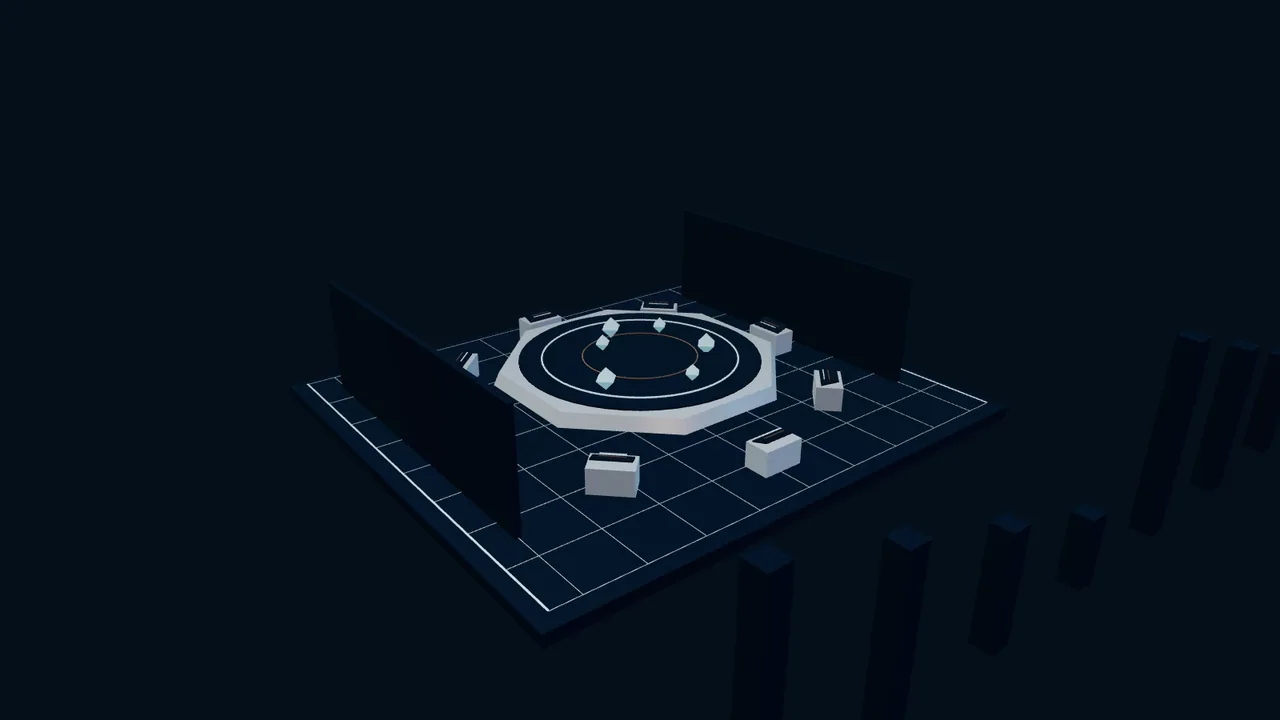
The War Room is a named production setting for The Human II's coordinated response to the Orvaan. It connects learning, leadership and restraint rather than introducing a new weapon. The website exhibit explores a shared planning space without fixing its location, occupants or final screenplay dialogue.
An ensemble space for decisions under pressure. Follow its connections to the wider film world, from everyday life to the choices made under pressure.
Humanity's peaceful development is central to the film. A war room therefore introduces a pressure that the wider civilization has not organized its daily life around. The room should not make ordinary cooperation disappear as soon as danger arrives. Its dramatic purpose is to connect that existing habit with unfamiliar consequences. Scientists need to explain what they understand; commanders need to identify what remains uncertain; leaders need to consider the lives behind the options. The room is useful precisely because none of those responsibilities can substitute for all the others.
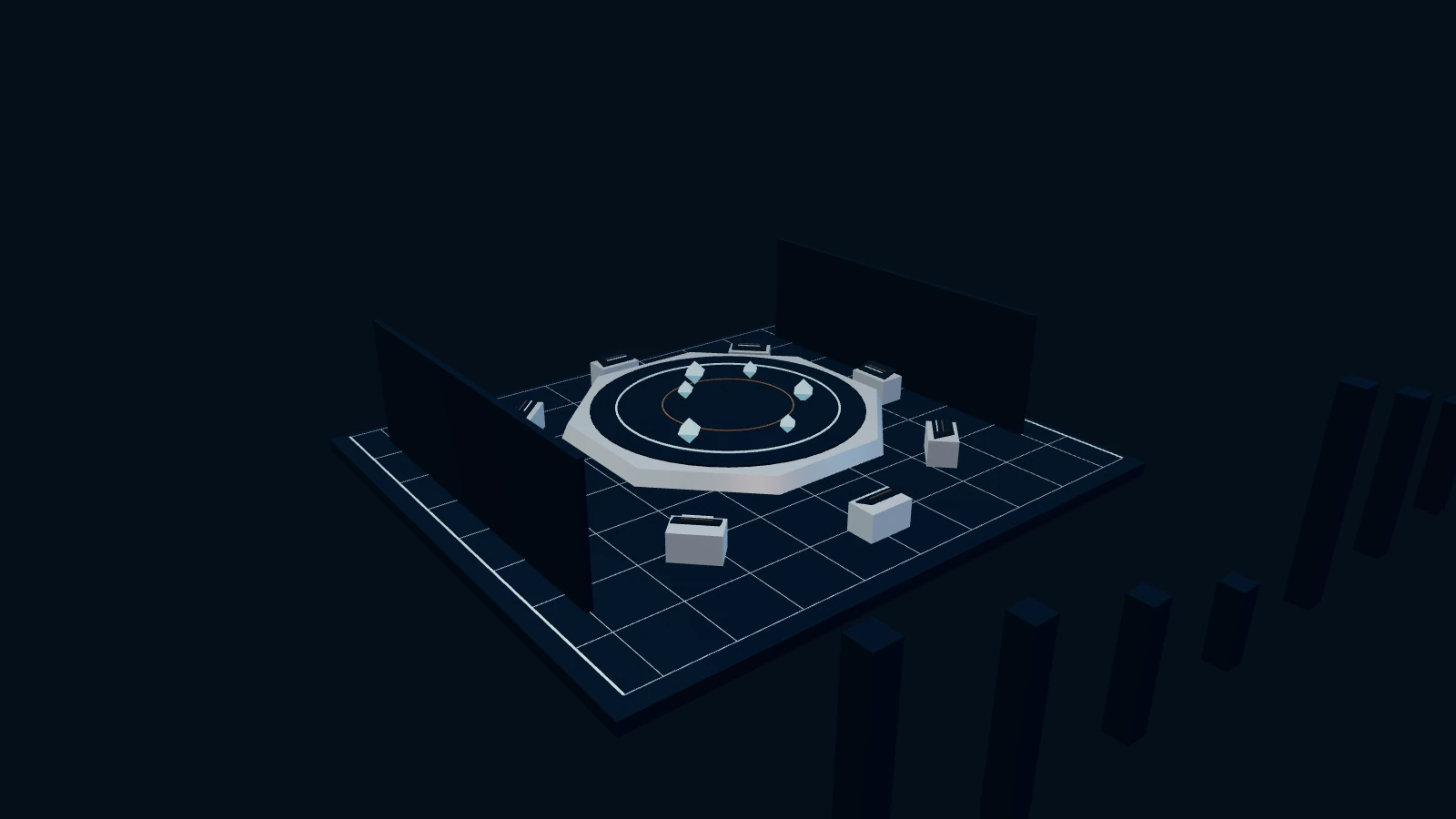
The story's turning point depends on humans, AI and robots learning rapidly. A table covered in lights cannot establish that process by itself. The useful progression is from an observation to an explanation, from a proposal to a test and from a result to a new decision. The website's central table holds abstract markers that move through a repeatable phase so visitors can inspect the composition. It is not a depiction of approved maneuvers, a real tactical map or a claim that solving the film's problem requires only moving symbols around a screen.
A shared planning image is useful only when its meaning can be challenged. In the film's learning-centered world, the most valuable contribution might be a question about an assumption rather than another confident proposal. That gives a quiet exchange a place beside fleet spectacle. The room can show an idea becoming better through cooperation without turning disagreement into national rivalry or inventing a command procedure. Its connection to the Six Days of Learning thread is therefore about method, while Countermove carries the later consequence of the decision.
Anil Cyborg is a connector within a larger cast, not an invulnerable replacement for everybody else's expertise. Admiral Han, Ira and other contributors retain their own roles and viewpoints. A planning room can make those differences productive: a useful objection may come from the person who notices a limit rather than the person who speaks first. The proposed architecture arranges working positions around a common surface instead of a single heroic pedestal. It does not assign final seats or invent a completed argument between particular characters.
The later story decision replaces whole-planet movement with asteroid-scale objects and retains the crucial ability to stop. The war room therefore belongs to a story in which the largest available act is not automatically the right one. It must eventually connect capability with restraint. The enemy's world is not erased to prove humanity's strength. That ethical direction changes how a visitor should read a command space: it is a place where consequences are considered, not a celebratory display of unrestricted destruction. The Countermove dossier explains that distinction in the wider climax.
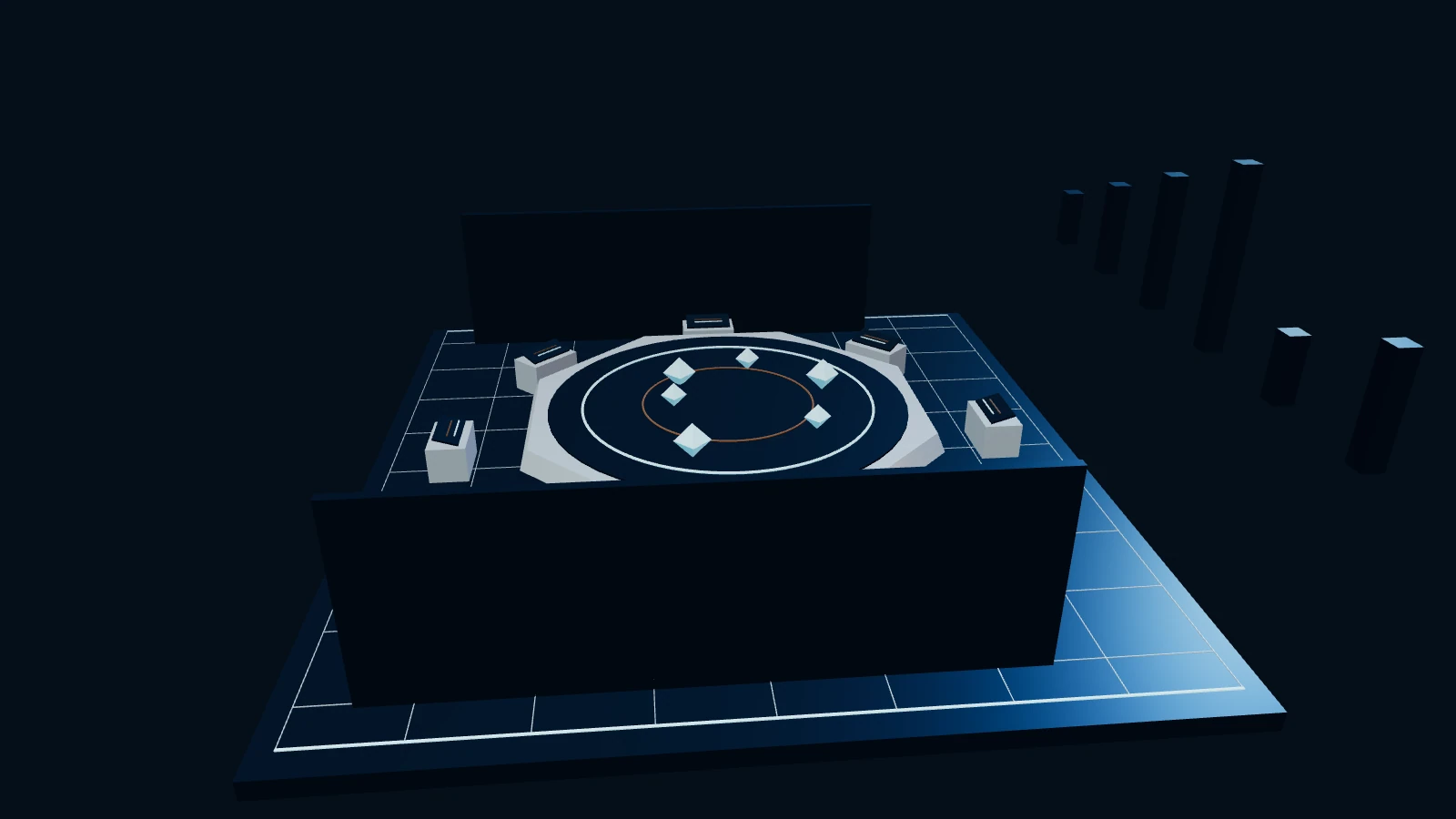
The new rendered angles show a central surface, surrounding stations and paths between them. The interactive model provides controlled motion, a pause function and camera changes, with reduced-motion and static-image alternatives. Its markers have no unit names, strike coordinates, weapons data or invented victory statistics. The existing Countermove clip is connected separately as story context. This distinction keeps the room cinematic without suggesting that its geometry is an approved set or that its moving elements reproduce an actual operational plan. The final composition remains open to film-production review.
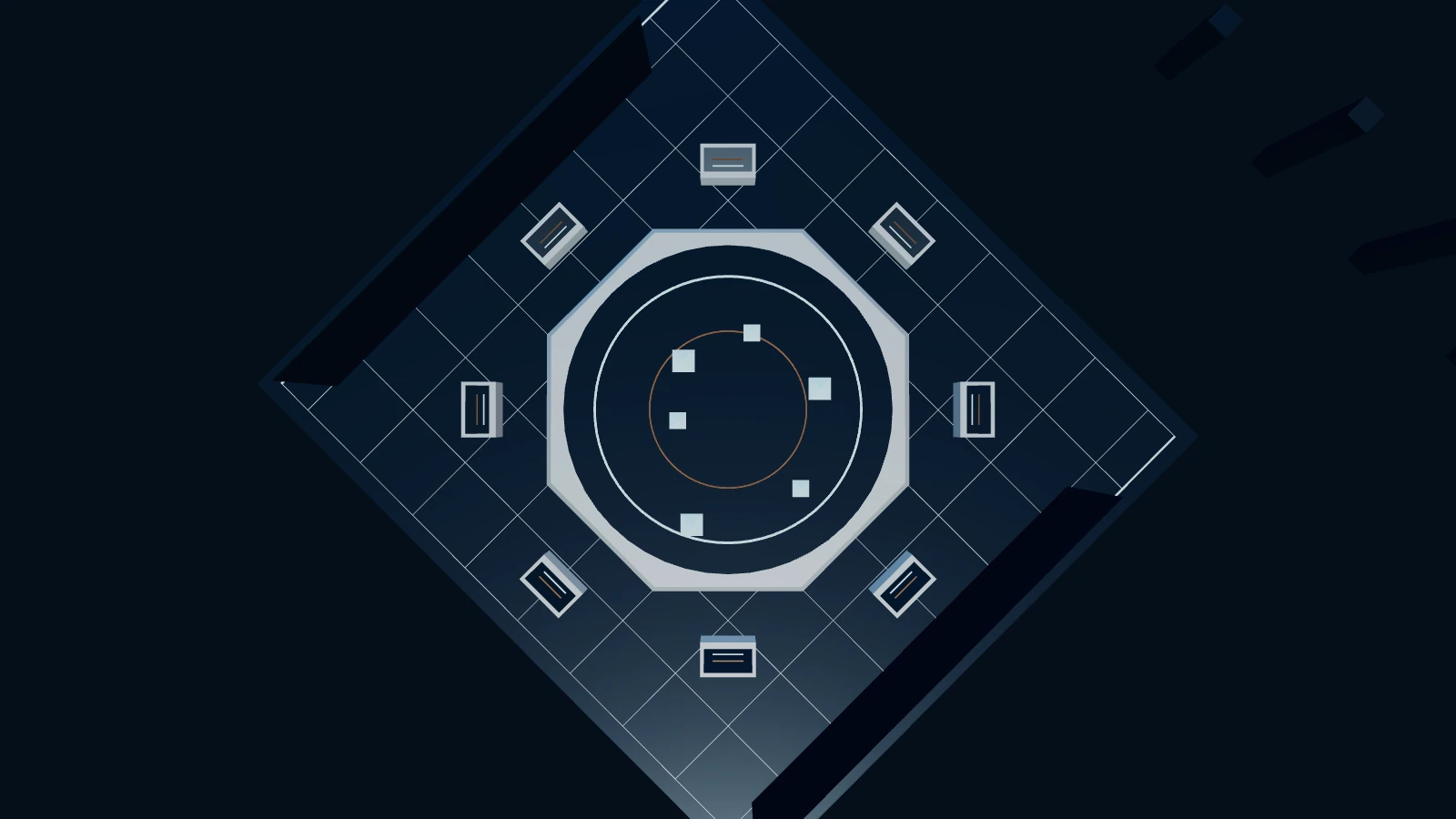
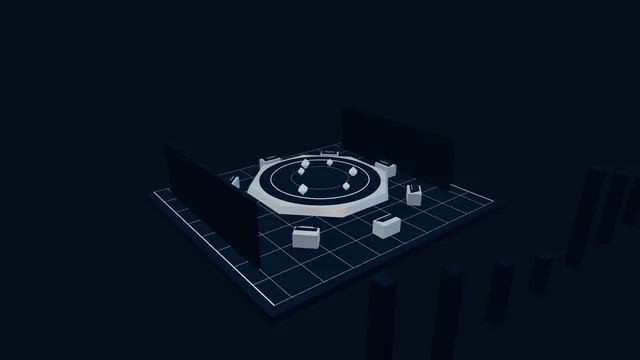
Static artwork remains available without 3D. The exhibit is an abstract website schematic, not a final model, approved map or physical simulation.
Drag horizontally or use arrow keys to inspect. Vertical touch scrolling remains native. The phase control changes geometry; it is not a claim about story timing.
New evidence interrupts assumptions.
Different kinds of expertise refine the response.
The ability to stop becomes a deliberate act.
Watch The Countermove as an eight-second, silent 3D website previsualisation. Read its source-grounded story and explore all four beats; not final movie footage.
Related story context. This existing clip is not a new scene at The War Room or a completed character performance.
Read the full watch page ↗The brief names the room but does not lock its exact location here. This page does not assign a planet merely because connected scenes occur there.
No fixed seating plan is established. The room is presented as an ensemble setting, not a sole-hero command throne.
No. They are abstract website elements used to inspect the space and motion, without operational labels or approved story outcomes.
The later direction emphasizes stopping the threat and offering friendship rather than extermination. Older whole-planet ideas must not override that revision.
The brief names a war room; its precise location, seating, dialogue and tactical imagery are not finalized. The model is a website staging study and contains no real operational guidance.
Source: the reviewed The Human series story record, sections 2, 3, 5, 20, 26, 28; Task/CG4008/TASK.md. Later owner decisions take precedence over older drafts. The five reading chapters are editorial interpretation of that record, not newly approved screenplay scenes.
These pages describe a fictional world. They do not announce a release date, a cast contract, real exoplanet settlements or completed production assets.
Read the story and media policy ↗Explore the places, shared roles and everyday systems that connect the larger movie universe.
Open Worldbuilding ↗