Protect
Defense sits inside a civilization built around other purposes.
 THE HUMANALIENS STUDIO
Meet the people. Discover their worlds.
Follow the spacecraft, scenes and ideas that connect them.
A film universe in development. Artwork and short motion studies are not final movie footage.
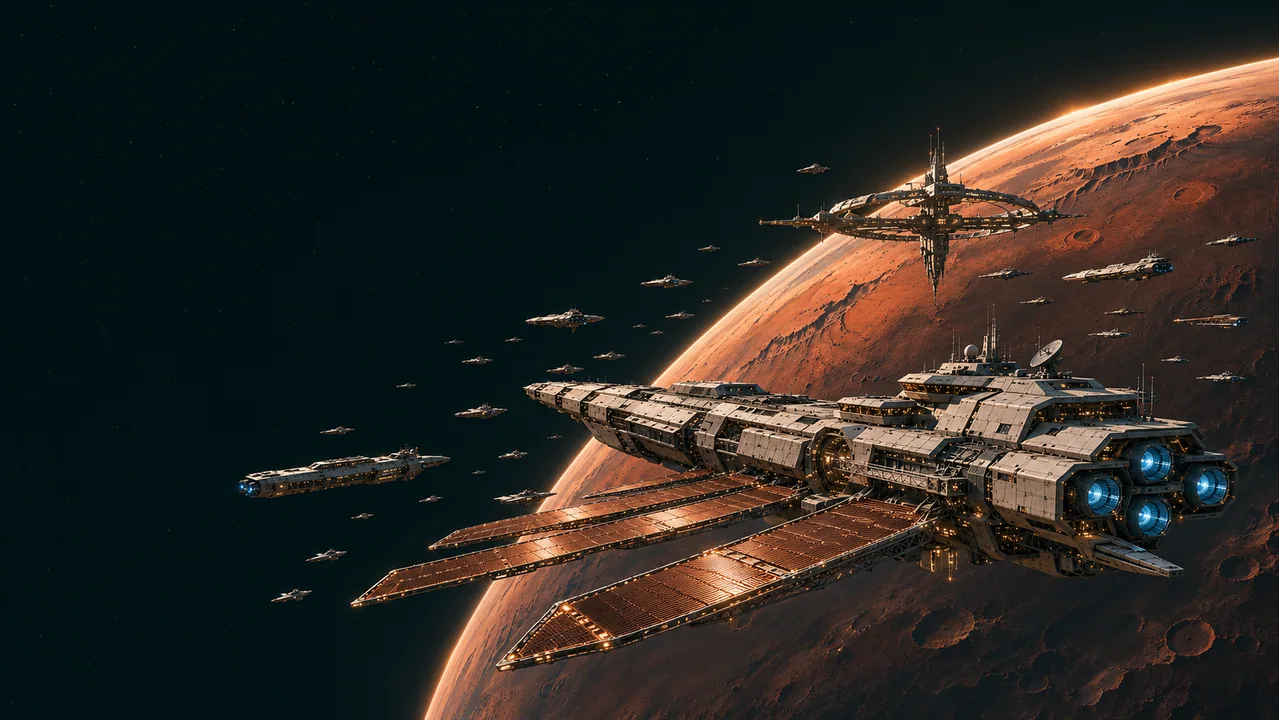
Strength is a responsibility, not a reason.
The fighting-robot role in the human ensemble
A film world in development / Context artwork + interactive schematic
Defense Cyborgs are the fighting-robot role in The Human's developing world. The production direction distinguishes black fighting bodies from working and medical roles. They support an ensemble story about learning and restraint, not a claim that every robot is a weapon or a copy of Anil.
The fighting-robot role in the human ensemble. Follow its connections to the wider film world, from everyday life to the choices made under pressure.
The film's humans have grown beyond fighting one another for land, food and status. Their security capabilities do not erase that larger direction. A defense Cyborg belongs to a civilization whose everyday machines also teach, build, rescue and care. Showing that context matters: otherwise the audience sees only a larger army instead of a different relationship with power. This role page therefore connects defense with the rest of the world, rather than presenting the fighting body as the default form of every robot.
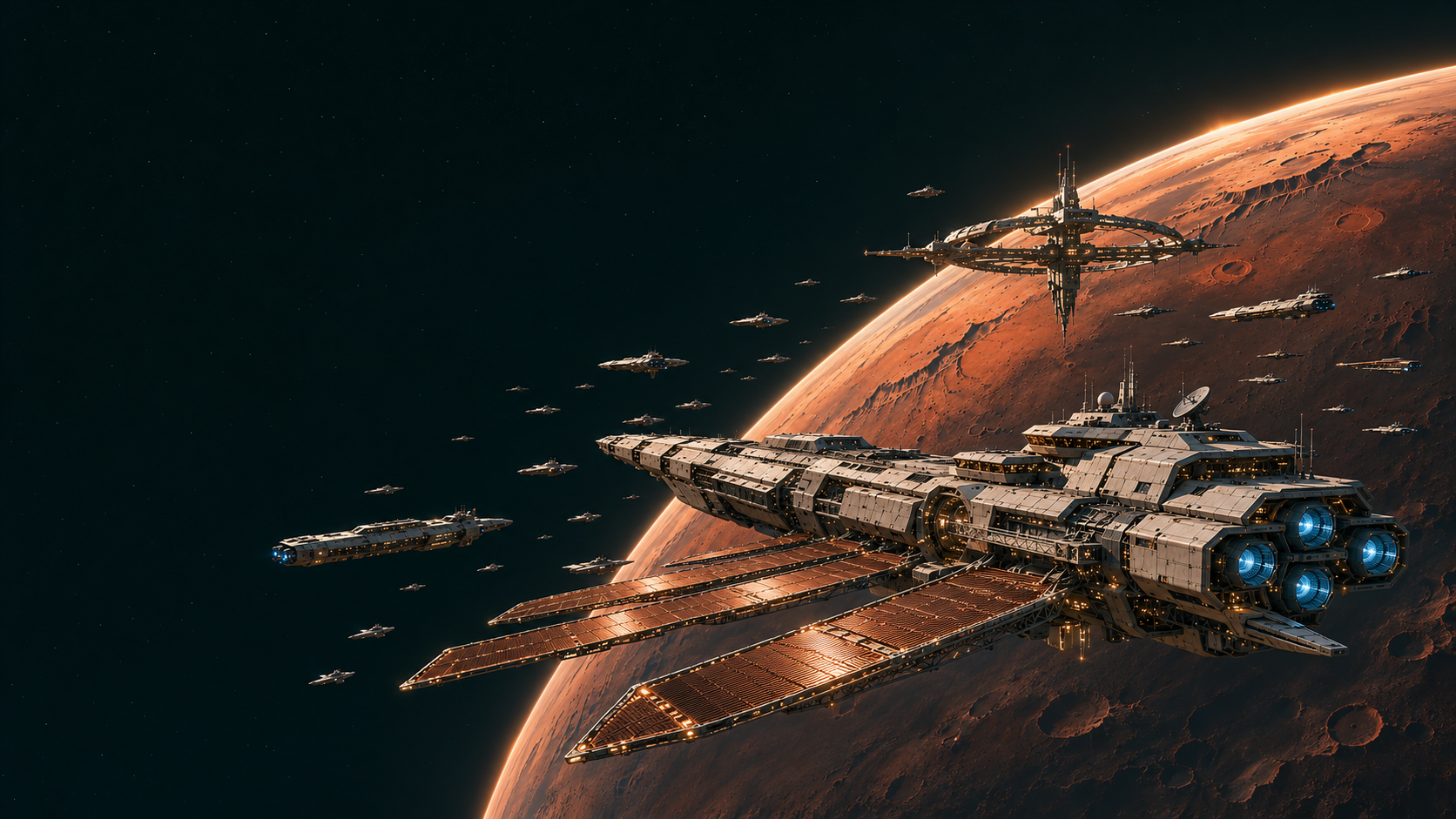
The visual-development brief assigns black bodies to fighting robots and treats them as one of several types. It also identifies Brick as a large named fighting robot with a shield. Brick's individual story is not the biography of every defense Cyborg. Nor does the group become a row of Anil's replicas. Keeping the role and the individual distinct gives the production team room for recognizable machines without breaking the single-active-Anil rule that applies to The Human II.
The conflict is not solved by a character suddenly receiving unlimited power. The source puts rapid learning, AI, robots, scientists and planning at the center of humanity's response. Defense machines are part of that connected effort. Their role gains meaning from the discoveries and decisions around them. This page does not invent new weapons, targeting procedures or battle outcomes. It follows the dramatic function of a capable body within a network of knowledge and responsibility, where cooperation matters more than invulnerability.
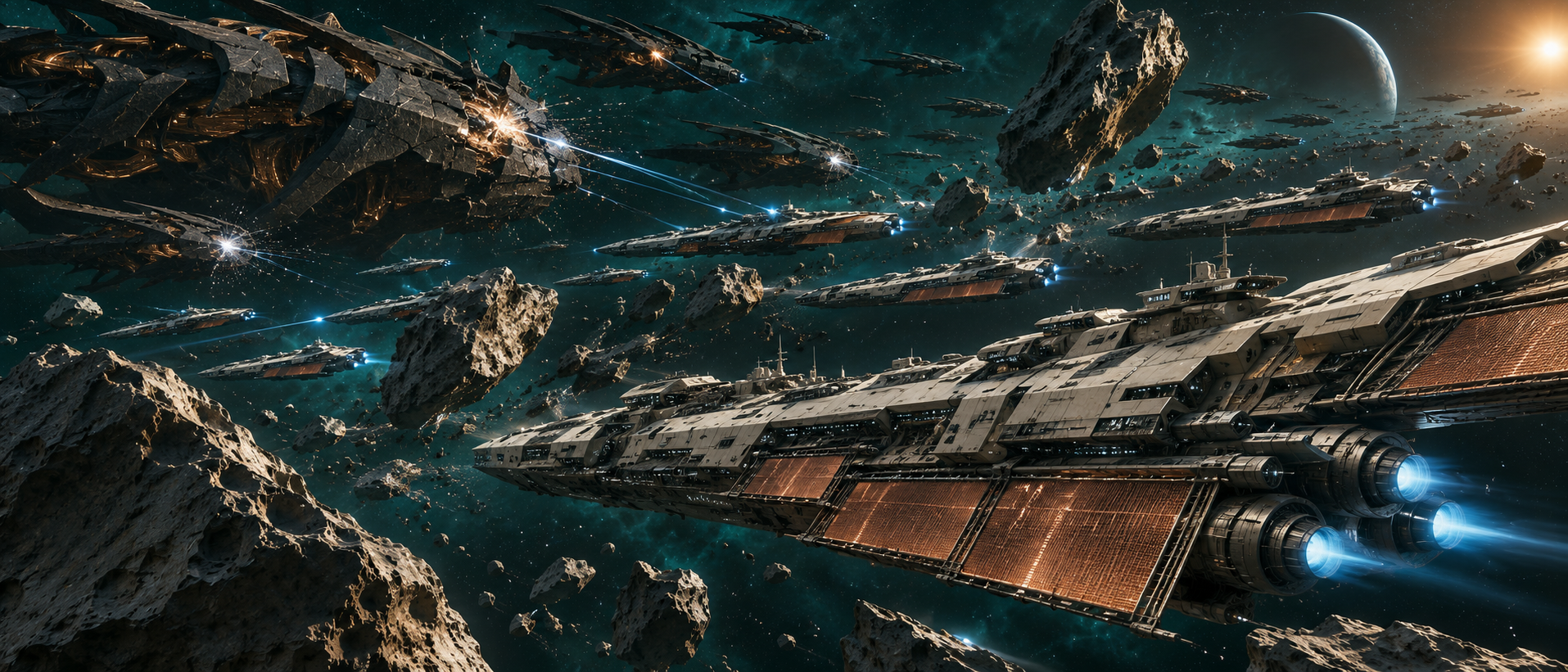
Anil's later movement into Brick is a transfer of his own Persona Core into an empty body, not the creation of another simultaneous Anil. The distinction is central to the current story direction. An obviously mechanical fighting body can become the vessel of an identity previously seen in a human-looking form. That is not proof of biological continuity or consciousness transfer. It is the film's speculative identity system operating under its own stated rule, with the body and the Persona doing different narrative work.
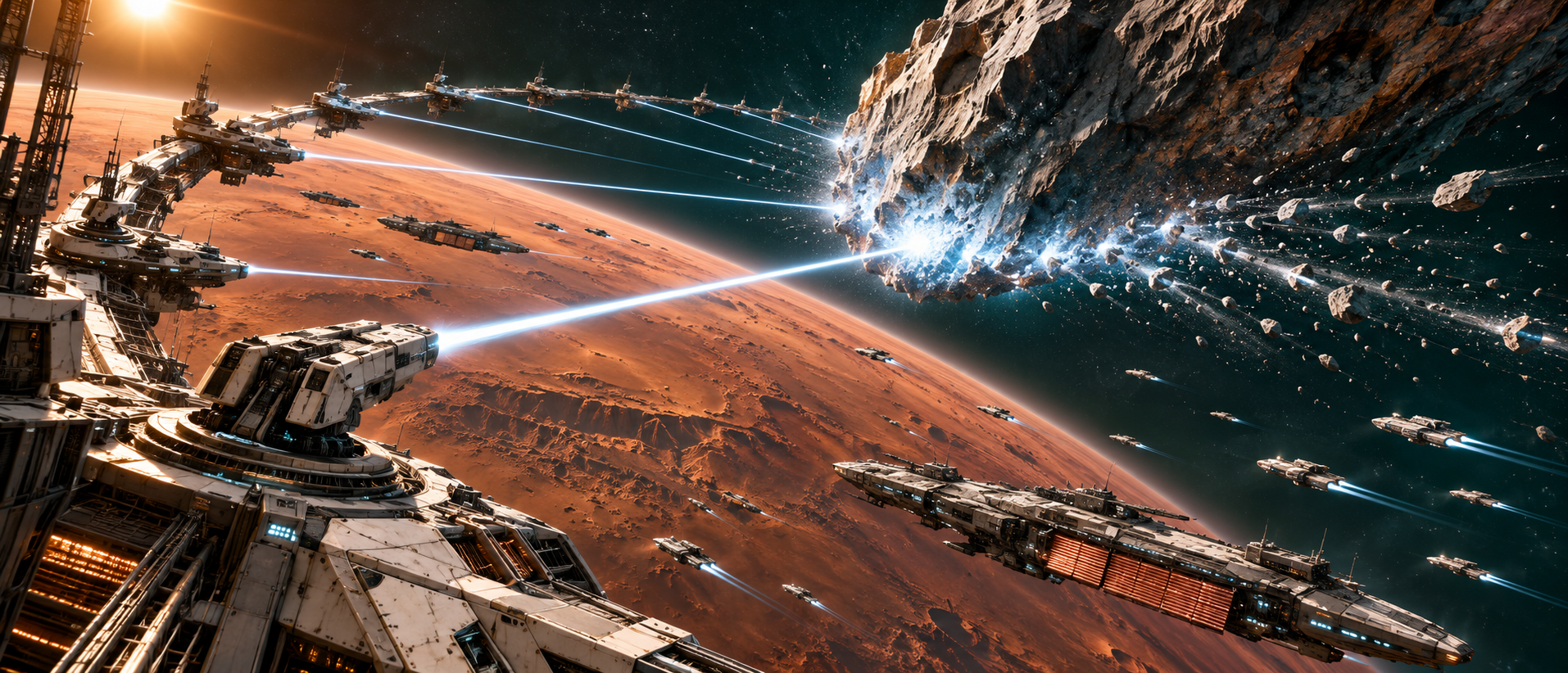
The revised climax uses asteroid-scale objects rather than moving whole planets. Its moral direction is the ability to stop and offer friendship instead of destroying the enemy's worlds. The website's Core schematic and existing Countermove clip are ways into that story, not finished combat footage. The schematic does not replace Brick's final body design. The clip does not certify a physical simulation. Their connection is thematic: machinery becomes more interesting when the story asks what its users choose not to do.
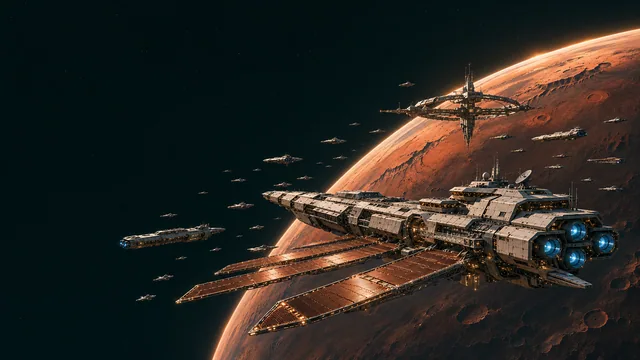
Static artwork remains available without 3D. The exhibit is an abstract website schematic, not a final model, approved map or physical simulation.
Drag horizontally or use arrow keys to inspect. Vertical touch scrolling remains native. The phase control changes geometry; it is not a claim about story timing.
Defense sits inside a civilization built around other purposes.
Many contributors make the countermove possible.
The capacity to stop is part of the outcome.
Watch The Countermove as an eight-second, silent 3D website previsualisation. Read its source-grounded story and explore all four beats; not final movie footage.
Related story context. This existing clip is not a new scene at Defense Cyborgs or a completed character performance.
Read the full watch page ↗No. The developing world has rescue, utility, keeper and medical roles as well as fighting machines. Their duties and identities are not interchangeable.
No. In Part II he moves his own Persona Core into Brick's empty body. The current rule is one active Anil, not two simultaneous copies.
No. The later source decision replaces that earlier idea with asteroid-scale objects, up to the stated development limit, while retaining the theme of stopping rather than exterminating.
No. It is an abstract identity-system exhibit. Dedicated exterior models, performances and final battle footage are separate production work.
This page defines a fictional role and connects existing canon. It supplies no new weapon engineering, final fighting-robot design or approved combat sequence. Older whole-planet and duplicate-Anil ideas remain superseded.
Source: the reviewed The Human series story record, sections 2, 3, 16, 18, 26, 28; TheHuman Task/CG4003/TASK.md. Later owner decisions take precedence over older drafts. The five reading chapters are editorial interpretation of that record, not newly approved screenplay scenes.
These pages describe a fictional world. They do not announce a release date, a cast contract, real exoplanet settlements or completed production assets.
Read the story and media policy ↗Explore the places, shared roles and everyday systems that connect the larger movie universe.
Open Worldbuilding ↗