Approach
Rescue paths converge on a possible departure.
 THE HUMANALIENS STUDIO
Meet the people. Discover their worlds.
Follow the spacecraft, scenes and ideas that connect them.
A film universe in development. Artwork and short motion studies are not final movie footage.
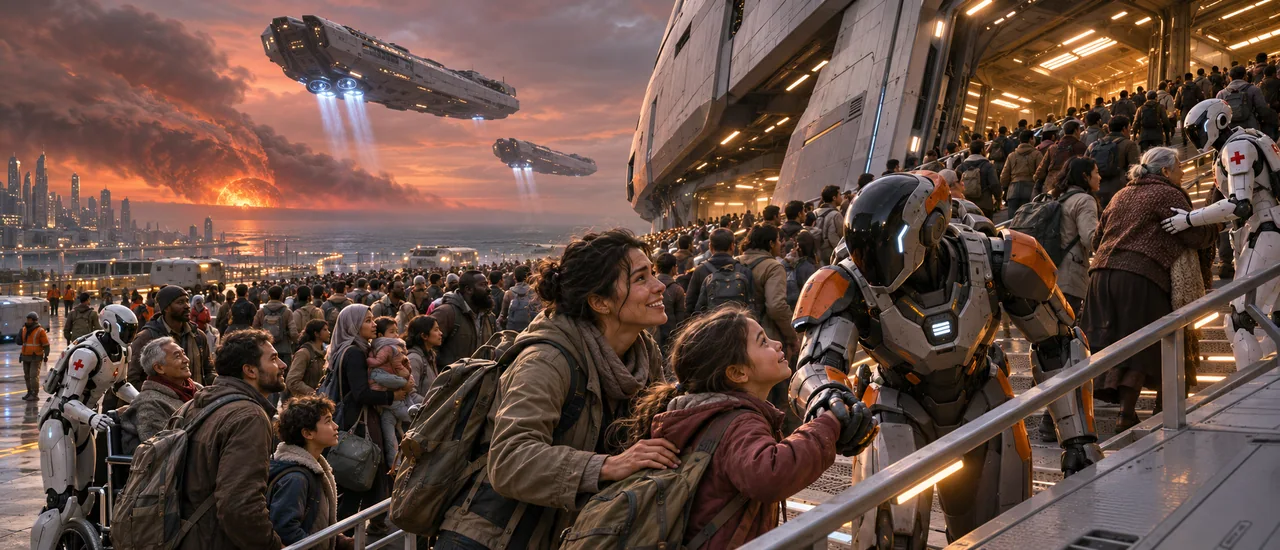
There is still someone to bring aboard.
The human-scale edge of Last Departure
A film world in development / Context artwork + interactive schematic
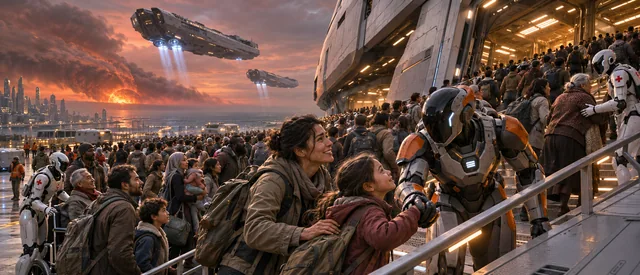
Rio Spaceport is the evacuation context associated with the developing Last Departure sequence. It brings a closing escape window, a transport crew and the people left on Earth into one place. Exact countdowns and final staging remain proposals, not confirmed movie specifications.
The human-scale edge of Last Departure. Follow its connections to the wider film world, from everyday life to the choices made under pressure.
A countdown can explain danger, but it cannot decide whom a story asks us to care about. Rio's departure setting puts that decision beside the ship: there are people trying to reach safety and people responsible for leaving without losing them. The place is valuable because the abstract scale of a planetary catastrophe becomes a series of local choices. The current story includes a proposed very short escape window; this page deliberately does not turn a draft number into a fixed scientific or screenplay fact.
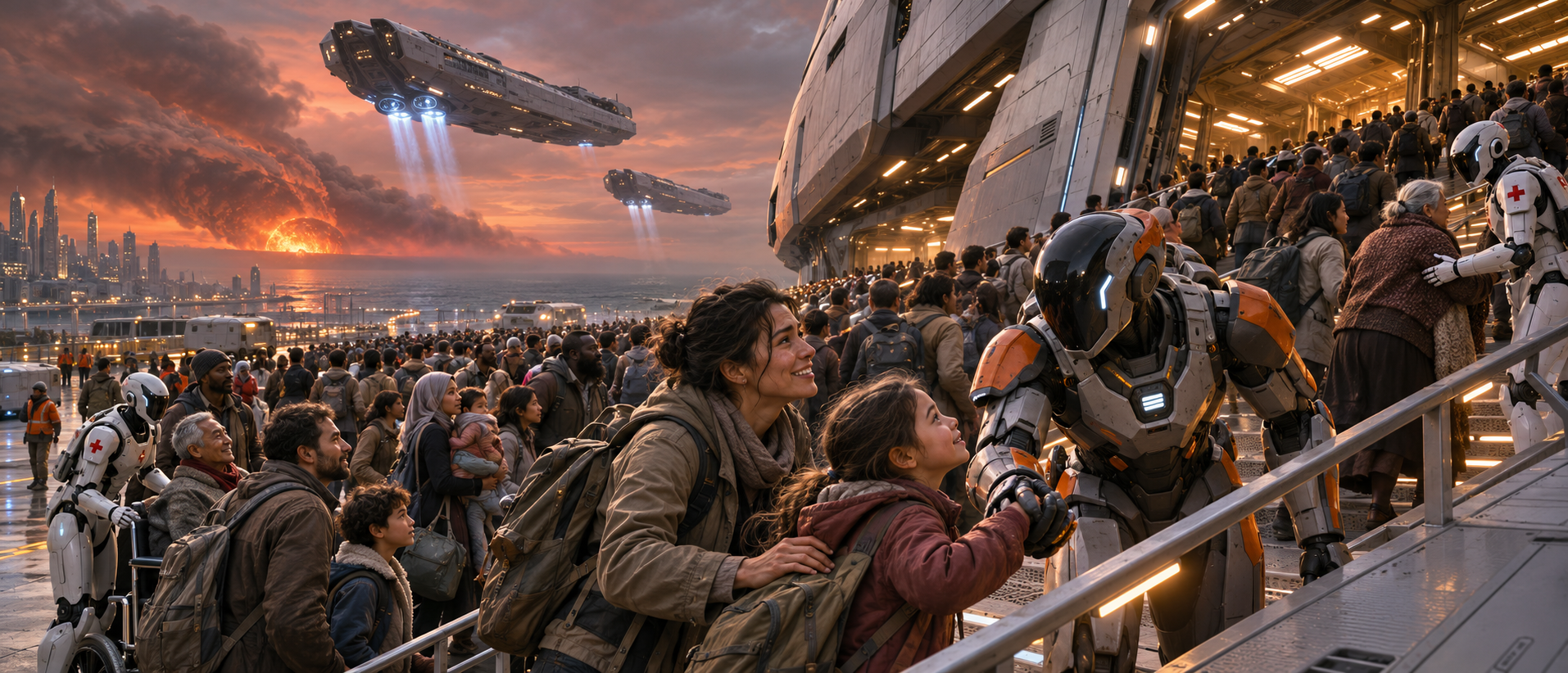
Kofi Mensah is linked with the evacuation and pilot perspective. His presence gives the fleet more than a mechanical role, but departure is still an ensemble action. Flight crews, rescuers, medical support and passengers each see a different part of the same problem. The spaceport is where those views meet. No single person sees the entire crisis. That separation creates room for coordination, trust and the film's larger idea that humanity learns and survives through connected efforts rather than one invulnerable individual.
The latest story direction asks the audience to treat machines as characters. A departing vessel can have a voice and a way of responding while remaining a machine with duties and limits. That is different from making every vehicle a copy of Anil Cyborg. The ship's personality belongs to its own role. In a departure scene, the relationship between pilot and vessel can carry warmth, disagreement or reassurance, but none of that requires inventing a locked ship name, a final voice actor or a completed dialogue recording.
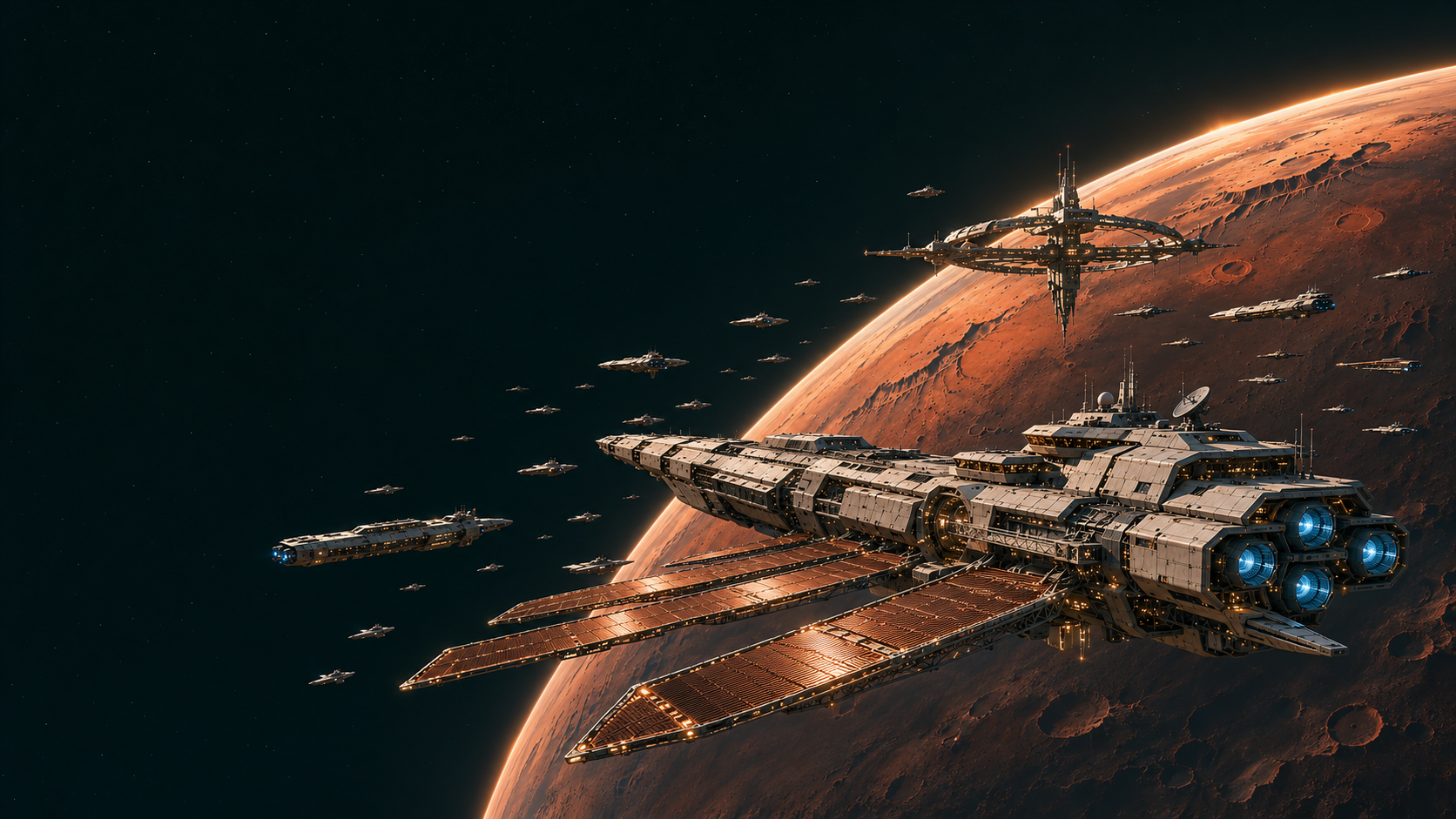
The departure moves the survivors away from immediate danger, but Earth remains the first home and a future responsibility. Later recovery imagery therefore connects back to this threshold. The emotional direction is not simply outwards into a larger galaxy. It is also a promise that the place being left matters. That reading gives the transport image a second meaning: a ship can carry the possibility of return, even while neither its crew nor the audience can know what a recovered Earth will look like.
The moving transport markers on this page make an approach and departure legible from several angles. The existing eight-second Flight Deck study adds moving geometry and a controlled camera. Neither is a reconstruction of a finished Rio sequence. Environmental artwork supplies atmosphere, not a verified city photograph or a geographic evacuation route. Keeping those roles separate allows the website to feel cinematic without filling production gaps with false certainty about the final film, the scale of the catastrophe or the vehicle's real-world performance.
Static artwork remains available without 3D. The exhibit is an abstract website schematic, not a final model, approved map or physical simulation.
Drag horizontally or use arrow keys to inspect. Vertical touch scrolling remains native. The phase control changes geometry; it is not a claim about story timing.
Rescue paths converge on a possible departure.
The crew must connect urgency with responsibility.
Earth remains part of the story even after the ship leaves.
Watch The Last Departure as an eight-second, silent 3D website previsualisation. Read its source-grounded story and explore all four beats; not final movie footage.
Related story context. This existing clip is not a new scene at Rio Spaceport or a completed character performance.
Read the full watch page ↗No. The story source contains draft timing. This page does not certify that timing as a final screenplay detail or a physically verified disaster model.
No. They are distinct story settings. Shared evacuation artwork is contextual and does not make the locations identical.
The current vessel dossier describes the role. Related transport geometry supports the website, but does not establish a locked individual hull or capacity.
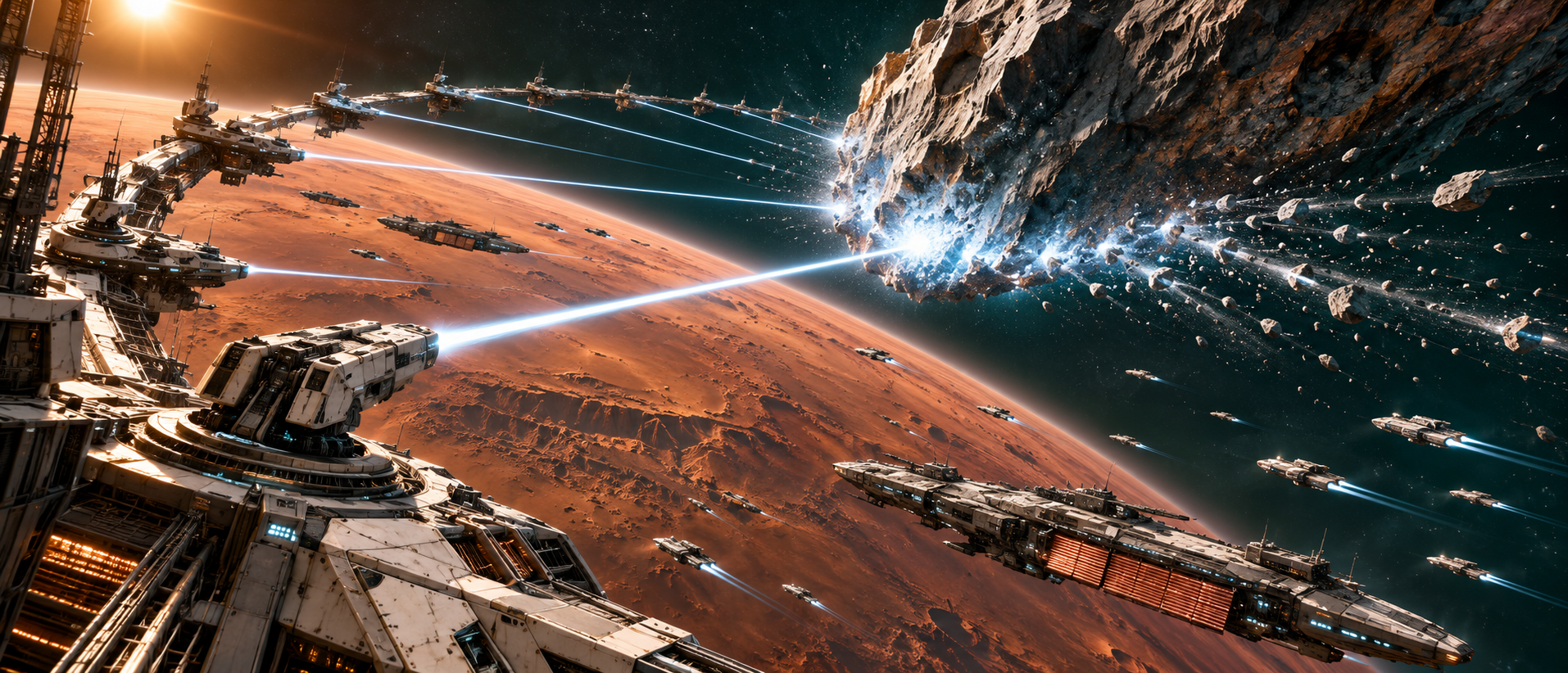
The wider evacuation thread connects to Mars and its defense. The Mars dossier and Mars Interception sequence explain that next stage without treating survival as the end of the conflict.
Rio's countdown, individual shots and detailed spaceport layout are development proposals. The interface is a schematic and the playable clip is existing website previsualization, not approved final movie footage.
Source: the reviewed The Human series story record, sections 5, 20, 28.4. Later owner decisions take precedence over older drafts. The five reading chapters are editorial interpretation of that record, not newly approved screenplay scenes.
These pages describe a fictional world. They do not announce a release date, a cast contract, real exoplanet settlements or completed production assets.
Read the story and media policy ↗Explore the places, shared roles and everyday systems that connect the larger movie universe.
Open Worldbuilding ↗