Find
The machine's behavior reveals its purpose.
 THE HUMANALIENS STUDIO
Meet the people. Discover their worlds.
Follow the spacecraft, scenes and ideas that connect them.
A film universe in development. Artwork and short motion studies are not final movie footage.
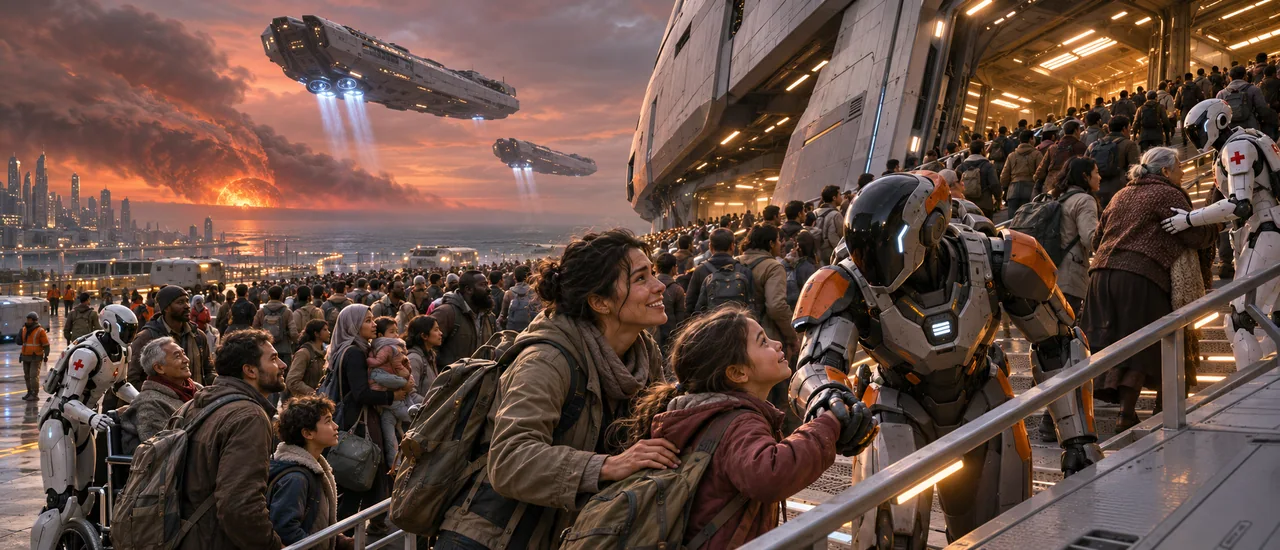
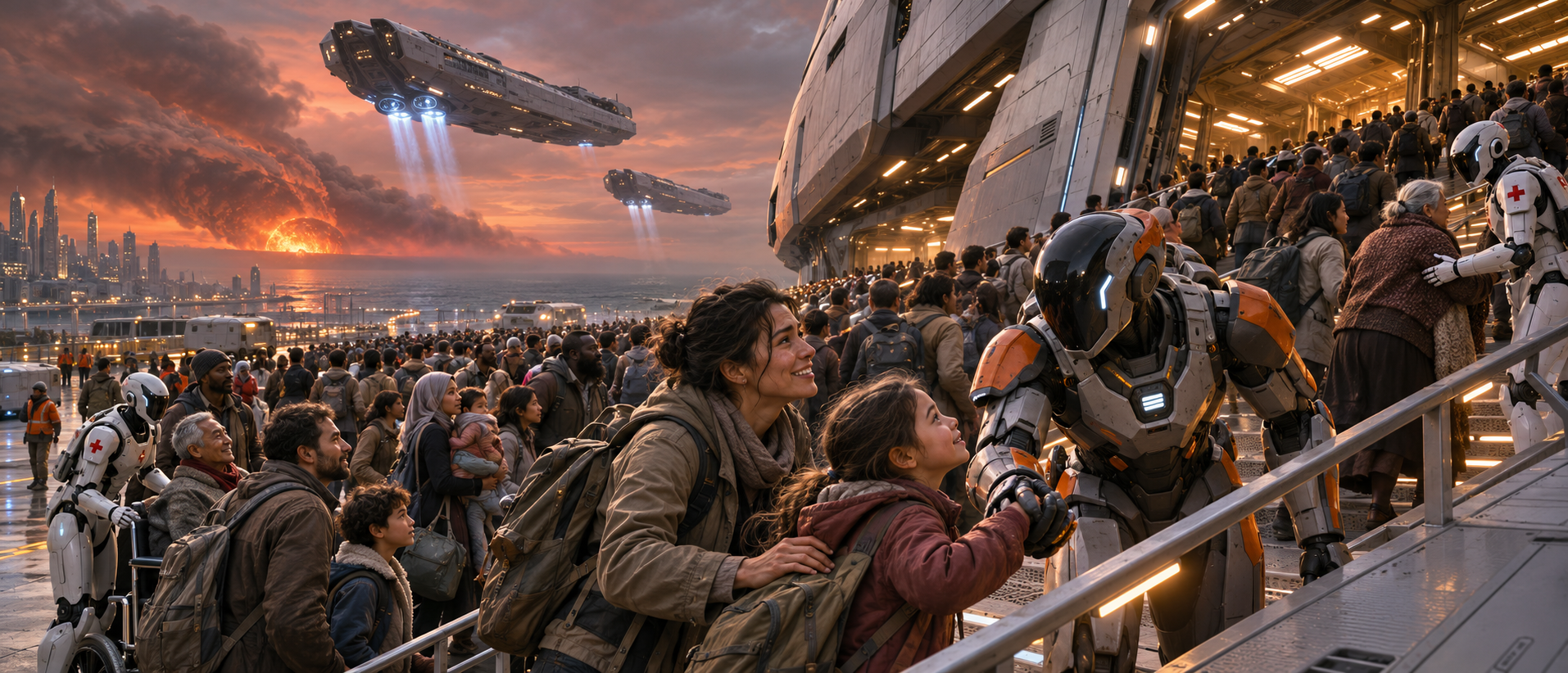
The first sign of intelligence is help.
A robot role, not a new individual character
A film world in development / Context artwork + interactive schematic
Rescue Cyborgs are the helping machines that make The Human's opening reversal possible: the robots on a damaged Earth are rescuers, not humanity's destroyers. Rescue is a role shared by multiple bodies and Personas, rather than a newly named character or a final robot model.
A robot role, not a new individual character. Follow its connections to the wider film world, from everyday life to the choices made under pressure.
The opening can invite a mistaken reading of robots among the remains of Earth. The reversal comes when their actions reveal care. A rescue Cyborg is therefore more than background equipment: it is part of the film's argument about AI as a friend and helper. What matters first is not whether its body resembles a person. What matters is what it does for someone who cannot manage alone. The role turns an unfamiliar machine into a source of trust through a visible act.
The current visual task includes a rescue Cyborg with a water capsule in a Seoul basement. That specific image gives a scale to the larger premise. An enormous catastrophe can be understood through a small, useful exchange. This page does not invent the rescued person's identity, the capsule's technical properties or a completed sequence around it. The reference is valuable because it connects advanced technology with an immediate need, leaving the final performance and composition to the visual-production work.
A capable rescue body may carry different kinds of Persona. The latest story direction makes learned Human Personas central, while the wider system still distinguishes them from default AI Personas. Two machines can therefore do similar work without becoming the same person. That distinction also protects Anil's single-active-Persona rule in Part II. A rescue fleet is not a fleet of spare Anils. Its members can contribute different histories, judgment and ways of speaking to a shared task.

Finding someone is only the beginning of rescue. The story can connect a rescuer with a shuttle, a medical role and a place of safety, giving each a different responsibility. This is an editorial reading of the existing ensemble, not a claim that a specific chain of procedures has been approved for the screenplay. It makes the role legible beside the fleet: a transport vessel does not replace the rescuer, and the rescuer does not replace the people and machines who receive the survivor.
The interactive recovery schematic shows distributed work around a damaged surface. Its markers and towers are abstract system elements, not a new locked rescue-robot design. The existing artwork and evacuation study carry the emotional context. The exhibit makes cooperation visible while keeping the production team's character looks intact. A moving indicator is not evidence of a physically validated search system, and a glowing element is not a claim about a real Persona Core. Those boundaries let the site explore the role without misrepresenting the available assets.
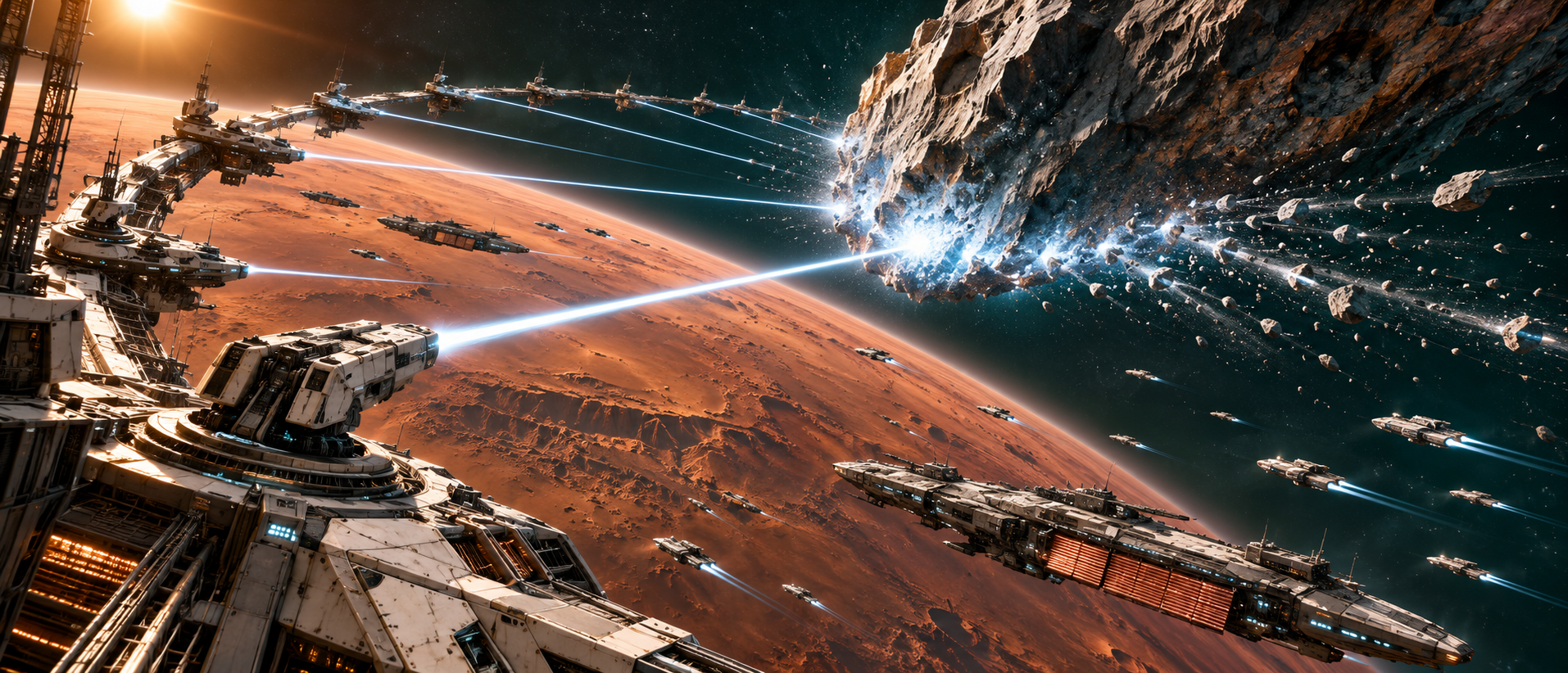
Static artwork remains available without 3D. The exhibit is an abstract website schematic, not a final model, approved map or physical simulation.
Drag horizontally or use arrow keys to inspect. Vertical touch scrolling remains native. The phase control changes geometry; it is not a claim about story timing.
The machine's behavior reveals its purpose.
A small practical action changes the meaning of the scene.
Rescue continues through other people, machines and safe places.
Watch the the last departures artwork motion study: 12 seconds of silent concept imagery, with a shot guide and links to The Human story dossiers.
Related story context. This existing clip is not a new scene at Rescue Cyborgs or a completed character performance.
Read the full watch page ↗No. The opening's intended reversal is that these robots are helping and recovering Earth. Their presence in the ruins is not evidence that AI caused the catastrophe.
No. This page describes a class of work. Named characters keep their own dossiers and identities.
No. A role does not determine a Persona's identity. The world includes distinct Human Personas and default AI Personas.
No. It is a schematic of coordinated recovery work. Dedicated robot designs belong to the separate visual-development and approval process.
The source establishes rescue as a role and names the Seoul water-capsule visual proposal. This page does not assign a new individual name, final appearance, medical capability or approved performance to a rescue machine.
Source: the reviewed The Human series story record, sections 5, 16, 22, 28.3; TheHuman Task/CG4003/TASK.md. Later owner decisions take precedence over older drafts. The five reading chapters are editorial interpretation of that record, not newly approved screenplay scenes.
These pages describe a fictional world. They do not announce a release date, a cast contract, real exoplanet settlements or completed production assets.
Read the story and media policy ↗Explore the places, shared roles and everyday systems that connect the larger movie universe.
Open Worldbuilding ↗