
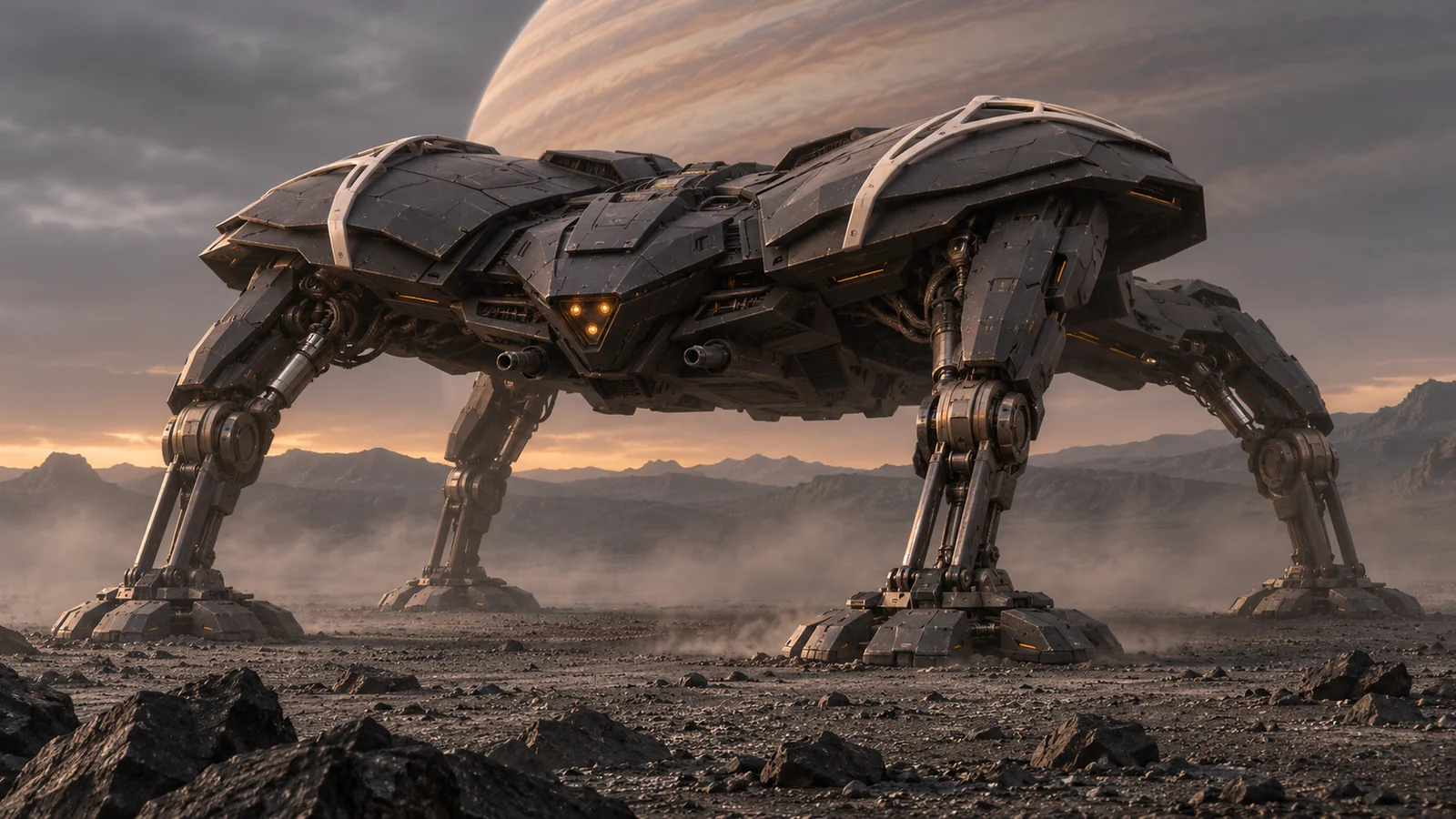
Orvaan Landing Walker
The distant conflict reaches the ground.
Inspect the source model ↘A distinct form. A different responsibility.
The distant conflict reaches the ground.
The landing walker is the Orvaan studio's four-legged ground-vehicle proposal for the Epsilon moon and Proxima settings. Its armored shoulders, low body and central optics give it a distinct identity; it is not a human Persona robot or an approved walking simulation.
From a fleet silhouette to a lived place
A landing vehicle changes the audience's relationship to the conflict. A distant ship can be read as a shape in space, while a walker appears at the scale of paths, buildings and landscapes where people live. The studio brief connects the proposal to the Epsilon moon and Proxima's black forest. That association gives the design a setting without inventing a final battle outcome or placing a named character beneath it. The existing world pages remain connected so the machine does not become the only description of the place it enters.
Four legs are part of the silhouette
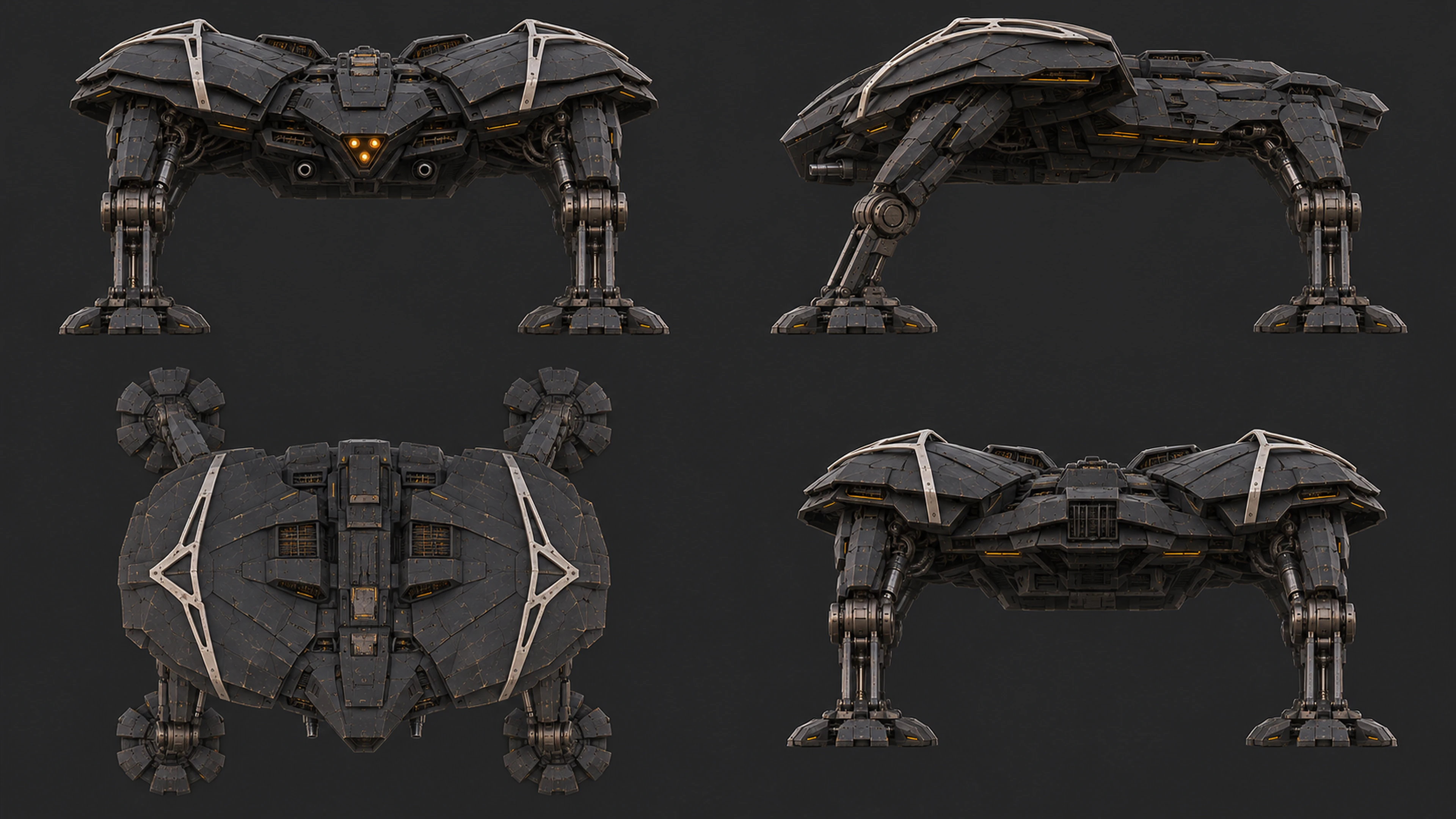
The source model places a low body over four splayed articulated supports. Pale shoulder ribs and the central optics connect it visually with the Orvaan while its stance separates it from the spacecraft. The new rendered angles make the support arrangement visible rather than hiding it behind a single dramatic pose. The model remains a form study. Turning the camera does not validate its balance, gait, ground pressure or mechanical joints, and the page does not claim that a static articulated shape is a completed animated creature.
Do not borrow a human robot's identity
The owner's Human Persona direction applies to the human-side Cyborg narrative. It does not automatically assign a recorded human life to an enemy ground vehicle. This page therefore does not reuse Anil's face, Brick's identity or another character's photographs to make the walker feel more personal. The enemy characters and their decisions stay in their own profiles. The machine receives a separate page because it has a distinct source design and story role, not because every object must be turned into a person.
A useful model leaves its limits visible
Beauty artwork, an orthographic sheet and a scale chart provide three different kinds of reference. The additional procedural stills and opt-in viewer connect them with the source mesh. All remain available as separate links, so a reader can distinguish the artist's image from a simplified geometry view. The new page adds detail without claiming a final landing shot, combat animation or performance. Future production can revise those elements while the current gallery remains honest about what has actually been made and reviewed.
Read the original artwork.
The existing beauty image and orthographic sheet remain in their source studio. The chart shows proposed scale. Working artwork is not promoted to owner-approved production design by this website.
 OPEN ORIGINAL ↗
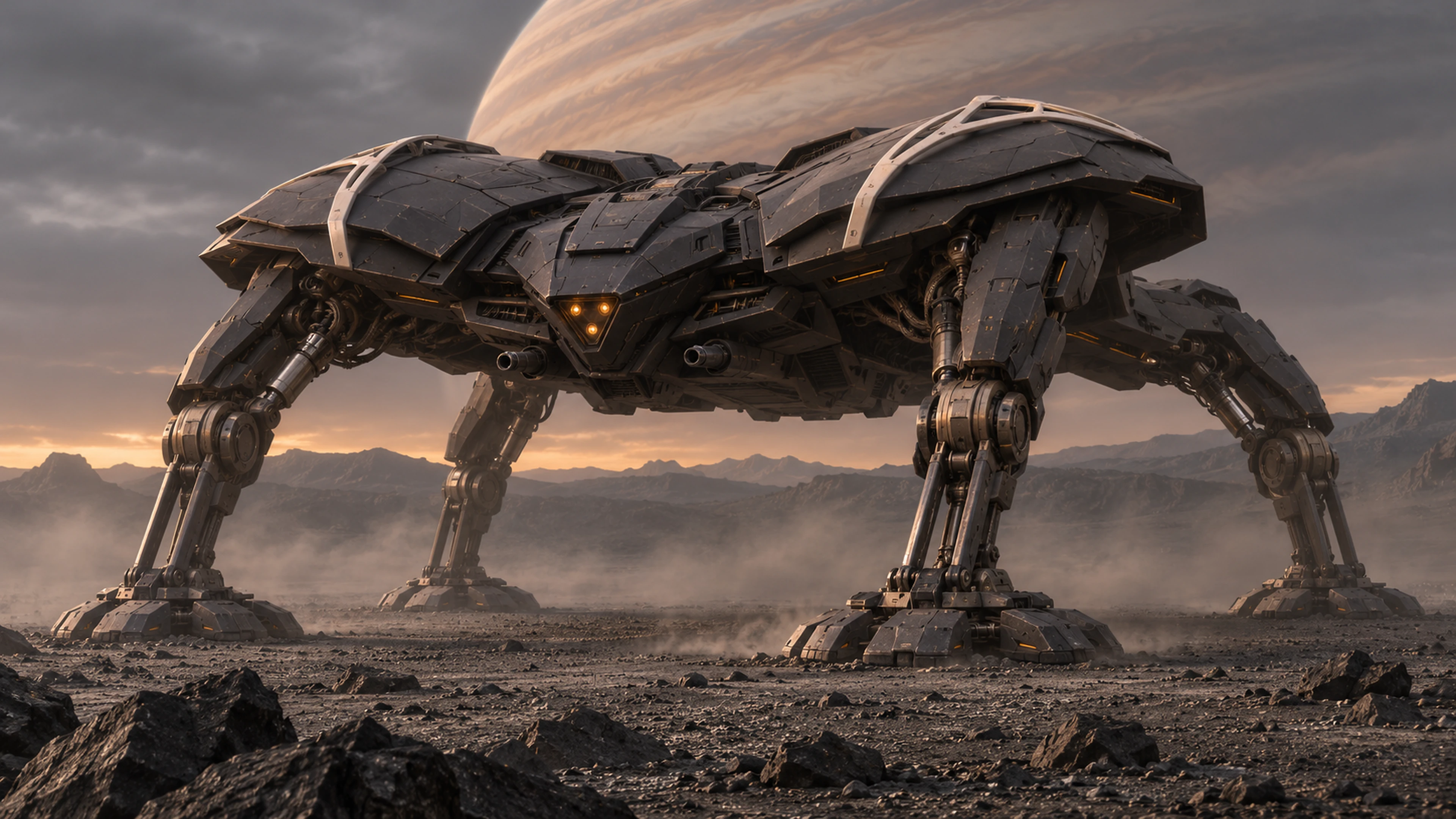
Landing walker — the Epsilon Eridani moon
Four-footed Orvaan landing machine on the low-gravity Epsilon Eridani moon under its striped gas giant. Proposed dimensions: 24 m length, 20 m width, 18 m height. All feet are grounded; design and dimensions await owner review.
Origin, dimensions and status
CG4007 existing generated artwork. Native 1672x941. Pillow Lanczos aspect-preserving fit 1672x941 to 3840x2160; minimal center edge trim to 16:9; restrained unsharp radius 0.65, 70%, threshold 3. Upscaled, not native 4K.
Delivered 3840 × 2160. Working reference; not owner approval or a final film frame.
 OPEN ORIGINAL ↗
Landing walker — four orthographic views
Front, left side, top and rear views of the same four-legged walker. The front and rear elevations overlap the far legs; the top view resolves all four feet. Proposed 24 x 20 x 18 m dimensions. Owner visual approval pending. Four-view design reference: views are individually framed, not measured blueprints. Exact proposed measurements are shown in the separate scale diagrams.
Origin, dimensions and status
CG4007 existing generated artwork. Native 1672x941. Pillow Lanczos aspect-preserving fit 1672x941 to 3840x2160; minimal center edge trim to 16:9; restrained unsharp radius 0.65, 70%, threshold 3. Upscaled, not native 4K.
Delivered 3840 × 2160. Working reference; not owner approval or a final film frame.
 OPEN ORIGINAL ↗
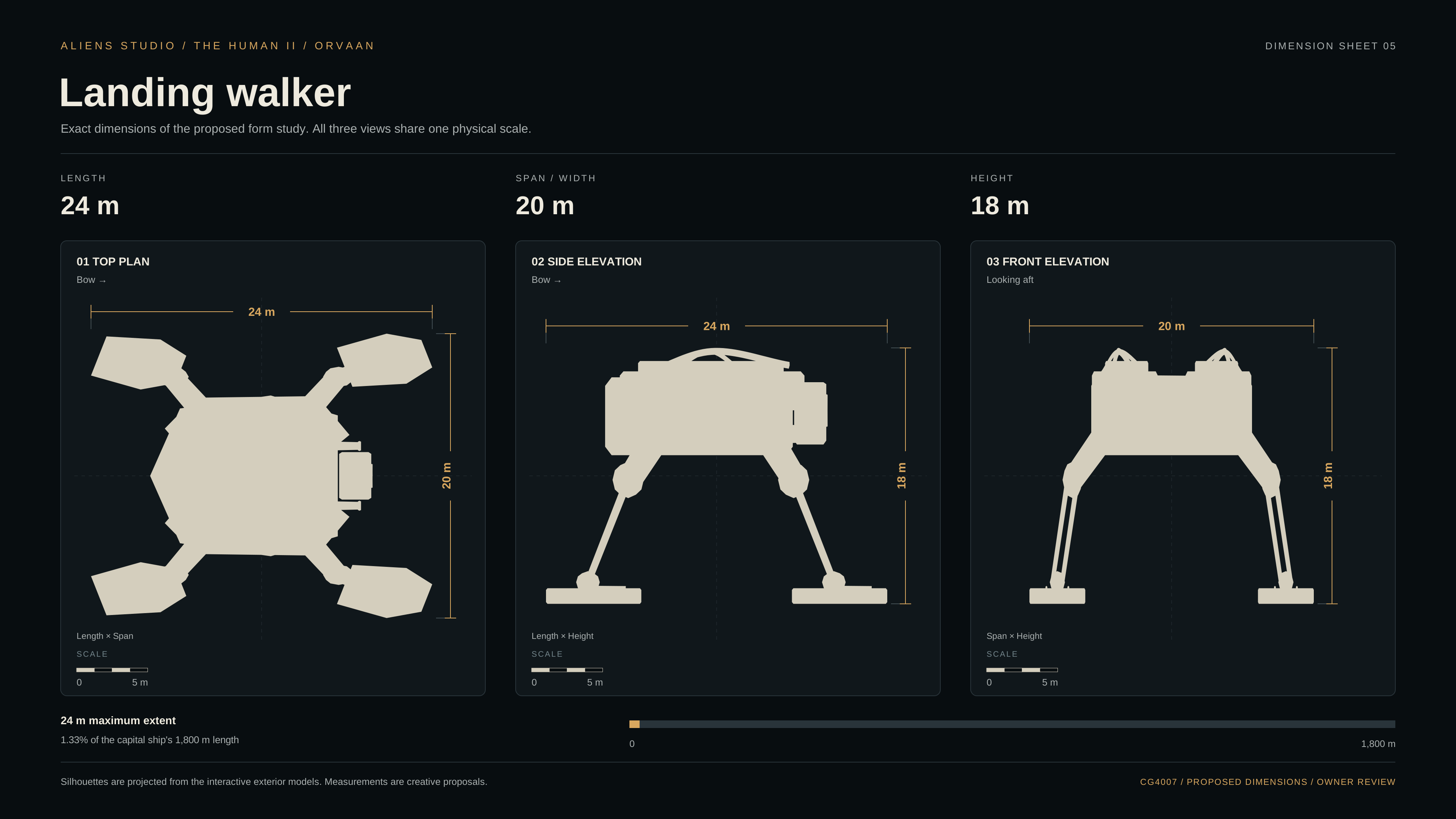
Landing walker — proposed scale chart
Four splayed articulated legs support a low twin-shoulder body. Pale shoulder ribs frame a narrow central head with three amber optics; two short weapon tubes sit within the armor. Designed for the Epsilon Eridani moon landing and Proxima's black jungle. Proposed dimensions and exterior; the interactive mesh is a concept form study.
Origin, dimensions and status
CG4007 vector reference; not an engineering specification.
Delivered 3840 × 2160. Working reference; not owner approval or a final film frame.
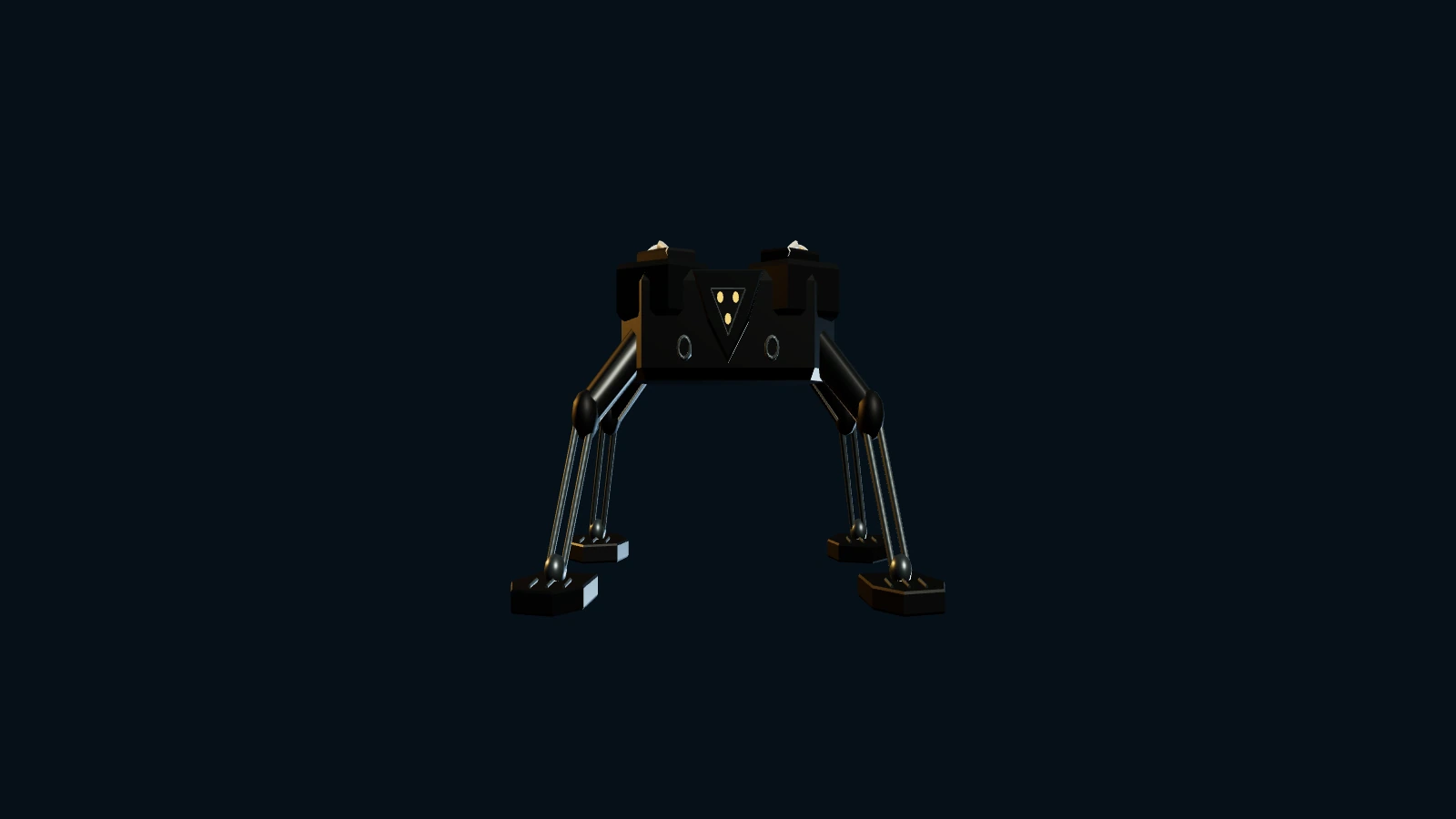
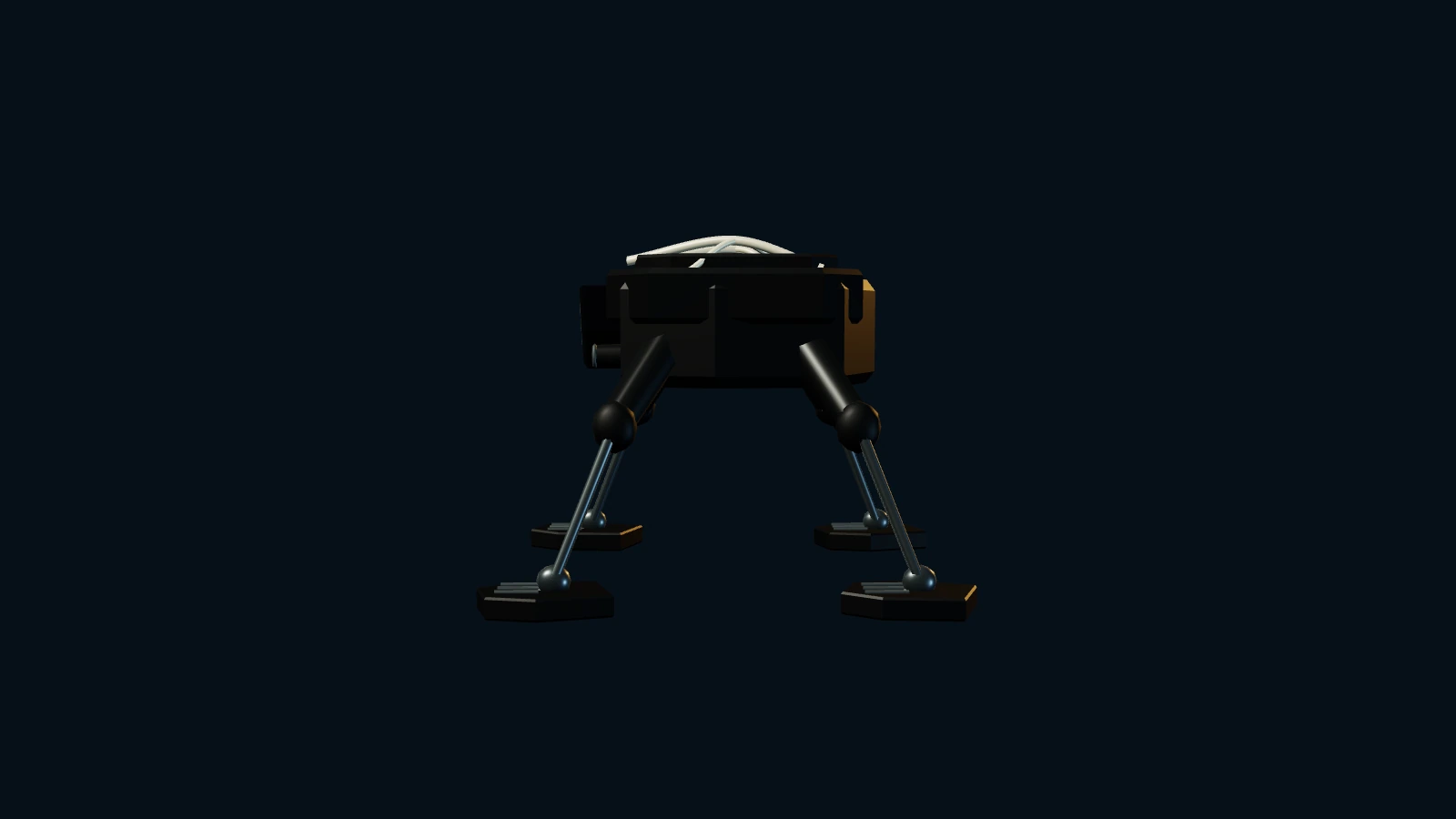
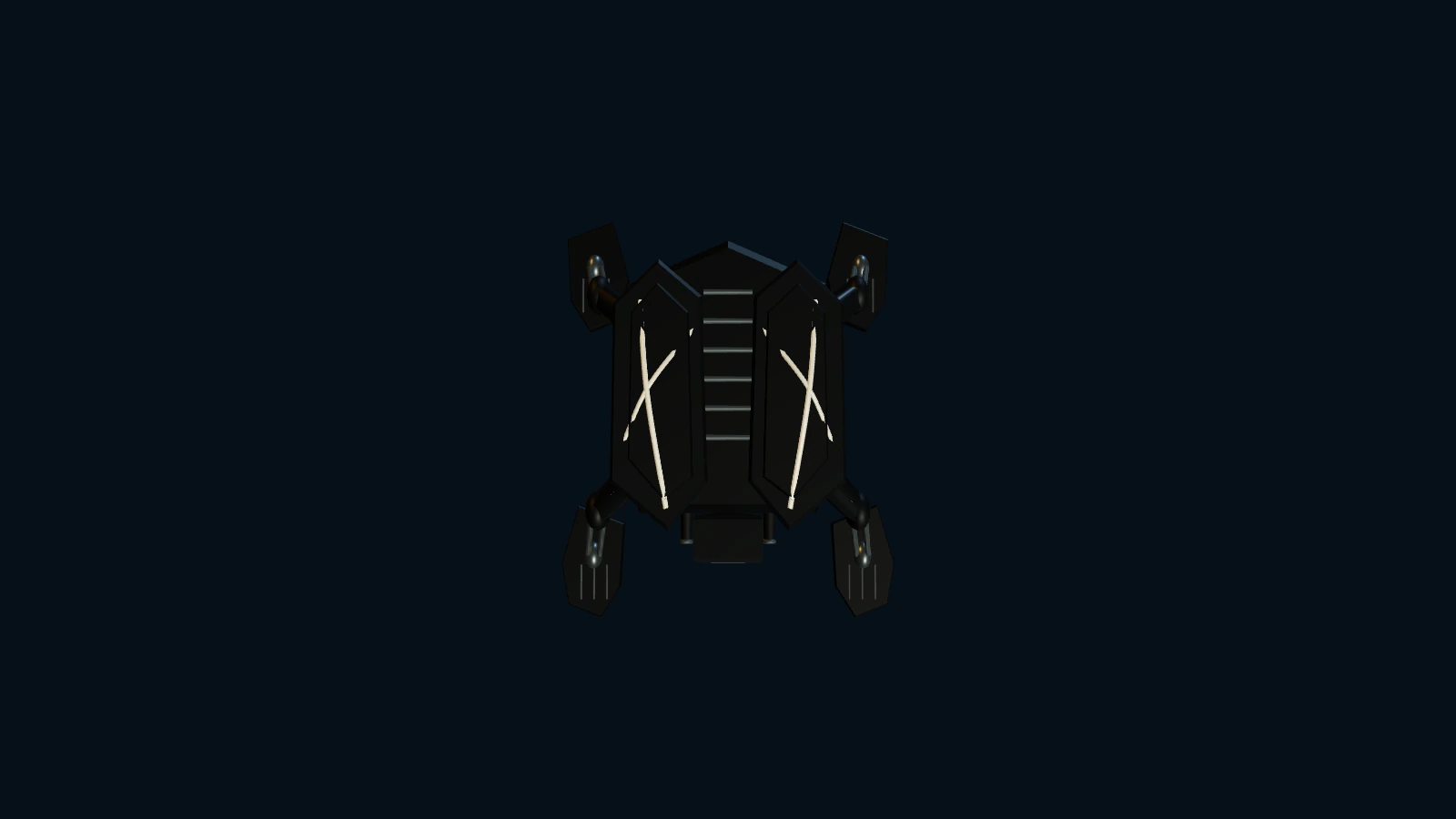
Three newly rendered viewpoints.
These native1600 ×900 views were rendered from the same geometry used in the model below. They are new procedural stills, not new generated character photography.
 OPEN ORIGINAL ↗
Orvaan Landing Walker — front inspection
A new camera angle of the existing artist geometry, not a newly approved design or movie photograph.
Origin, dimensions and status
Rendered natively at1600 ×900 from the same makeModel source used in the interactive viewer.
Delivered 1600 × 900. Working reference; not owner approval or a final film frame.
 OPEN ORIGINAL ↗
Orvaan Landing Walker — side inspection
A new camera angle of the existing artist geometry, not a newly approved design or movie photograph.
Origin, dimensions and status
Rendered natively at1600 ×900 from the same makeModel source used in the interactive viewer.
Delivered 1600 × 900. Working reference; not owner approval or a final film frame.
 OPEN ORIGINAL ↗
Orvaan Landing Walker — above inspection
A new camera angle of the existing artist geometry, not a newly approved design or movie photograph.
Origin, dimensions and status
Rendered natively at1600 ×900 from the same makeModel source used in the interactive viewer.
Delivered 1600 × 900. Working reference; not owner approval or a final film frame.
Take the model in your own direction.
Optional source-model inspection. Original references and rendered angles do not require3D.
Scale is a proposal, not a specification.
- Proposed length
- 24 m
- Proposed span
- 20 m
- Proposed height
- 18 m
Four splayed articulated legs support a low twin-shoulder body. Pale shoulder ribs frame a narrow central head with three amber optics; two short weapon tubes sit within the armor. Designed for the Epsilon Eridani moon landing and Proxima's black jungle. Proposed dimensions and exterior; the interactive mesh is a concept form study. Every model is fitted independently to its viewport. Compare dimensions in the source chart, not the apparent size of screenshots.
See the fleet from another angle.
The new Sickle and Knife camera studies use the same source-model approach. They complement the existing Cinema programme without representing an additional performance or battle scene.
Know what this design represents.
Is the walker a spaceship?
No. It is a ground-vehicle form study associated with the proposed Epsilon and Proxima landing settings.
Does it contain a Human Persona?
The current source does not establish that. Human Cyborg Persona rules are not automatically assigned to an Orvaan vehicle.
Does the model show a physically simulated walk?
No. It supports camera inspection of the static articulated design, not a validated gait or terrain simulation.
Are the landscape associations finished scenes?
No. They are production-setting connections, not proof of a completed sequence or an approved character performance.
The object is only part of the story.
One source. Clear boundaries.
The Cyborg movie Bible governs the story. The names, geometry and reference artwork here come from CG4007’s existing studio collection. New camera renders change the viewpoint, not the underlying design or its approval state.
Original character photographs and existing enemy profiles remain available. No anonymous face is reassigned and no human Persona identity is invented for an enemy machine. The model is a visual study without operational controls.
Story and media notes ↗