A remembered beginning
Tomás Varga, an asteroid-mining captain who died centuries ago
 THE HUMANALIENS STUDIO
Meet the people. Discover their worlds.
Follow the spacecraft, scenes and ideas that connect them.
A film universe in development. Artwork and short motion studies are not final movie footage.
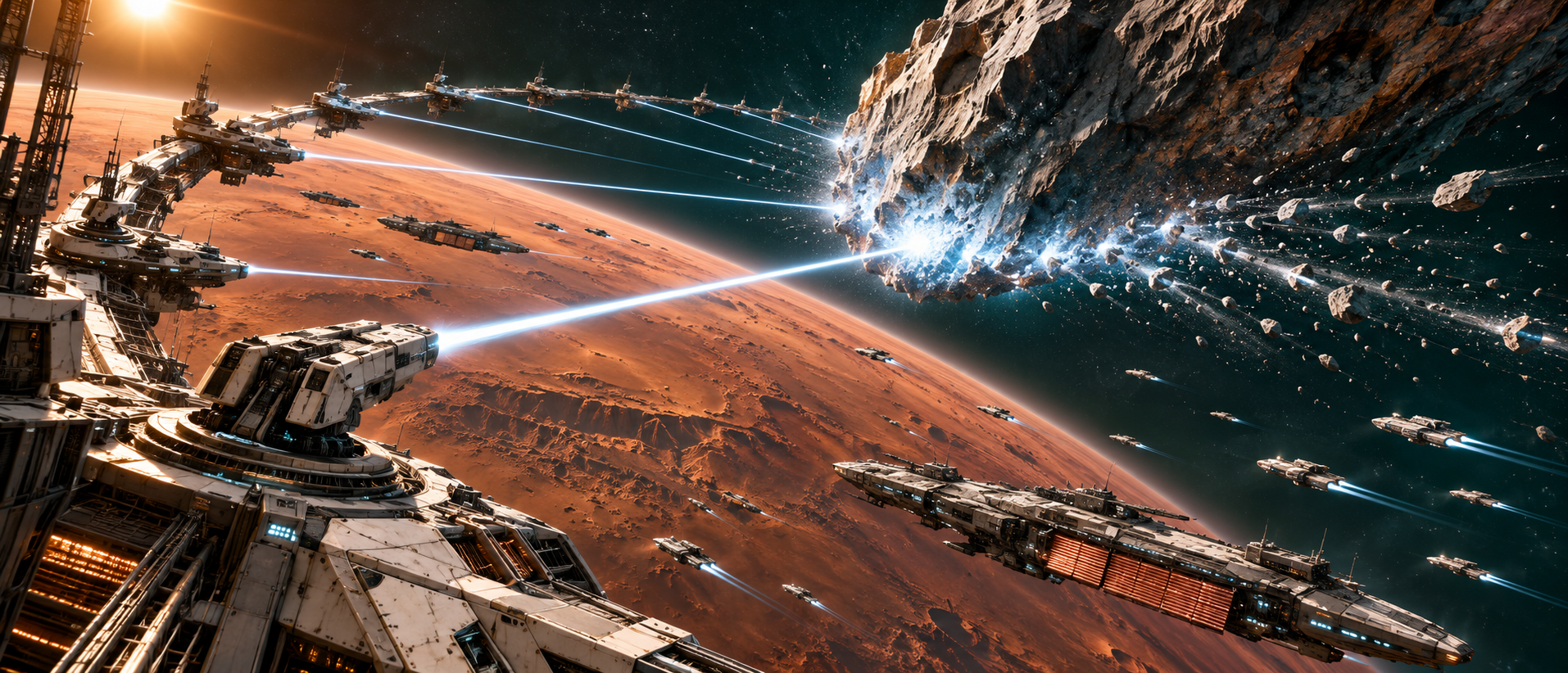
The largest turn may be the slowest one.
Context artwork only. Dedicated character face/body design remains pending.
Old Rock Varga is the roster's working name for a Mars-built Colossus carrying asteroid-mining captain Tomas Varga's Persona. The concept anchors to a rock and applies sustained force; it does not instantly redirect any threat.
Story-development spoilers. Roster direction approved9November2026; working names and final visual design remain separately reviewable.
So far away that his replies arrive minutes late (real light delay) - and he pushes for weeks, not seconds.
The numbered power scale is an internal storytelling aid, not a measured performance rating. Gate-based concepts remain explicitly speculative; no diagram on this page validates an engineering mechanism.
The roster derives Varga from an asteroid-mining captain who lived centuries earlier. That experience connects the character to work performed in space before it becomes part of a conflict. A ship-sized body changes the scale of the image but does not remove the person behind it. The working name Old Rock Varga and the Colossus form remain attached to the source plan rather than borrowed from a different robot's gallery. This page has no approved portrait or final body model to reveal; its illustrations concern the related world and infrastructure, not a secretly completed design.
The science ledger makes the rock's size and the available warning time part of the problem. Varga anchors and pushes through a controlled relationship with the mass rather than using an unexplained remote gesture. A small change applied early can serve a different situation from an enormous late change. The character is therefore not an answer to every impact in the film. The website's motion diagram is symbolic and has no distance or time scale. It communicates sustained work, while refusing to turn a rotating schematic into evidence that an emergency can actually be solved.
The new visual plan restricts copper to Mars rather than applying it to every human machine. Varga is explicitly Mars-built, so that material direction belongs to this design in a way it does not automatically belong elsewhere. The source also calls for visible engines and a body whose scale remains honest. This matters for the ensemble image: a vessel-sized machine belongs in orbit, not hovering over an ordinary city with no supporting consequence. The eventual approved art must meet the new look-book process. Existing Mars images provide context without approving the new Colossus silhouette.
Varga's late answers come from communication distance. His habitual opening can carry humor while reminding the audience that a question had to travel. That is more useful than adding a delay only when the plot needs inconvenience. The same physical honesty connects him with Noor, Ira Choir and Kai, whose different environments also affect communication. His partnership with Yuki is another responsibility rather than a universal power upgrade: the Gate rig has to be carried and managed on the large body. Neither the working name nor that collaboration settles every final scene.
Tomás Varga, an asteroid-mining captain who died centuries ago
Colossus, ship size; Mars-built, so copper is allowed on him
So far away that his replies arrive minutes late (real light delay) - and he pushes for weeks, not seconds.
Old Rock Varga is the roster's working name for a Mars-built Colossus carrying asteroid-mining captain Tomas Varga's Persona. The concept anchors to a rock and applies sustained force; it does not instantly redirect any threat.
Persona → body → responsibility
Readable without3D. No scale, timing or physics is simulated.Optional diagram. It does not depict an approved character, Gate mechanism or physical simulation.
These three existing images identify connected source material. They are not newly generated portraits, approved robot looks or finished scenes for Old Rock Varga. Follow each source page for its complete photographs and classification.
Mars — source context, not a new portrait or final body design for Old Rock Varga
Read the source subject ↗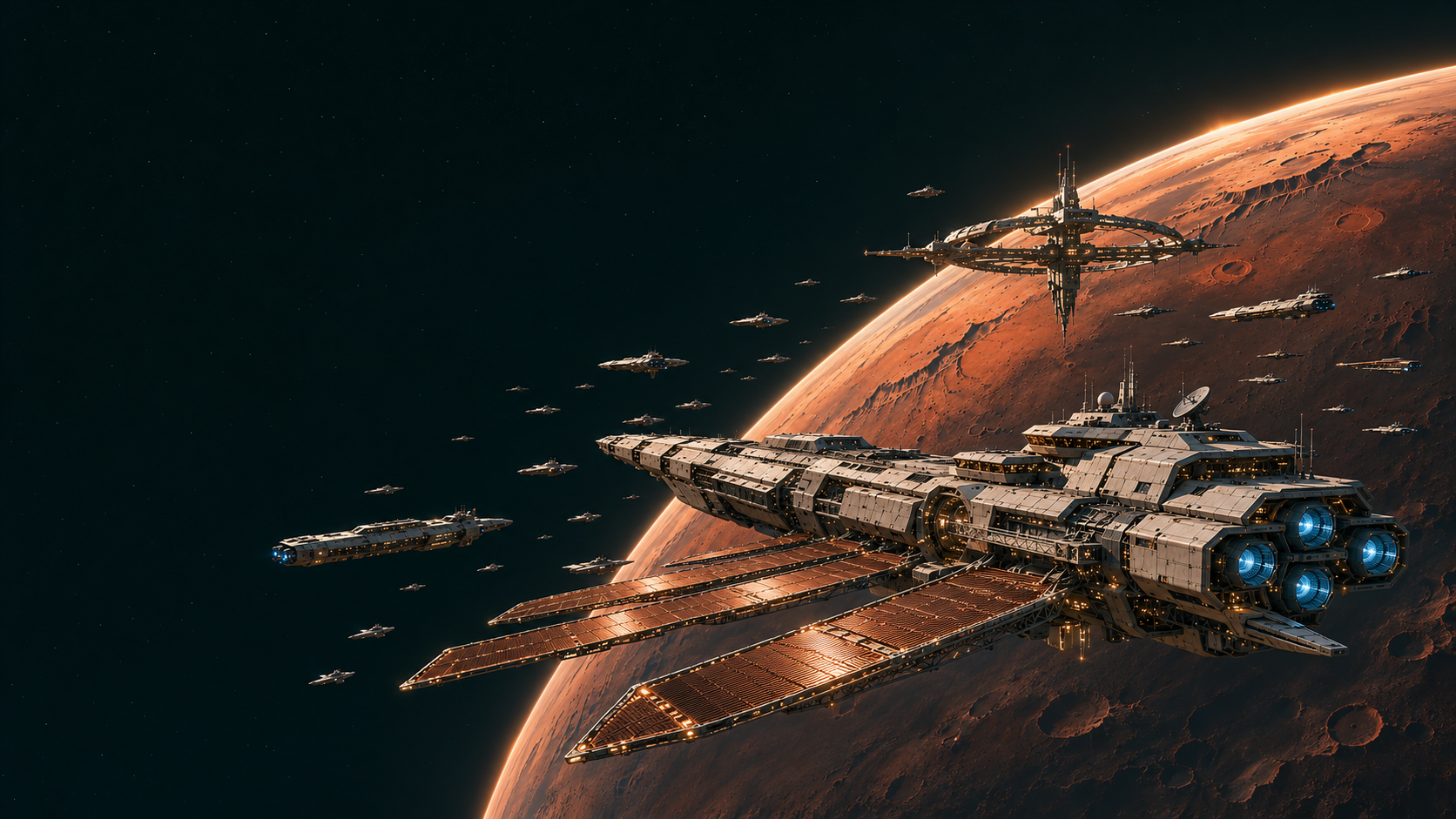
The Orbital Dock — source context, not a new portrait or final body design for Old Rock Varga
Read the source subject ↗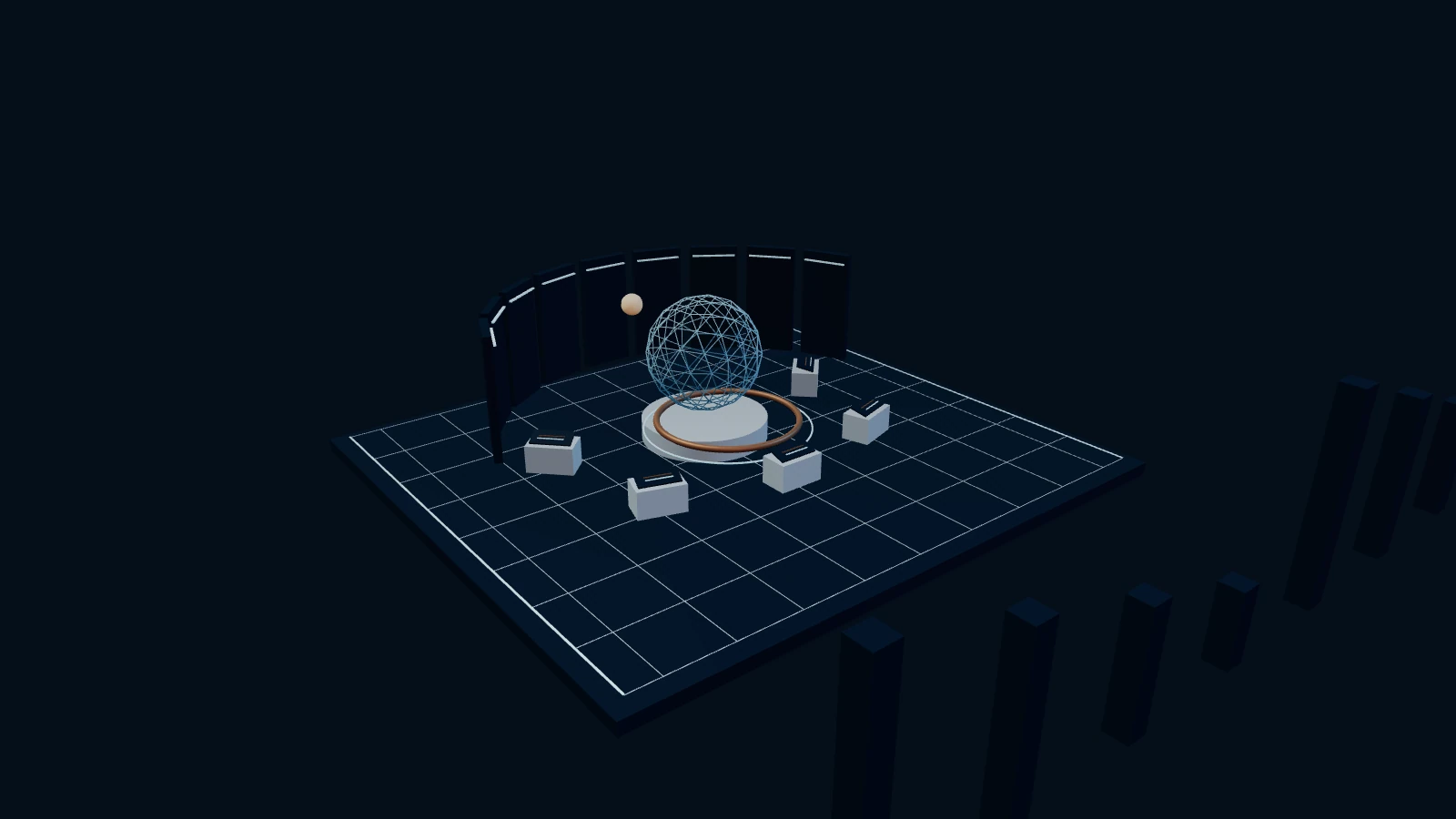
Mars Shield Control Room — source context, not a new portrait or final body design for Old Rock Varga
Read the source subject ↗Artwork motion study. This existing study supplies thematic context. It does not show a completed performance by Old Rock Varga or approve a new body design.
Open the full scene notes ↗No. The source requires anchoring, sustained force and sufficient warning; the updated ledger explicitly preserves impossible late-response cases.
No. This page records the roster direction and contextual references. Dedicated visual production remains pending.
The approved visual direction permits copper on Mars-built machines, and Varga's Colossus is explicitly Mars-built.
No. It is an unscaled explanatory diagram, not an orbital calculation or an operational procedure.
This journal follows the owner-approved Persona Roster and9November2026 science corrections. Later directions take precedence over older development drafts. The roster is an approved story direction, not a claim that every face, body, line of dialogue or physical mechanism has been completed or validated.
The new look-book approval sequence remains intact. Existing studio art is preserved in its own collections. New identity diagrams are unscaled symbolic website exhibits, not character models, flight simulations or approved science demonstrations.
Current production plan and review board ↗