Attend
A pilot's perspective narrows the crisis to an actionable responsibility.
 THE HUMANALIENS STUDIO
Meet the people. Discover their worlds.
Follow the spacecraft, scenes and ideas that connect them.
A film universe in development. Artwork and short motion studies are not final movie footage.
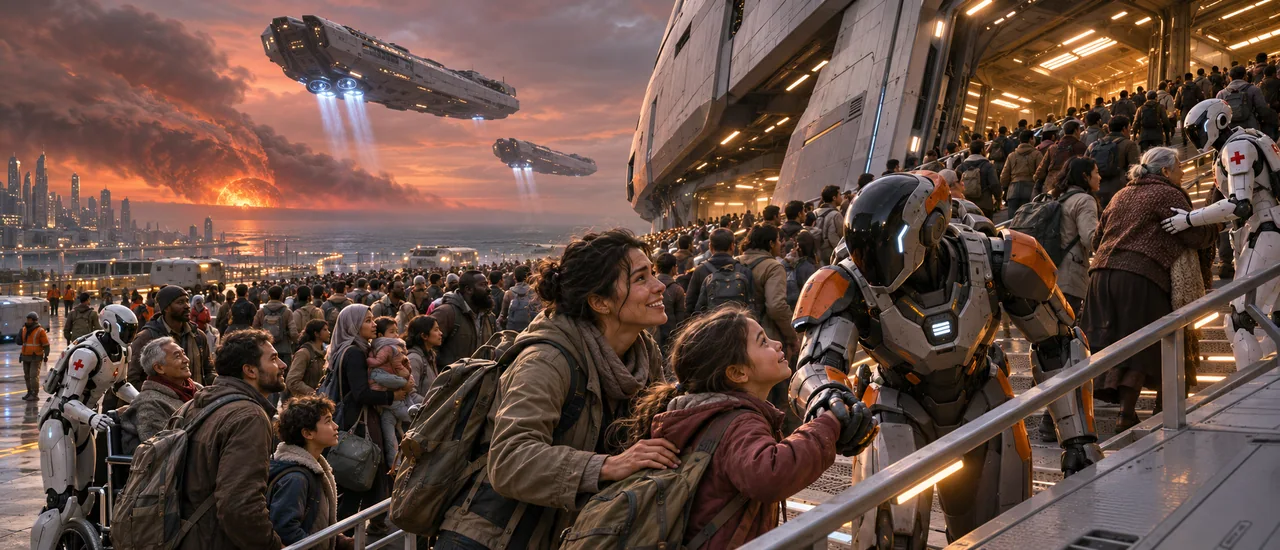
A familiar voice beside an unfamiliar horizon.
A pilot's place inside the evacuation story
A film world in development / Context artwork + interactive schematic
Kofi's cockpit is a named setting in The Human II's production brief. It brings the evacuation pilot's perspective close to the people, machines and choices involved in departure. The page does not invent a new ship identity, lock cockpit controls or settle which fleet design belongs to this interior before source reconciliation.
A pilot's place inside the evacuation story. Follow its connections to the wider film world, from everyday life to the choices made under pressure.
The evacuation is enormous when viewed from outside. A cockpit changes the scale by placing the audience close to one person responsible for part of it. The useful tension is not that a pilot controls the entire catastrophe, but that a decision in a small space affects people beyond the view. Kofi's setting can carry that connection without turning him into the only contributor to survival. Rescuers, crew, transport machines and people waiting to board each see different parts of the event. The cockpit is a viewpoint into their coordination, not a substitute for the whole ensemble.
The later story direction makes vehicles and ships conversational participants. A pilot can therefore share a moment with the vessel's personality even when another human is not visible beside him. That is different from claiming that every ship carries a recorded human life. The source distinguishes default AI Personas from learned Human Personas, and those origins remain meaningful. This setting does not assign a dead relative's identity to the cockpit or invent a final exchange with Kofi. It keeps the more general idea: the machine has a way of relating to the person who relies on it.
Production notes refer to Kofi's cockpit and, elsewhere, to different human ship roles. The appearance of a name in two lists is not enough to manufacture a new vessel class. The current page therefore connects Kofi with the existing evacuation and carrier material while leaving the exact exterior/interior match to the fleet references. It avoids a made-up capacity, a fixed seat count or an unsupported claim that this is an interceptor cockpit. The absence of those details is not empty storytelling; it protects continuity until the design team and owner settle the actual ship.
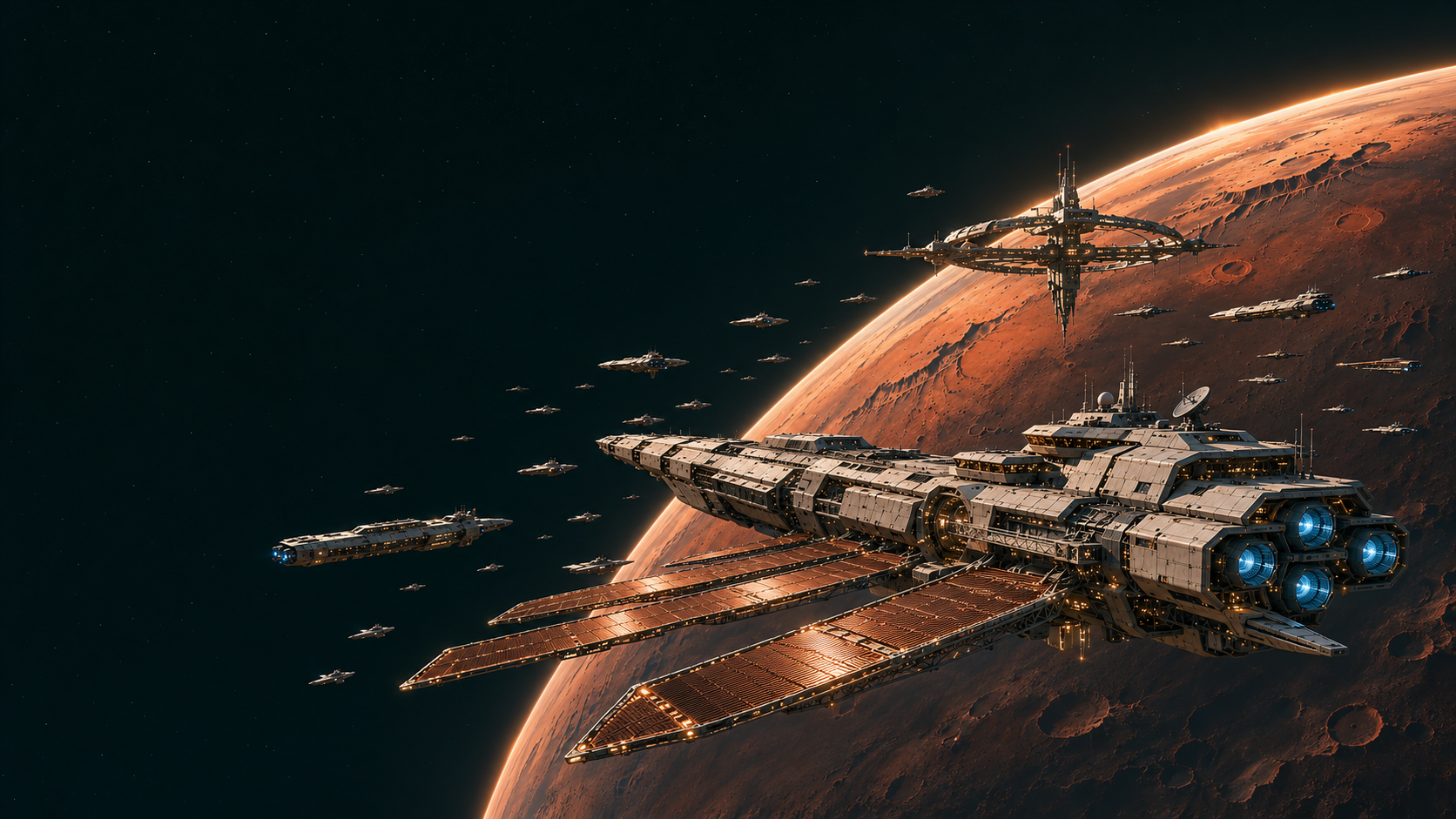
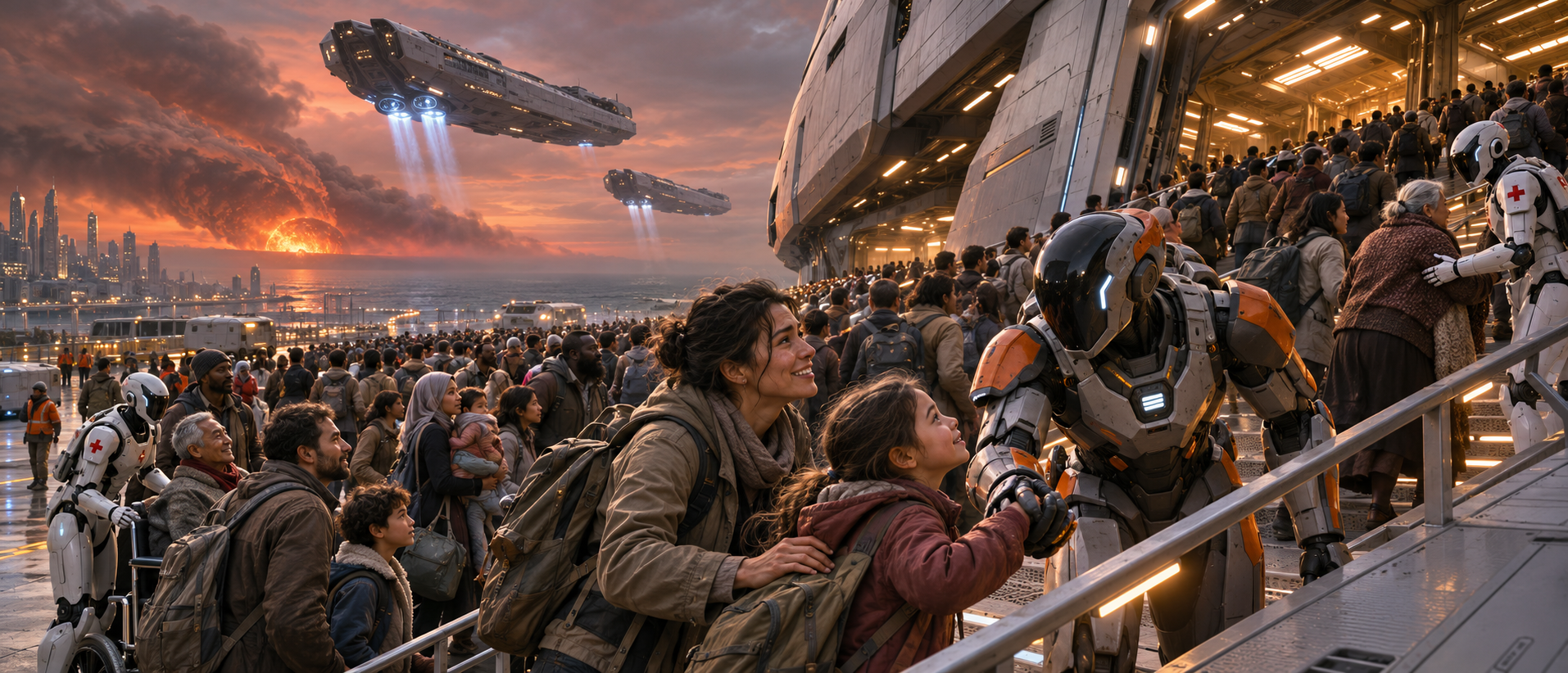
A cockpit can reveal pressure through what a person notices, what a machine reports and what remains outside the frame. It does not need an invented countdown on every display. The source's departure proposals carry their own timing and development status; the website does not turn a draft into a final measurement. A quiet view toward Mars and an evacuation image can support the emotional transition without claiming to be the same shot. The existing images remain contextual, and their captions make that distinction before visitors open the full-resolution files.
Departure can move people away from immediate danger without ending their story. Kofi's cockpit belongs to that continuing journey: a place where getting someone to safety is one responsibility among the responsibilities that follow. The linked pages lead from Kofi to the fleet and Mars, and the playable departure study provides the existing visual pacing reference. The interactive transit model remains an abstract website exhibit, not the final controls or instrumentation of his ship. Final cockpit angles and matched production layouts remain visible gaps rather than being concealed with another character's portrait or a generic model labelled as approved.
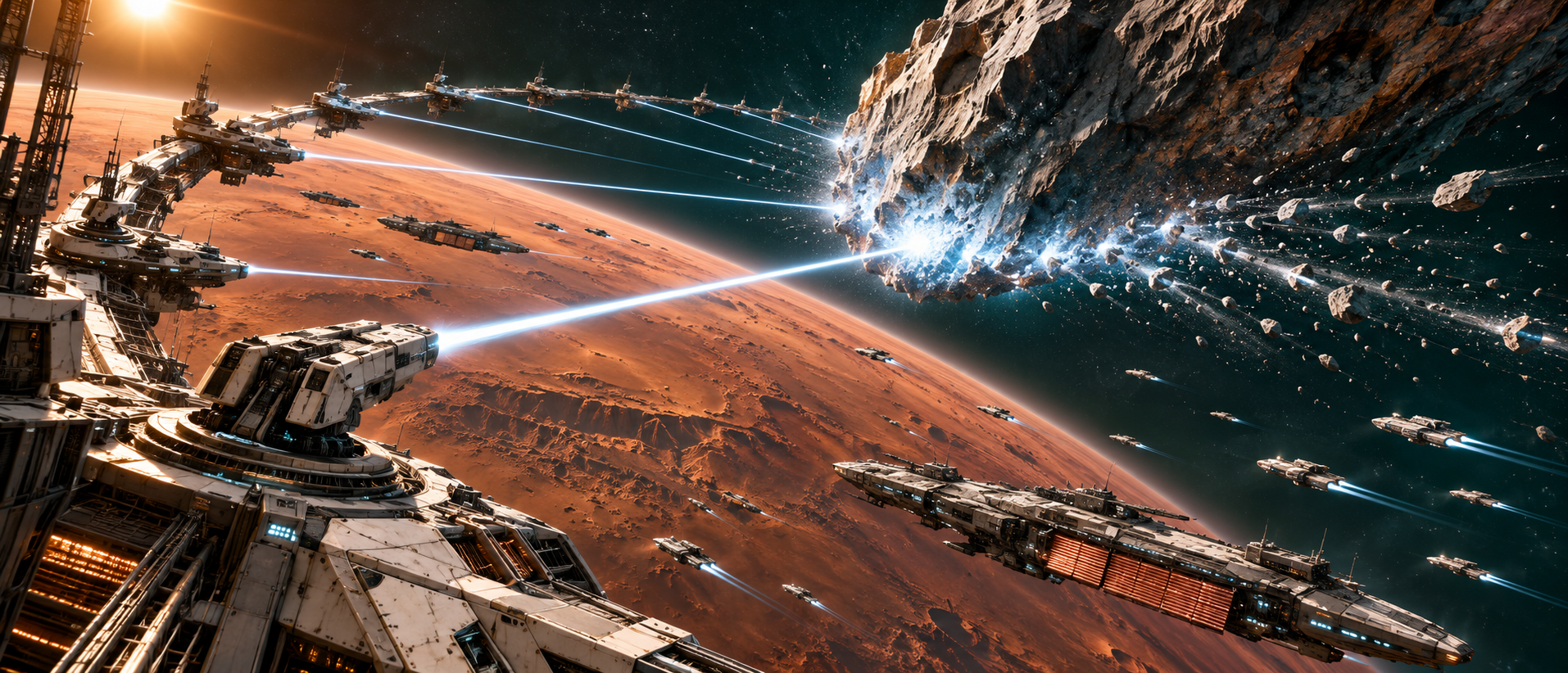
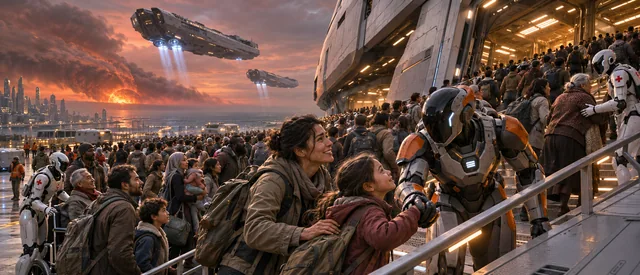
Static artwork remains available without 3D. The exhibit is an abstract website schematic, not a final model, approved map or physical simulation.
Drag horizontally or use arrow keys to inspect. Vertical touch scrolling remains native. The phase control changes geometry; it is not a claim about story timing.
A pilot's perspective narrows the crisis to an actionable responsibility.
Human judgment and a machine's personality work together.
Arrival creates the next responsibility rather than ending the story.
Watch the the last departures artwork motion study: 12 seconds of silent concept imagery, with a shot guide and links to The Human story dossiers.
Related story context. This existing clip is not a new scene at Kofi's Cockpit or a completed character performance.
Read the full watch page ↗No. A setting is not a new vessel identity. Its final exterior match must be reconciled with the existing fleet designs.
The page does not assign a new Persona identity. The story distinguishes vehicle AI personalities from the learned Human Personas carried by many robots.
No. They are explicitly labelled evacuation, fleet and Mars context. A dedicated approved cockpit collection remains production work.
No. It is an existing website motion study, not a completed Kofi performance or a final shot inside his cockpit.
Kofi's cockpit is named in the setting brief. This page preserves his identity without inventing a new ship class, fixed layout, finished dialogue or family relationship. All contextual media keeps its original meaning.
Source: the reviewed The Human series story record, sections 5, 16, 20, 28.4; Task/CG4008/TASK.md. Later owner decisions take precedence over older drafts. The five reading chapters are editorial interpretation of that record, not newly approved screenplay scenes.
These pages describe a fictional world. They do not announce a release date, a cast contract, real exoplanet settlements or completed production assets.
Read the story and media policy ↗Explore the places, shared roles and everyday systems that connect the larger movie universe.
Open Worldbuilding ↗