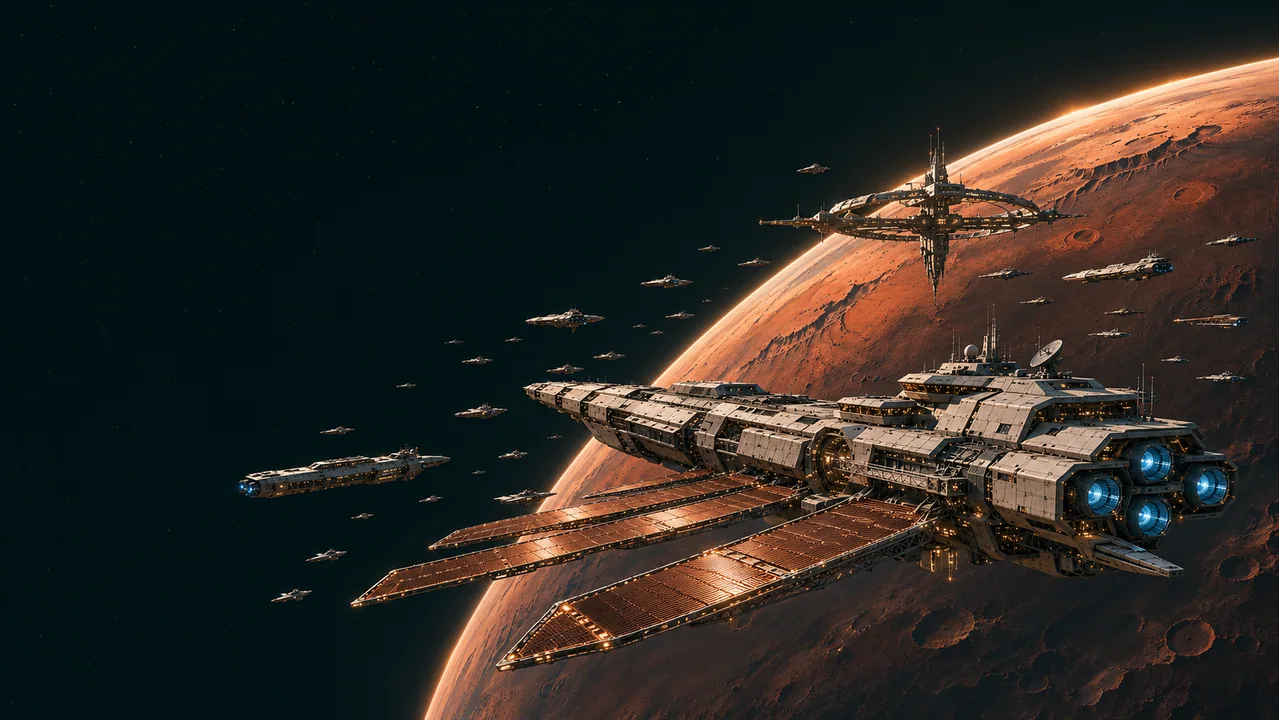
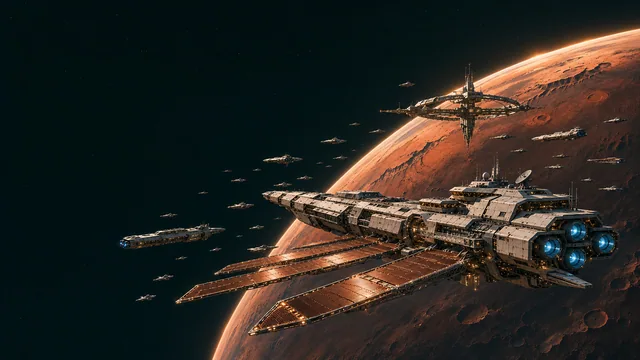
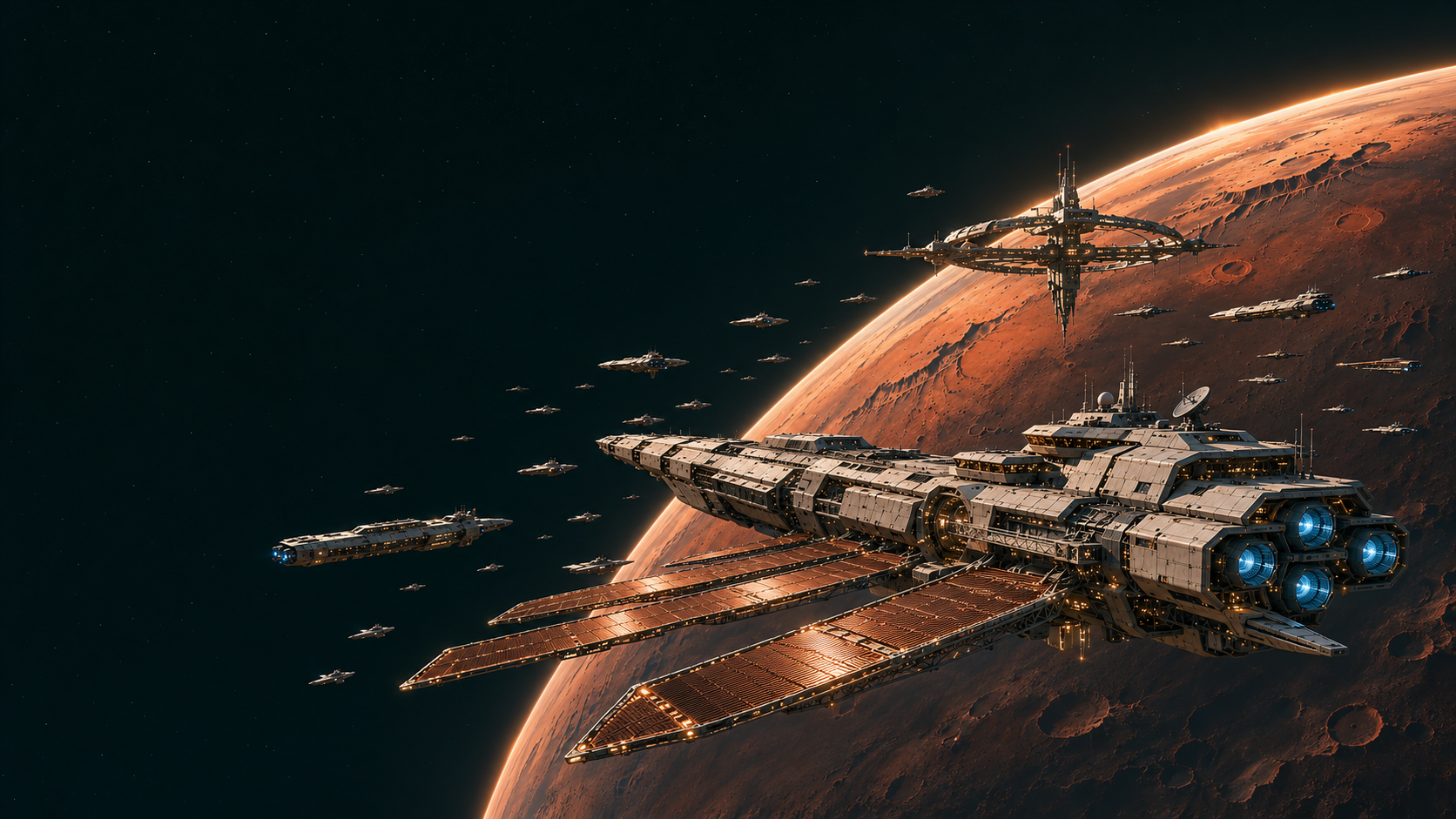
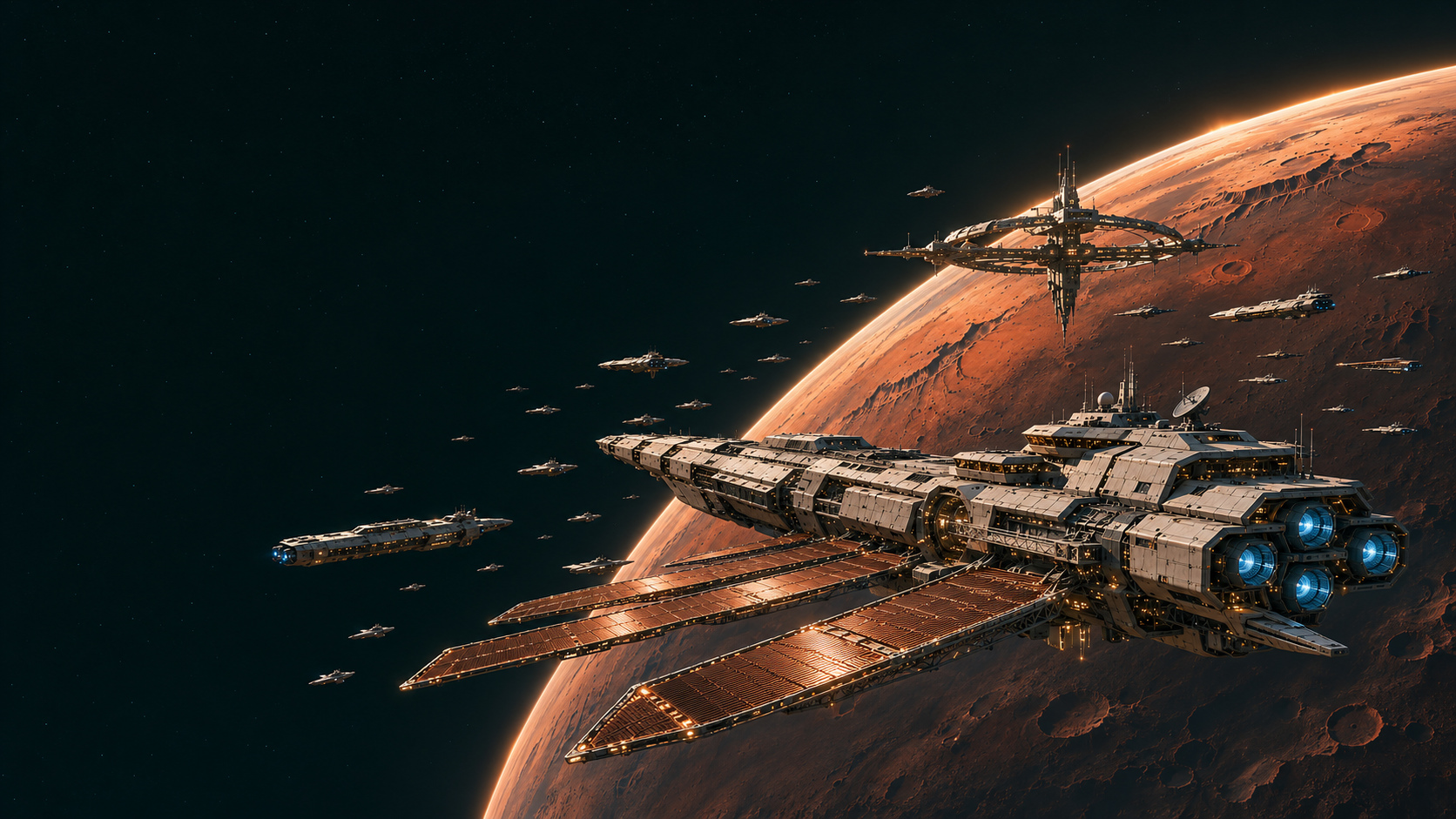
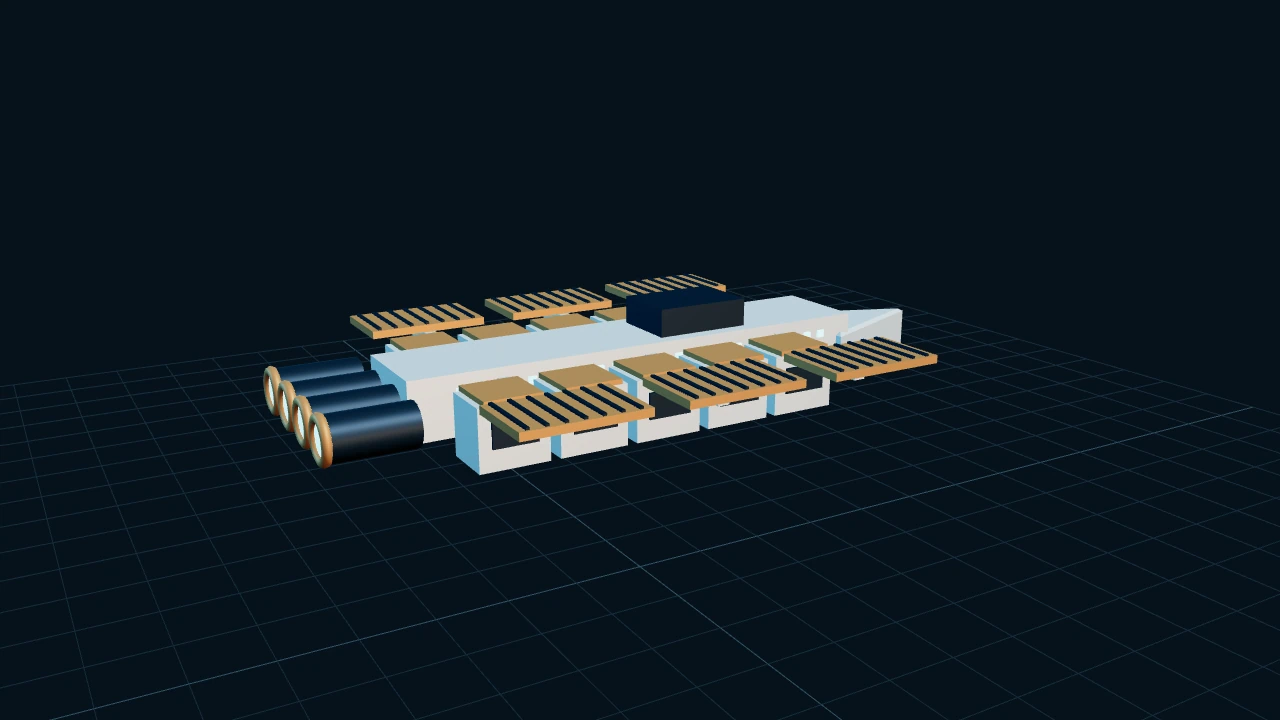
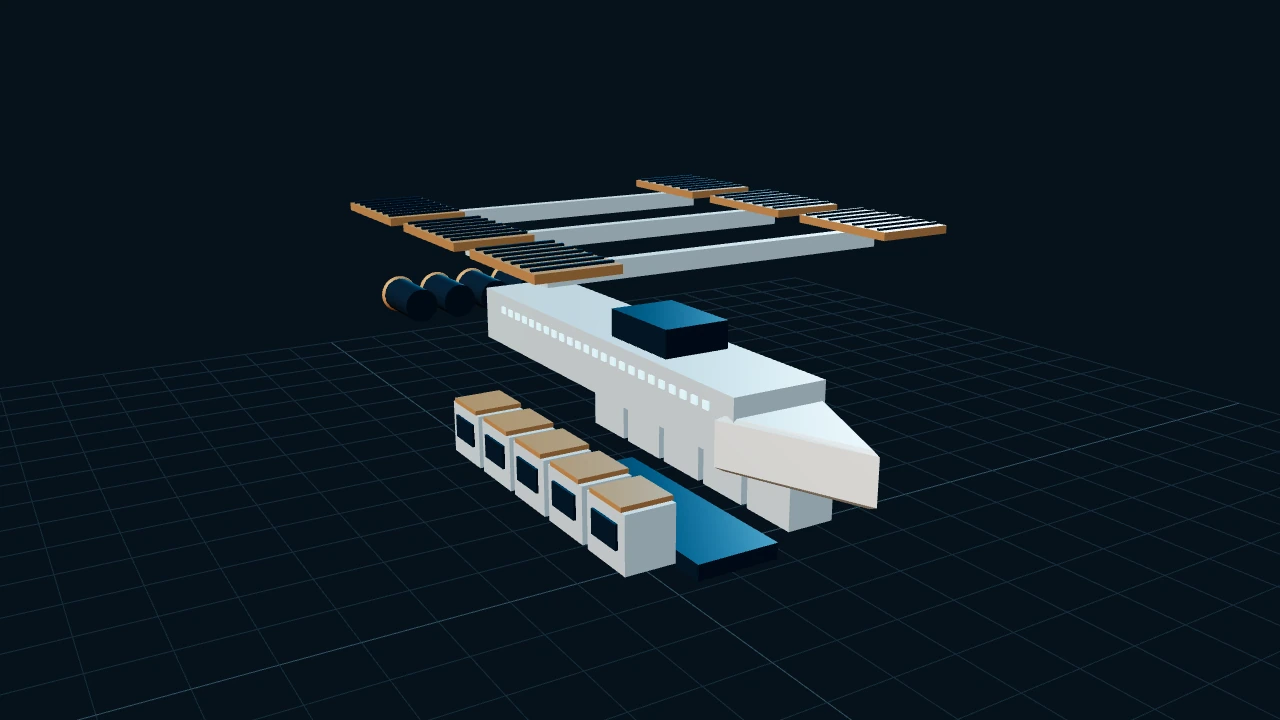
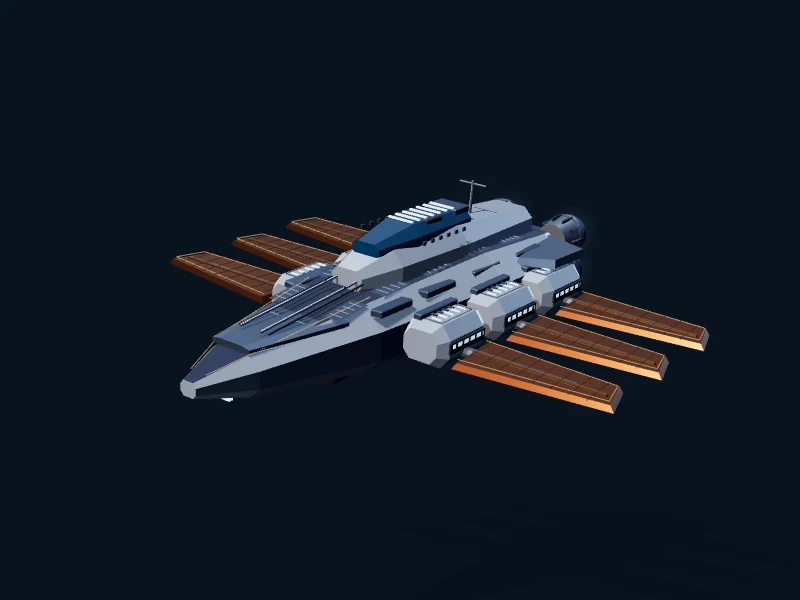
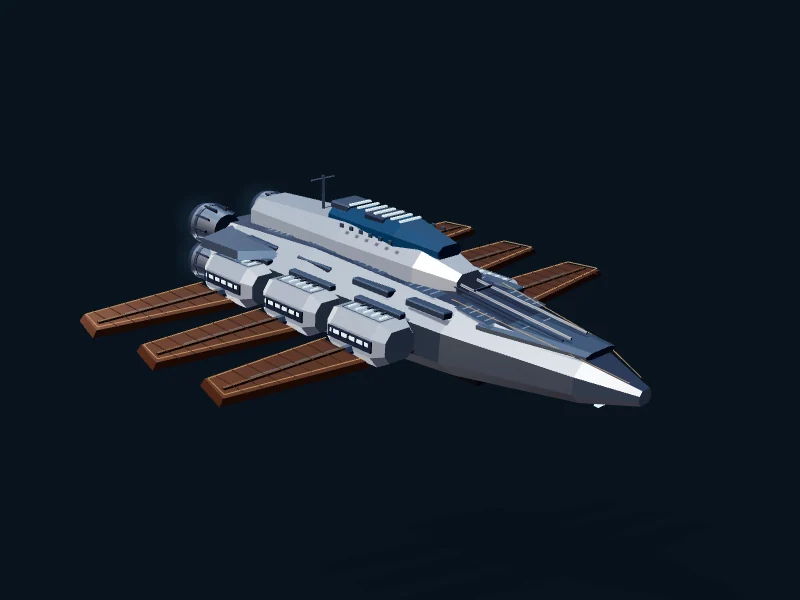
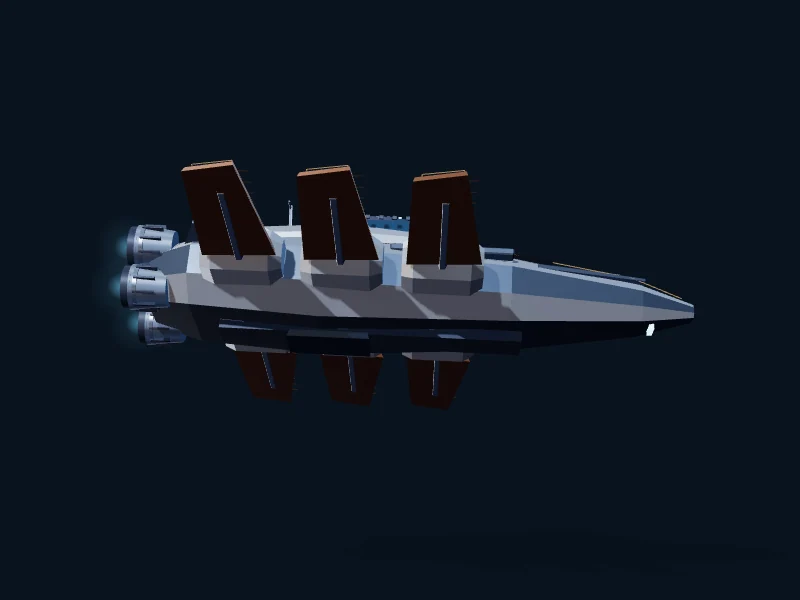
The Human Carrier is the existing evacuation-vessel design study: a long plated hull with passenger modules, rescue bays, copper radiators and four recessed engines.
Archive
Ships & fleet
Story status
Development concept
Visual archive
6 images
Connected sequence
The Last Departure
THE COMPLETE COLLECTION
A world beyond the frame.
A visual journey through the existing world, scene and design references.
VISUAL CONTEXT
Scenes, places & visual references.
Existing scene and environment artwork. These are not additional portraits of this character or newly filmed scenes.
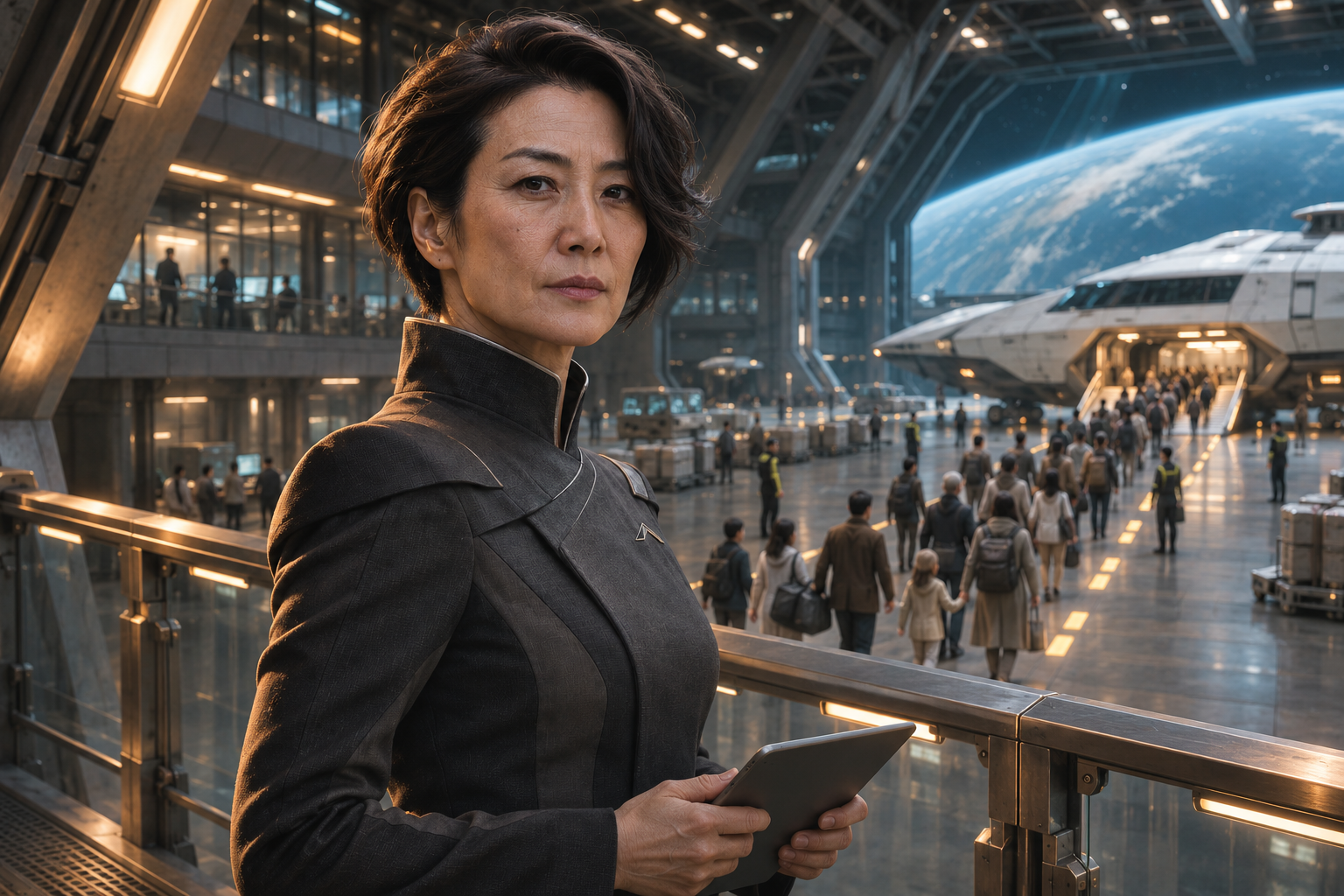
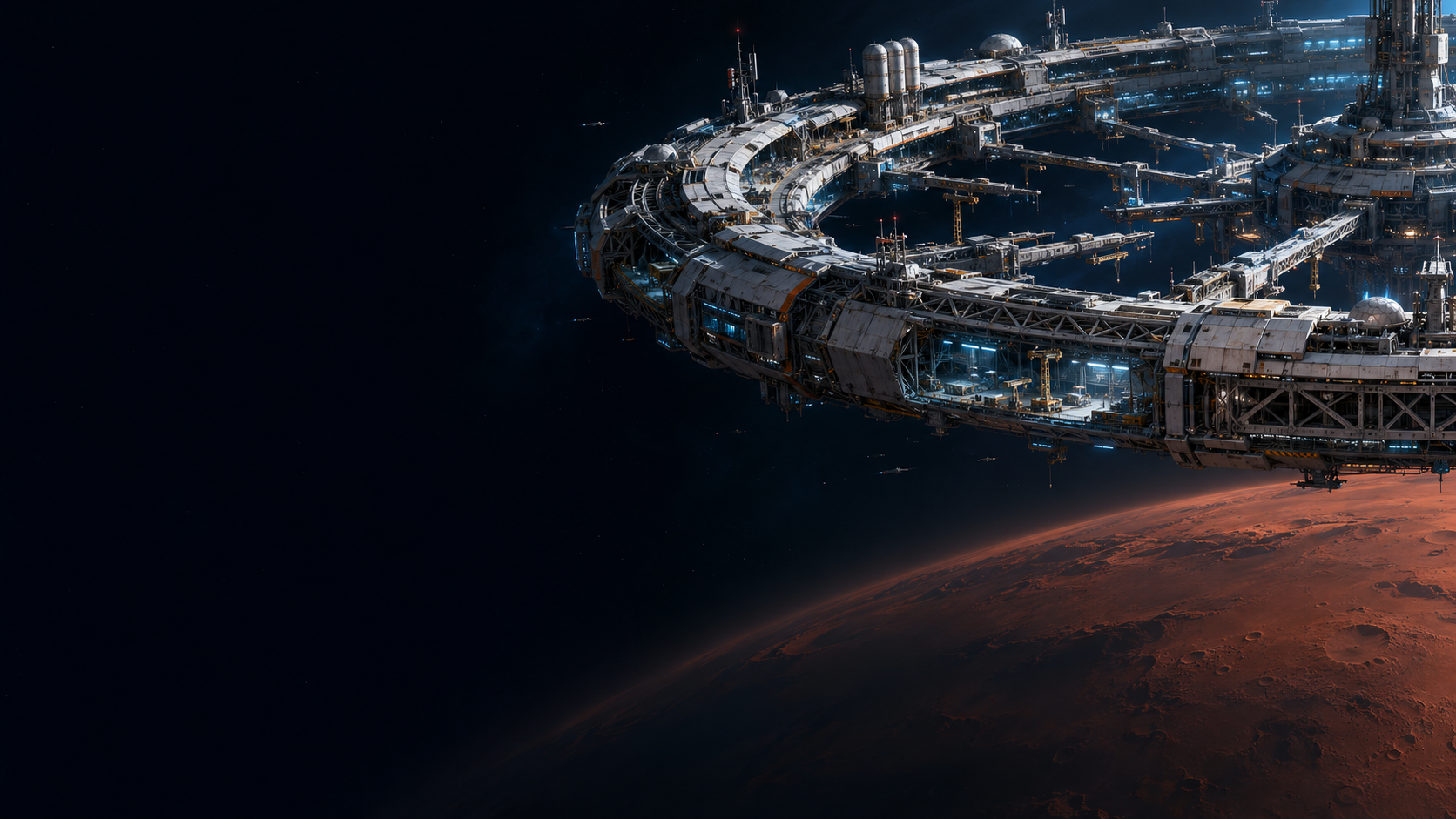
↗SCENE REFERENCEThe human fleetContext study · this is not a dedicated portrait or a completed scene↗SCENE REFERENCEEarth evacuation conceptContext study · this is not a dedicated portrait or a completed scene↗SCENE REFERENCEMars defense conceptContext study · this is not a dedicated portrait or a completed scene↗SCENE REFERENCEHero Fleet SocialContext for Human Carrier. Existing development artwork, not a final movie frame.↗SCENE REFERENCENo ship left behindContext for Human Carrier. Original character identity retained; this is not a new portrait of this dossier subject. Existing development artwork, not a final movie frame.↗SCENE REFERENCEHero Orbital DockContext for Human Carrier. Existing development artwork, not a final movie frame.
THE STORY / KEY DETAILS
Human Carrier at a glance.
Function
Civilian evacuation and transport
Human-side technology
Cyborg systems
Flight
Autonomous operation with crew collaboration
Specifications
No final capacity or dimensions announced
Story-world information from the reviewed development record. Working details are not release announcements or real-world specifications.
THE HUMAN / INTERACTIVE FLEET STUDY
Built for a different purpose.
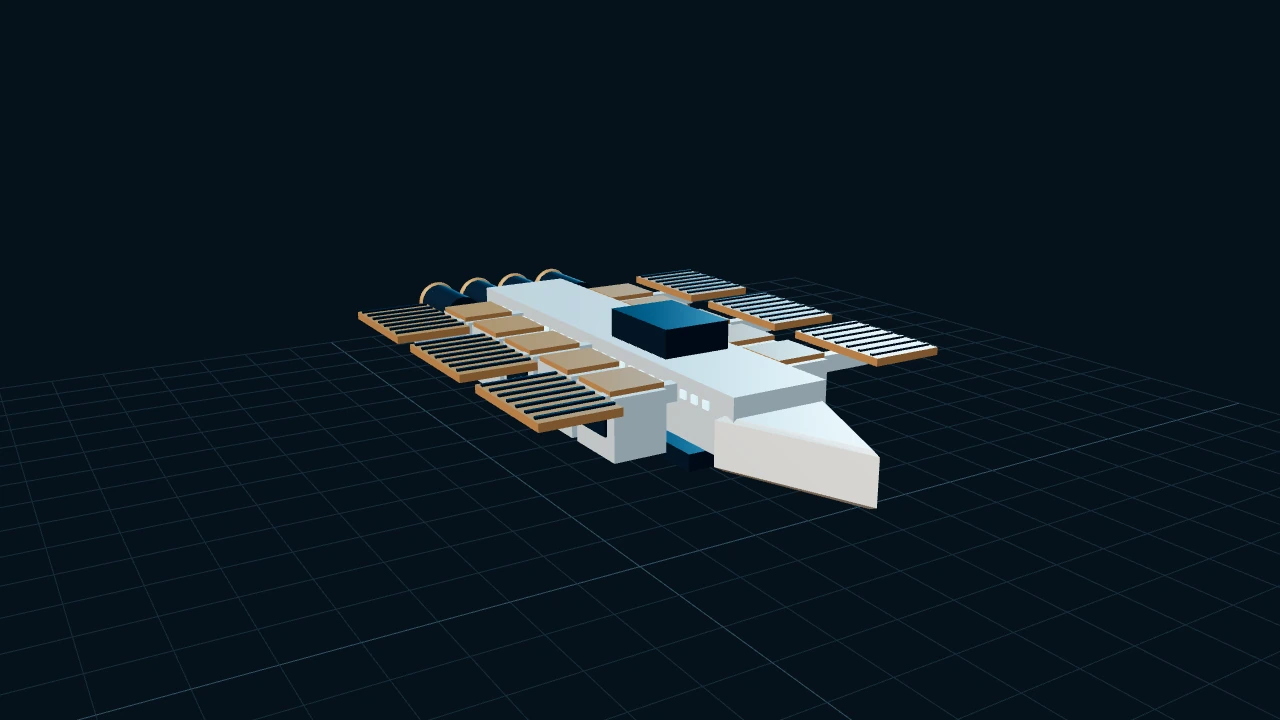
A distinct visual study for this vessel role. Inspect the parts or view all three rendered angles without JavaScript.
This new web concept gives the carrier a long central hull, a repeated rhythm of passenger pods and a sheltered transfer space beneath the spine. Copper radiator banks sit away from the pale inhabited structure so that the silhouette explains a different task from the interceptor. Open the component view to separate those visual layers, then return to the assembled ship. The movement is an inspection convention, not a proposed disassembly procedure in flight.
Human Carrier
Civilian transport / a community in motion
CYBORG / FORM STUDY NOT FINAL FILM HARDWARE
FLEET / DESIGN INSPECTIONDRAG · ARROWS · HOME
Interactive study loads near the viewport. All rendered views and source information remain available without 3D.
Hull & silhouette
The pale central spine and forward bridge organize the human-scale spaces. The window pattern is an artistic scale cue, not a passenger-capacity calculation.
Lateral structures
Three paired copper panel banks distinguish the carrier's silhouette. They communicate the film's thermal-design language without claiming a certified heat budget.
Drive forms
Four recessed drive forms give the stern a readable direction. Their light is a web effect, not measured engine performance.
Mission spaces
Ten modular pod forms and the under-hull transfer space emphasize the carrier's civilian purpose. The final cabin layout and passenger count remain open.
Three-quarter view Rendered concept · not final movie photographyReverse angle Rendered concept · not final movie photographySeparated component view Rendered concept · not final movie photography
New procedural website concept. The component separation is a visual inspection aid, not a flight operation. No final film hull, weapon specification, capacity or physical scale is claimed.
THE HUMAN / ILLUSTRATED CHAPTERS
Inside the story.<br>Beyond the frame.
Engineered to carry life.
Explore the story through its existing artwork. These visual references are development material, not a final shot sequence.
OPEN ARTWORK ↗The human fleet · Context artwork, not a finished film frame01 / THE HUMAN
SHIPS & FLEET / CHAPTER 01
Build around the people inside
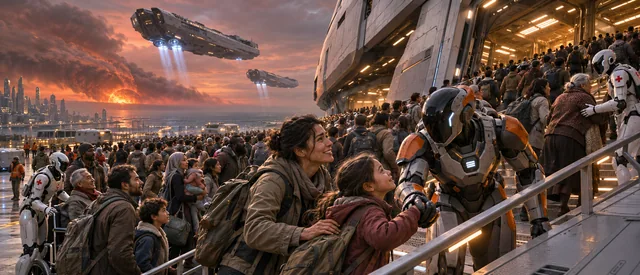
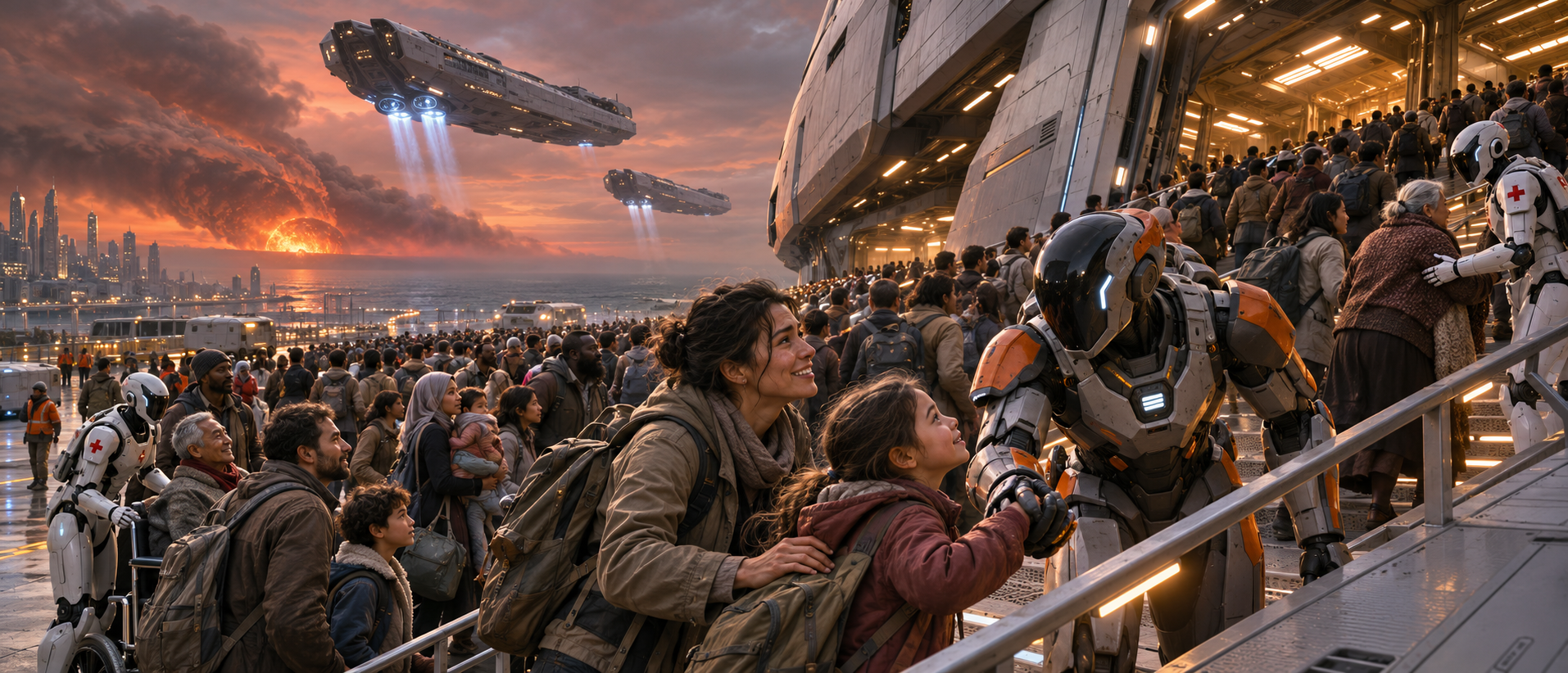
The carrier's scale matters because it contains lives, not because it wins a contest for the largest object on screen. Boarding routes, medical areas and places where families wait give the vessel a social interior. The bible calls for immense transports, but this site does not turn that direction into an unsupported exact passenger count. The existing model is a geometric silhouette study, not a production blueprint.
OPEN ARTWORK ↗Earth evacuation concept · Context artwork, not a finished film frame02 / THE HUMAN
SHIPS & FLEET / CHAPTER 02
An intelligent ship can disagree
The latest story direction lets ships speak, operate autonomously and behave as distinctive personalities. A carrier might challenge a risky departure instruction or remember a pilot's habits. The final name and voice are not locked. A personality should emerge through decisions connected to the mission, rather than a generic assistant delivering exposition while every meaningful action remains elsewhere.
OPEN ARTWORK ↗Mars defense concept · Context artwork, not a finished film frame03 / THE HUMAN
SHIPS & FLEET / CHAPTER 03
Motion has a cost
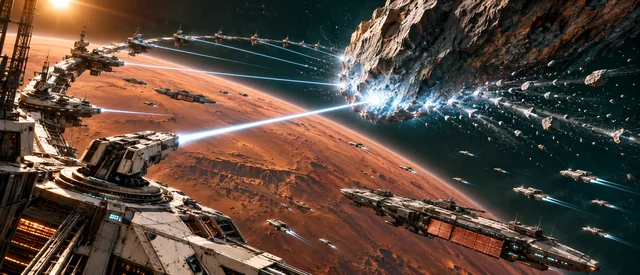
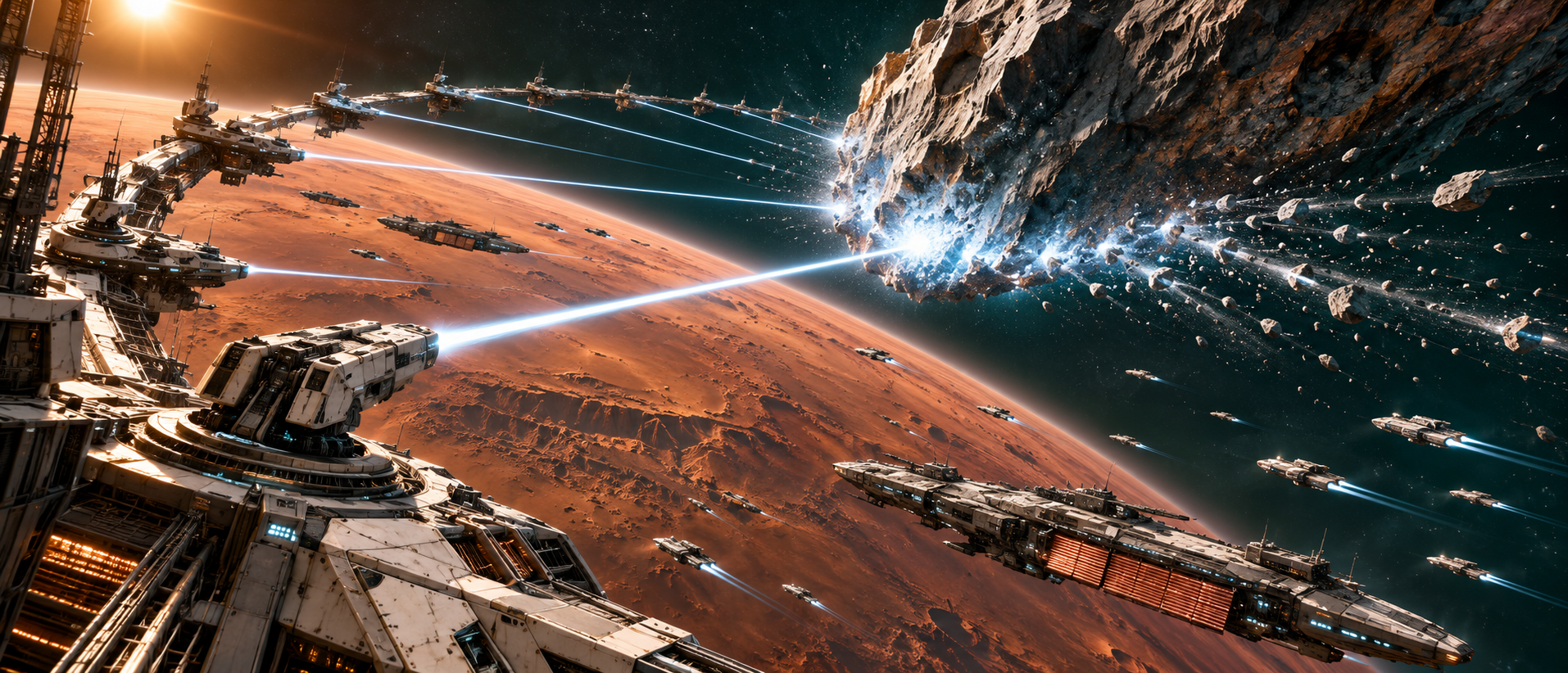
Radiator surfaces, engines and maneuvering structures make the ship's operation legible. The fiction rejects instant stops and magical universal shields. A carrier must change its motion and manage heat while protecting a vulnerable interior. Its difference from an interceptor is therefore not merely size: priorities, routes and acceptable risks are different. Han's command decisions and Kofi's cockpit choices can be read against that physical role.
OPEN ARTWORK ↗Hero Fleet Social · Context artwork, not a finished film frame04 / THE HUMAN
SHIPS & FLEET / CHAPTER 04
The departure that matters
The Earth sequence gives the carrier a clear story function. A ship that leaves too early may abandon people; one that leaves too late may not save anyone. Exact last-flight timing remains development material. The related scene page presents an editorial motion study, not a claim that the finished movie sequence has already been shot.
The last-departure concept follows the final vessels escaping Earth as the disaster spreads. It connects the scale of evacuation with the human and artificial personalities deciding whether everyone who can be reached is aboard.
Visual context · The human fleet · not a completed film frame
MOTION STUDY
Let the world move.
Slow pans, scale and transitions assembled from existing artwork. Native controls keep playback in your hands.
ARTWORK MOTION STUDY · 12 SECONDS · SILENT · NOT FINAL FILM FOOTAGE
Optional website score, played only by you. This is separate from the silent motion study and is not a final film sound mix.
INTERACTIVE 3D
A different perspective.
INTERACTIVE STUDY · CARRIER CONCEPT
Interactive concept model loads when this section enters view. The artwork and all story text remain available without 3D.
Schematic carrier concept used to explore scale and form. It is not a production-ready asset, a portrait, a physically accurate simulation or a unique final model of Human Carrier. Drag gently; vertical touch scrolling remains available.
Three actual renders of the website inspection model. Shared form studies are not presented as unique finalized hulls or astronomical maps.
DESIGN NOTES
The visual language.
FORM & FEEL
Form follows the story.
Pale plated surfaces, copper heat-rejection structures and a long readable spine distinguish the human fleet. The interactive mesh is an original website study, not a film-ready model or a manufacturing design.
CANON BOUNDARY
What the story does—and does not—claim.
No unsupported speed, passenger count or armament specification. Cyborg-built does not mean the human government belongs to the company.
Not in the reviewed source material. The current title describes its role.
Can it fly without a pilot?
Autonomous Cyborg-powered ship operation is part of the approved world direction.
Is the 3D model film-ready?
No. It is an interactive website design study.
Are the images and videos final movie footage?
No. The photographs are development artwork and the short videos are silent motion studies assembled from that artwork. They are labelled on the page. Final character portraits, scene performances and production-ready effects are not implied.
EXPLORE / THE STORY MAP
Follow the connections.
Move from this dossier to its connected characters, worlds, vessels and ideas. The interactive constellation represents editorial reading paths, not physical distances or a confirmed voyage.
Adapted from The Human Series Bible, sections 5,18,26,28.4–28.5. Later owner decisions, especially sections 26 and 28, take precedence over earlier proposals. Current status: Development concept.
The source repository may require account access. This public dossier distinguishes approved foundations, working names, contextual art and unrendered scenes. Read the canon and media policy.