Gather
A rescue path becomes a departure path.
 THE HUMANALIENS STUDIO
Meet the people. Discover their worlds.
Follow the spacecraft, scenes and ideas that connect them.
A film universe in development. Artwork and short motion studies are not final movie footage.
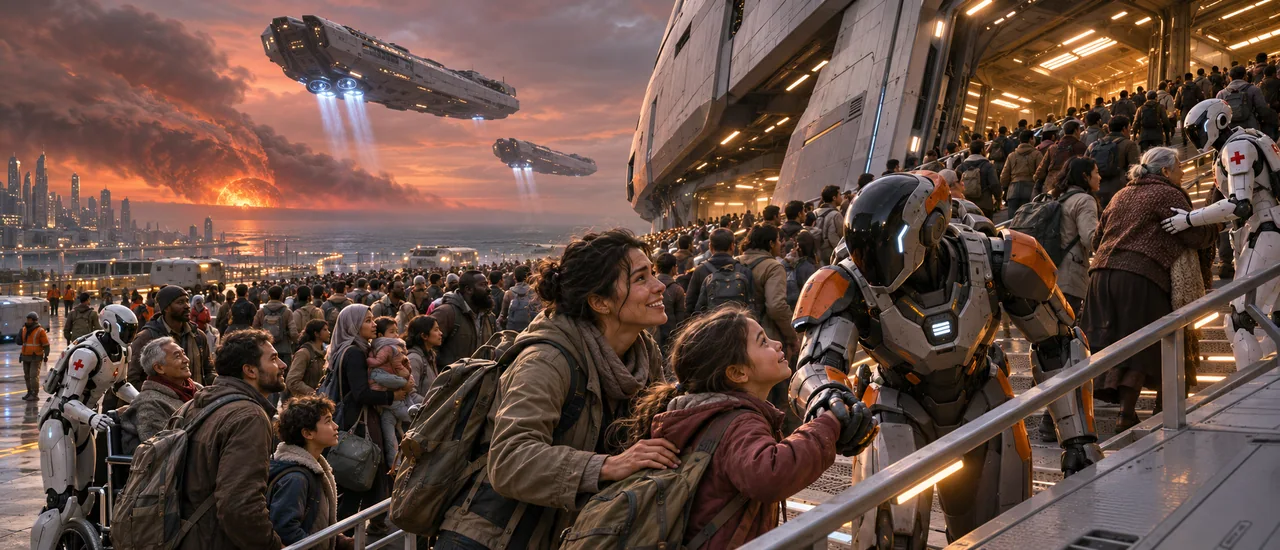
The future is measured in people who get home.
An Earth evacuation setting
A film world in development / Context artwork + interactive schematic
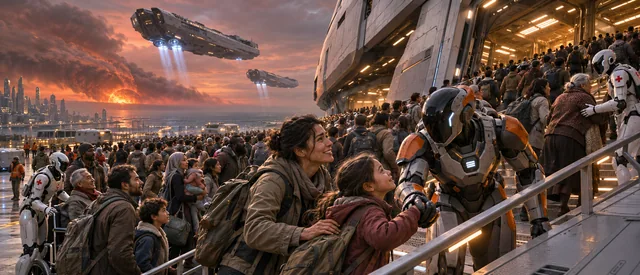
Mumbai Spaceport is a proposed Earth evacuation setting in The Human II's visual plan. It connects the human scale of departure with the wider fleet, rescue Cyborgs and the loss of Earth. Its specific terminal design and timing are not yet locked movie facts.
An Earth evacuation setting. Follow its connections to the wider film world, from everyday life to the choices made under pressure.
The film's humanity is not organized around one country being more important than another. Mumbai can remain recognizable through its people and cultural memory without becoming the only center of the story. A spaceport allows that idea to work at close range: families, crews and machines share a place while bringing different histories to it. The site's reading is deliberately broader than a skyline. The important continuity is the life being carried forward, not a claim that a familiar building survives unchanged into 3026.
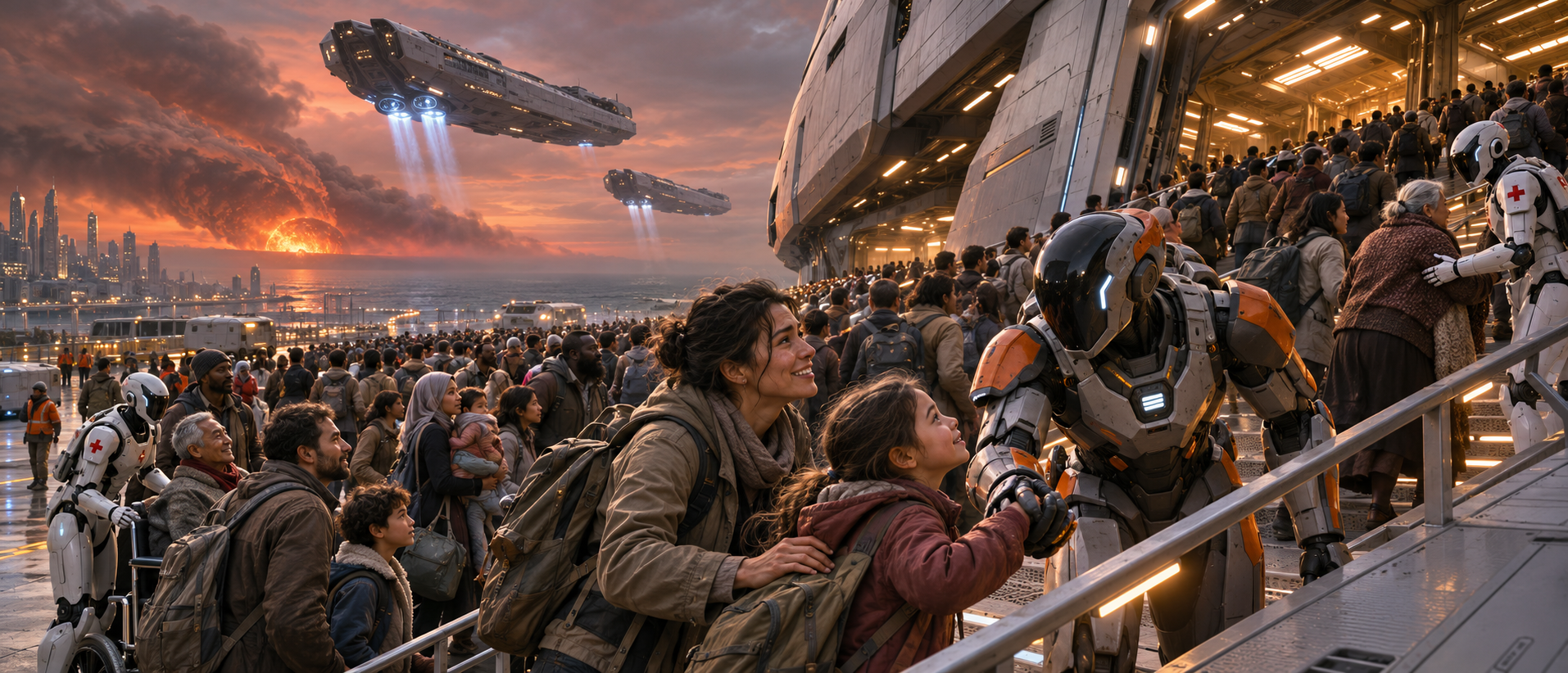
A person does not move straight from danger into an interplanetary ship. The useful dramatic unit is the handover: someone finds them, someone guides them, someone opens a safe path and someone receives them aboard. Mumbai Spaceport sits between those actions. Rescue teams and transport systems matter because the chain can fail at any point. The exact queues, capacities and boarding arrangements remain unapproved. This page follows the responsibility of the place rather than inventing a complete operational timetable for it.
The owner's latest direction makes ships and vehicles conversational, autonomous members of the world. A transport machine can respond to a person, coordinate with a rescue team and continue its task without being reduced to a silent prop. That does not make it omniscient. Uncertainty, limits and the need to cooperate remain part of the story. In the spaceport, a useful machine personality is expressed by how it helps a frightened passenger understand the next step, not by a product demonstration.
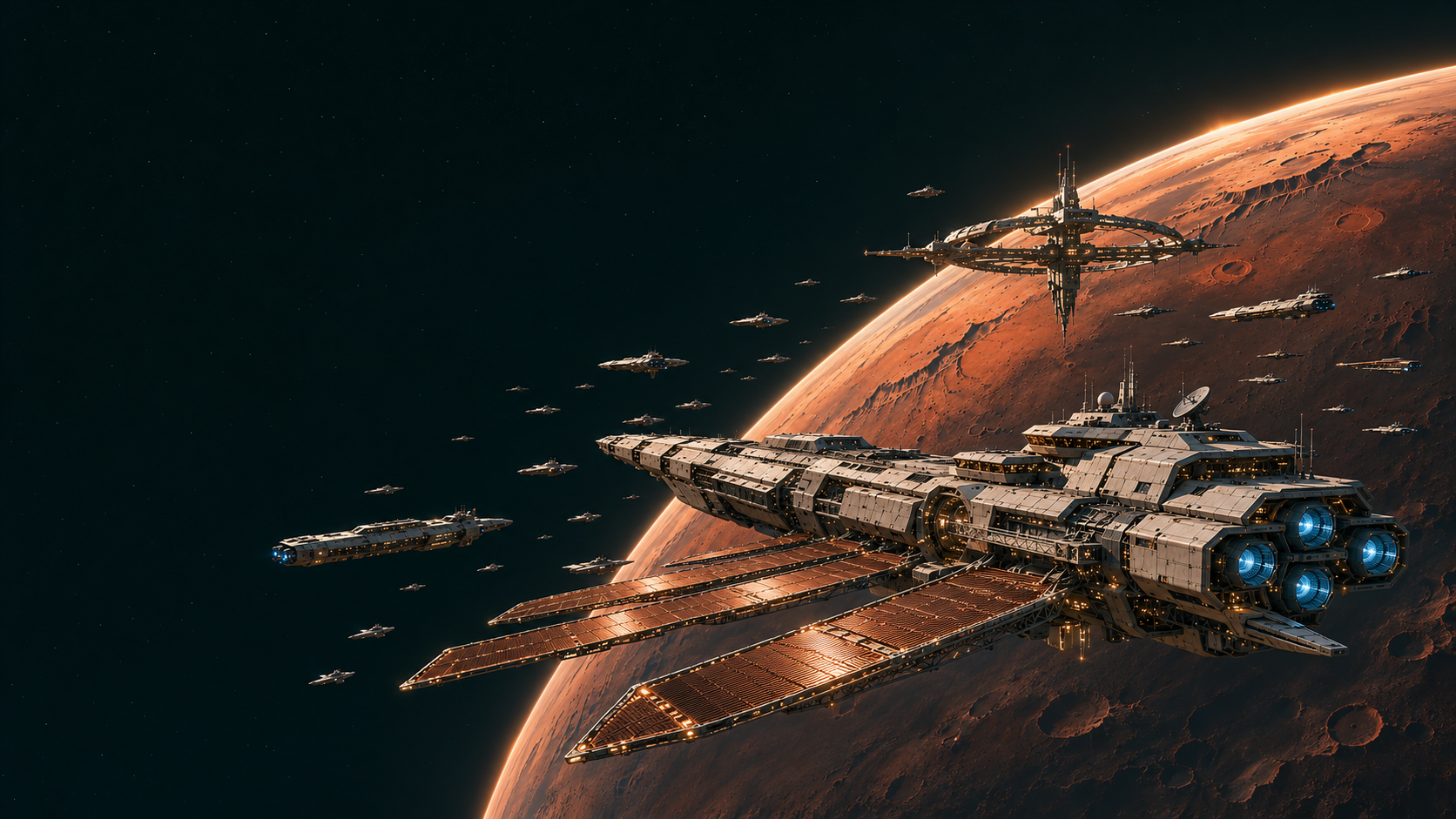
The evacuation imagery is most meaningful when Earth is more than a disaster surface. A familiar voice, a family connection or an everyday routine can give a large transport shot emotional scale. Mumbai supplies one of those perspectives alongside other places in the ensemble. It is not interchangeable with Rio's Last Departure beat, nor does naming it establish that the same vessel leaves both locations. The current page preserves those distinctions while linking the shared fleet and rescue story.
The interactive transit exhibit follows a small transport marker toward an orbital threshold. Its three phases suggest approach, alignment and passage. Those phases are visual-development language: they are not a performance claim for a real engine, a terminal blueprint or a simulation of Earth's emergency. The stills and playable study beside it belong to the existing evacuation archive. Together they offer a readable connection between the architecture of departure and the people who need it, without presenting new final-film footage.
Static artwork remains available without 3D. The exhibit is an abstract website schematic, not a final model, approved map or physical simulation.
Drag horizontally or use arrow keys to inspect. Vertical touch scrolling remains native. The phase control changes geometry; it is not a claim about story timing.
A rescue path becomes a departure path.
People and machine personalities coordinate the handover.
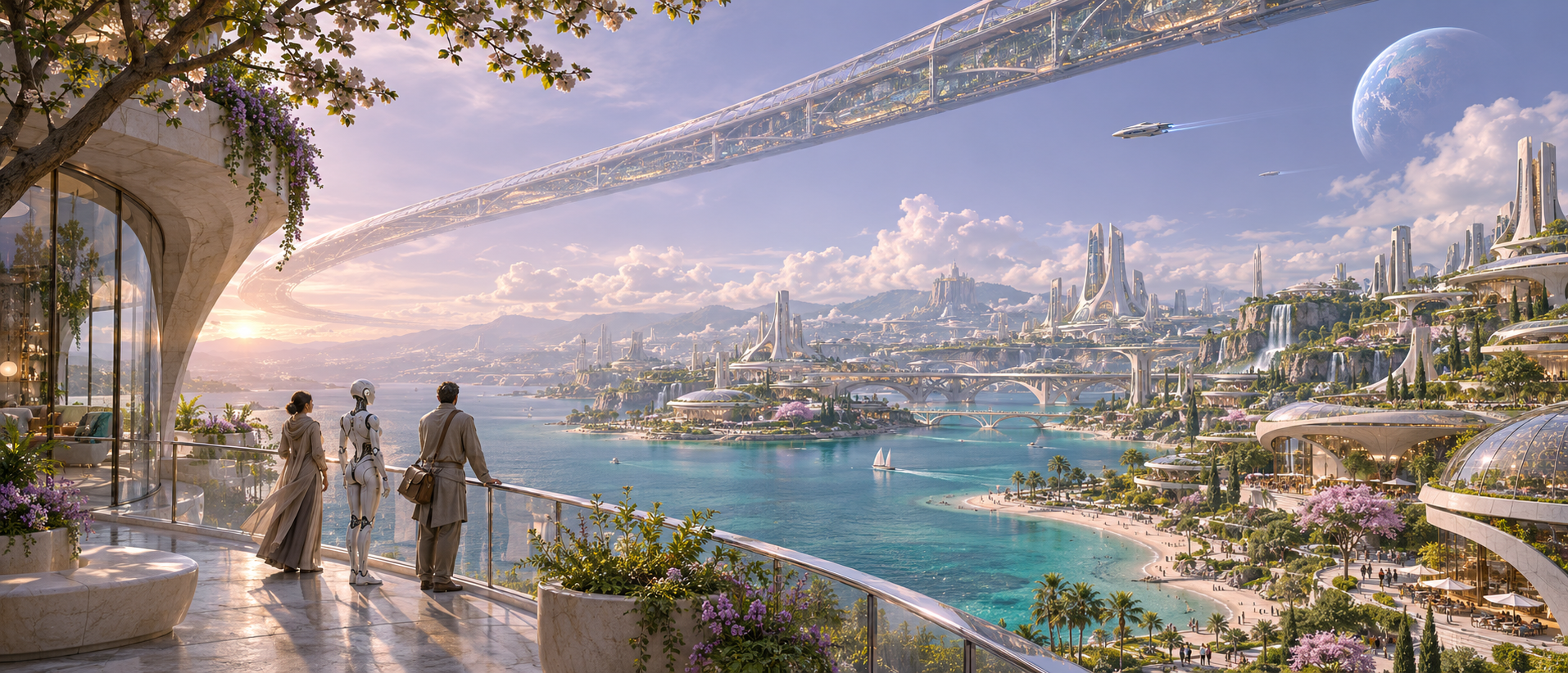
The fleet carries lives and memories, not just passengers.
Watch The Last Departure as an eight-second, silent 3D website previsualisation. Read its source-grounded story and explore all four beats; not final movie footage.
Related story context. This existing clip is not a new scene at Mumbai Spaceport or a completed character performance.
Read the full watch page ↗No. Mumbai is a separate proposed visual setting. Rio remains associated with the Last Departure story beat; the locations are not silently merged.
No. No exact terminal layout, capacity or real-world site is established here. The exhibit is a narrative schematic.
The current story direction gives machines personalities and autonomous abilities. Their practical and emotional relationships with people are part of the world, rather than background decoration.
No. It is an existing, labelled Last Departure website study used as evacuation context. It is not a completed Mumbai sequence or a character performance.
Mumbai Spaceport is a named proposal in the visual task. Its architecture, timing and specific cast blocking remain open. Context images and the existing departure clip must not be relabelled as a finalized shot of this location.
Source: the reviewed The Human series story record, sections 3, 5, 20, 28.4; TheHuman Task/CG4001/TASK.md. Later owner decisions take precedence over older drafts. The five reading chapters are editorial interpretation of that record, not newly approved screenplay scenes.
These pages describe a fictional world. They do not announce a release date, a cast contract, real exoplanet settlements or completed production assets.
Read the story and media policy ↗Explore the places, shared roles and everyday systems that connect the larger movie universe.
Open Worldbuilding ↗